Showing posts with label South Sudan. Show all posts

Tuesday, September 12, 2023

Today in the Mission Yearbook - During a U.N. chapel service, mission co-workers ask God to ‘guide us’

The Revs. Nancy and Shelvis Smith-Mather advocate for prayers and peacebuilding in war-ravaged South Sudan

September 12, 2023

The Revs. Nancy and Shelvis Smith-Mather are pictured at Oxford 

University, where Shelvis is studying for graduate degrees using 

research he’s completed over a decade as a Presbyterian Church 

(U.S.A.) mission co-worker. (Contributed photograph)

Presbyterian Mission Agency mission co-workers the Revs. Shelvis and Nancy Smith-Mather were recently in the United States to meet with several entities at the United Nations to create awareness around the critical needs of those living in South Sudan under the barrage of continued violence and near-civil war. Hosted by the Presbyterian Ministry at the United Nations, the Smith-Mathers led a morning chapel service for a group of in-person and online worshipers via Zoom.

Anthony Harris, a seminarian and intern with PMUN, called the group to worship reading from Psalm 63:1–4. A summer fellow with PMUN, Kayla Hawkins, followed with a litany taken from Psalm 15:1–5 before Shelvis taught worshipers a simple South Sudanese song, “Guide Us Lord We Are Here,” which helped center the worshipers for the day’s message.

Nancy then read from the gospel of Luke, chapter 9, verses 57–62:

“As they were walking along the road, a man said to him, ‘I will follow you wherever you go.’

“Jesus replied, ‘Foxes have dens and birds have nests, but the Son of Man has no place to lay his head.’

He said to another man, ‘Follow me.’

“But he replied, ‘Lord, first let me go and bury my father.’

“Jesus said to him, ‘Let the dead bury their own dead, but you go and proclaim the kingdom of God.’

“Still another said, ‘I will follow you, Lord; but first let me go back and say goodbye to my family.’

“Jesus replied, ‘No one who puts a hand to the plow and looks back is fit for service in the kingdom of God.’”

“I’ve never understood that passage or cared for it. How can a person who’s doing good need it and expect it won’t be out of sync with God’s calling?” said Shelvis.

The Smith-Mathers visited the United Nations to discuss 

the refugee crisis occurring because of the conflict along 

the Sudan-South Sudan border. (Photo by Tomas Eidsvold 

via Unsplash)

The tale of a young South Sudanese man helped Nancy to rethink the impact of the gospel passage. She shared the story of Daniel, an aspiring teacher, in the context of educational challenges within South Sudan, including the fact that South Sudan is the third-least literate country in the world. Most teachers there are volunteers who lack formal training. Most schools are under trees or in temporary shelters, against a backdrop of violence and decades of war.

At age 11, Daniel used to wake up at 4 o’clock each morning to walk three hours to reach the village school, then walk three hours home every day with no food or water along the way. He convinced his family to let him move to a refugee camp in Ethiopia so he could continue school, but was forced to flee when violence erupted there.

He eventually received a high school education in Uganda and was awarded a scholarship to attend the Teacher Training College in South Sudan. While there, violence broke out in his hometown twice, threatening the safety of his wife and children.

“It would have been good and expected for Daniel to stop being a student and come home to protect his family,” said Nancy. “But Daniel felt the rare opportunity to become a teacher was God-given. So, he relied on his community and church family to take care of his loved ones so that when he finally came back, he could provide his community with a trained teacher. He felt God calling him to be something different, something beyond what was expected.”

The Smith-Mathers began their calling in South Sudan in 2010. Their work as mission co-workers was interrupted less than a year later when the call came to be a caregiver for Shelvis’ mother, who battled cancer and endured two transplants.

“I have worked in South Sudan during times of civil war and constant insecurity, but caregiving for someone losing their battle with cancer was by far the most difficult ministry I’ve ever been a part of,” said Nancy. “Life is filled with seasons, and some will be called to good, needed and expected work. And there are other times there will be a ministry we’re called to step into that is hard to even imagine.”

“However you feel called, this is your call,” her husband said.

Scott O’Neill, Communications Strategist, Presbyterian Mission Agency

Today’s Focus: Revs. Nancy and Shelvis Smith-Mather mission co-workers advocate for South Sudan

Let us join in prayer for:

PC(USA) Agencies’ Staff
Gabe Loredo, Archives Technician, Presbyterian Historical Society
Lisa Love, Counsel, Legal Services, Presbyterian Foundation

Let us pray

Heavenly Father, your unconditional love inspires us to be loving, welcoming and hospitable to our neighbors. Pour into our hearts your compassion; strengthen and guide us as we go forth to make your kingdom tangible. Grant us your peace and surround us with your presence. Amen.

Thursday, June 1, 2023

Today in the Mission Yearbook - International Peacemaker to share South Sudan’s hope for a better future

The Rev. Peter Yien will spread a message of peace and forgiveness while visiting the Presbyterian Church (U.S.A.)

June 1, 2023

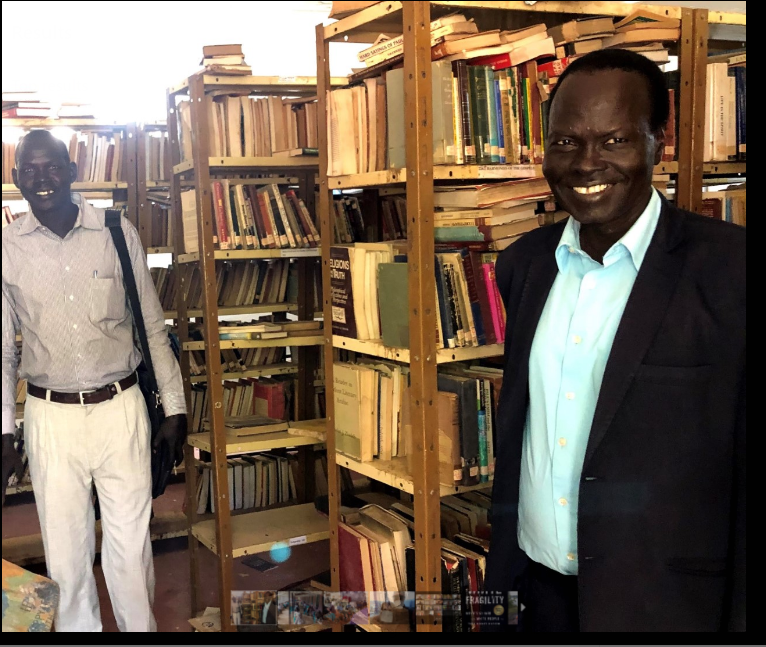
The Rev. Peter Yien is pictured at Nile Theological College. (Photo courtesy of Bob and Kristi Rice)

A pastor who has endured civil war and imprisonment in South Sudan will bring his message of peace and forgiveness to the Presbyterian Church (U.S.A.).

The Rev. Peter Yien of the South Sudan Presbyterian Evangelical Church is one of up to 10 people who will serve as International Peacemakers later this year for the Presbyterian Peacemaking Program.

Peacemakers from around the world will be making in-person visits throughout the church to share their stories and provide insight into issues of peace and justice that are affecting their countries. They also will help the Church live into the Matthew 25 invitation.

“I am coming to let the international community know about South Sudan,” Yien said. “I also want to communicate with the churches in the United States that as the church in South Sudan, as followers of Jesus Christ, that despite all the many challenges we face, we still have hope for a better tomorrow, for a better future. We also carry within us resurrection hope, hope beyond the sufferings and tragedies of this world.”

South Sudan has been wracked by civil war, which began in 2013. Although a peace agreement is being implemented, strife continues and there are other issues to contend with, such as a lack of forgiveness and a scarcity of resources.

“Poverty plagues us, and people are displaced from their home regions due to war and continued communal fighting,” said Yien, academic dean of Nile Theological College in Juba. Also, some people are “doubting this peace agreement.”

His church has collaborated with PC(USA) in the past and helps to provide food relief and seminars on reconciliation and forgiveness. “We also help collect vulnerable children, bring them to church and help them to reconcile with their communities,” Yien said.

Yien looks forward to sharing his experiences with Presbyterians in the United States. “I will seek to (be) a bridge, so that people in the congregations will know how to pray for us in South Sudan.”

For more information about hosting an International Peacemaker, go here.

The Presbyterian Peacemaking Program is one of the Compassion, Peace & Justice ministries of the Presbyterian Mission Agency. The International Peacemakers Program is made possible by your generous gifts to the Peace & Global Witness Offering.

 Darla Carter, Communications Strategist, Presbyterian Mission Agency

Let us join in prayer for:

PC(USA) Agencies’ Staff
Chelsea de Lisser, Retreat Center Manager, Stony Point Center, Presbyterian Mission Agency
Sheldon Dennis, Vice President, Human Resources, Board of Pensions

Let us pray

O God, when the world’s needs seem to overwhelm our ability to help, let us remember that you ask us to give what we have, not what we do not have. By your Spirit, we can do more than we ever dreamed. Give us faith to trust your Word and obey your commands through Jesus Christ our Lord. Amen.

Thursday, December 22, 2022

WCC NEWS: As world prepares for Christmas, South Sudan Church leaders encourage hope among their people

As the world prepares to mark Christmas, South Sudan church leaders have pronounced, “Joy to the world,” while encouraging hope among their people.
A bird flies across the rising sun in Agok Photo:Paul Jeffrey/Life on Earth Pictures
22 December 2022

The leaders said the people of the worlds youngest nation might not feel joyful this year as they are suffering misery, sickness, and death due to political and military unrest, and socio-economic situations.

We must shine light into darkness. Still we can say, Joy to the world,’ ” said Rev. James Oyet Latansio, general secretary of the South Sudan Council of Churches in the leaders' Christmas message.

The message urges the people to celebrate Christmas with all their hearts and might” in spite of the challenges, since Christmas is the celebration of hope, peace, joy, and love.

Of great concern now is the latest flare-up in Fashoda County of the Upper Nile State. Factional fighting triggered on Aug.15 has displaced at least 20,000 people, according to the UN. An estimated 3,000 have fled to the neighbouring countries, as the fighting spread to the neighbouring Jonglei and Unity states.

According to the leaders, the intense fighting has triggered a humanitarian crisis, killed innocent civilians and destroyed ancestral villages. It has also triggered the movement of unaccompanied children as parents die in the crossfire.

This violence continues to inflict human misery and has killed scores of innocent [people]. Fleeing civilians are traumatized and report killings, injuries, gender-based violence, abductions, extortions, pillaging, and the torching of property,” reads the statement, which appealed to the leadership of the Revitalized Transitional Government of National Unity to act to save lives.

We call on the international community not to get tired of supporting innocent South Sudanese who are caught in the communal violence and armed conflict. These innocent people are in dire need of political and humanitarian intervention.”

Joy to the world” of the newborn savior is something needed in South Sudan, according to the statement, although proclaiming joy in the current circumstances is difficult.

At the same time, the leaders said they cannot give up hope.

It is hope that will give us the strength to get up every morning and continue living our lives. If there is hope, there is no fear of moving forward,” said the message.

Meanwhile, the leaders have urged sustainable peace, reconciliation, and forgiveness, as the country awaits Christmas and a global Christian leaders’ ecumenical pilgrimage of peace in February.

 
See more
The World Council of Churches on Twitter
The World Council of Churches on Facebook
The World Council of Churches' website
The World Council of Churches on Instagram
The World Council of Churches on YouTube
SoundCloud
The World Council of Churches promotes Christian unity in faith, witness and service for a just and peaceful world. An ecumenical fellowship of churches founded in 1948, today the WCC brings together 352 Protestant, Orthodox, Anglican and other churches representing more than 580 million Christians in over 120 countries, and works cooperatively with the Roman Catholic Church. The WCC acting general secretary is Rev. Prof. Dr Ioan Sauca, from the Orthodox Church in Romania. 

Media contact: +41 79 507 6363; www.oikoumene.org/press
Our visiting address is:
World Council of Churches
150 route de Ferney
Geneve 2 1211
Switzerland

Thursday, March 17, 2022

Today in the Mission Yearbook - Rising out of poverty during a pandemic

Once the food basket of South Sudan, Pochalla has been rocked by decades of conflict

March 17, 2022

Despite challenges faced during COVID-19, women of the Presbyterian Church of South Sudan in Pochalla hold on to their vision of “Women Feeding the Nation.”
(Photo by Othow Okoti)

For the people of Greater Pochalla, survival hangs in the balance. Once the food basket of South Sudan, decades of conflict have unraveled the region’s fabric of society that ensured the population’s self-reliance through farming, fishing and trade.

A few years ago, the women of the Presbyterian Church of South Sudan in Pochalla launched the ambitious “Women Feed the Nation” project to improve food security and teach children traditional agricultural skills long lost in the war. With a Presbyterian Women Thank Offering grant, they set out to establish a large farm near Otallo village to grow staple foods and a demonstration field at the Presbyterian Education Complex in Pochalla town (PECP).

Then COVID-19 hit, creating new challenges for the 400 women farmers in the project. Illness and safety guards resulted in a shortage of labor and a price increase for seeds and other farm inputs rendered them inaccessible. While the activities at the farm were disrupted, the demonstration field returned to weeds after the school was closed in the nationwide COVID-19 lockdown.

Besides the symptoms of the coronavirus itself, leaving hunger, economic hardships and death in its trail, the pandemic also revealed underlying systemic ills that have long been undermining the community’s ongoing efforts to lift itself out of poverty and food insecurity.

Confinement exacerbated harmful behaviors stemming from cultural norms, peer pressure and sexual abuse, which left 15 female students at PECP with early and unintended pregnancies. Having infants to look after, these girls have not enrolled for the new school year.

Fifty PECP students and three teachers returned to the gold mines near Dimma and Okugo refugee camps, across the border river of Akoba in Ethiopia. It remains to be seen whether they will return to class; in an impoverished context, digging gold is an alluring economic activity, even though it cheats children out of an education.

People living along the region’s extensive river network are exposed to hazardous outputs produced by a foreign hydraulic mining company. This mining leaves holes everywhere and releases toxic mercury and other waste products that contaminate drinking water and enter the food chain through water-based animals and agricultural produce.

Through years of adversity, however, the Pochalla community has grown resilient. When the school reopened in April, the demonstration farm grounds were cleared and new crops were planted. While weathering the shock of COVID-19, the Pochalla women are determined to support this year 100 vulnerable families in critical need of food.

As community- and peace-building activities have resumed on the school grounds, Pochalla has become known in humanitarian and development circles as one of the most peaceful areas in South Sudan, as was confirmed by a European Union delegation visit to the community on June 1.

The COVID-19 pandemic has laid bare the inequitable access to vaccines and medicines that could give communities like Pochalla a fighting chance. Seeing the faces of Jesus in those suffering from preventable and treatable diseases, we are called to prioritize basic human rights to life over intellectual property rights that protect the economic interests of the pharmaceutical industry.

 Othow Okoti, Community Worker and Peacemaker with the Presbyterian Church of South Sudan

Christi Boyd, Facilitator for Women and Children’s Interests with Presbyterian World Mission, based in Kinshasa, Congo


Let us join in prayer for:

PC(USA) Agencies’ Staff
Rhonda Martin, Financial Manager, Presbyterian Women
Dina Martinez, Customer Service Representative, Presbyterian Publishing Corporation

Let us pray

Lord God, help us to discern your guidance for all that we think, say, and do, and strengthen us to walk in the paths that you have set before us. Amen.

Monday, March 29, 2021

Today in the Mission Yearbook - Studying, praying and taking steps toward action

Mission co-workers pray for a window to return to South Sudan

March 29, 2021

Before the pandemic, Bob and Kristi Rice were pictured in Juba, South Sudan. (Contributed photo)

Mission co-workers the Rev. Bob and Kristi Rice firmly believe that God has a reason for them to be in the United States at this time.

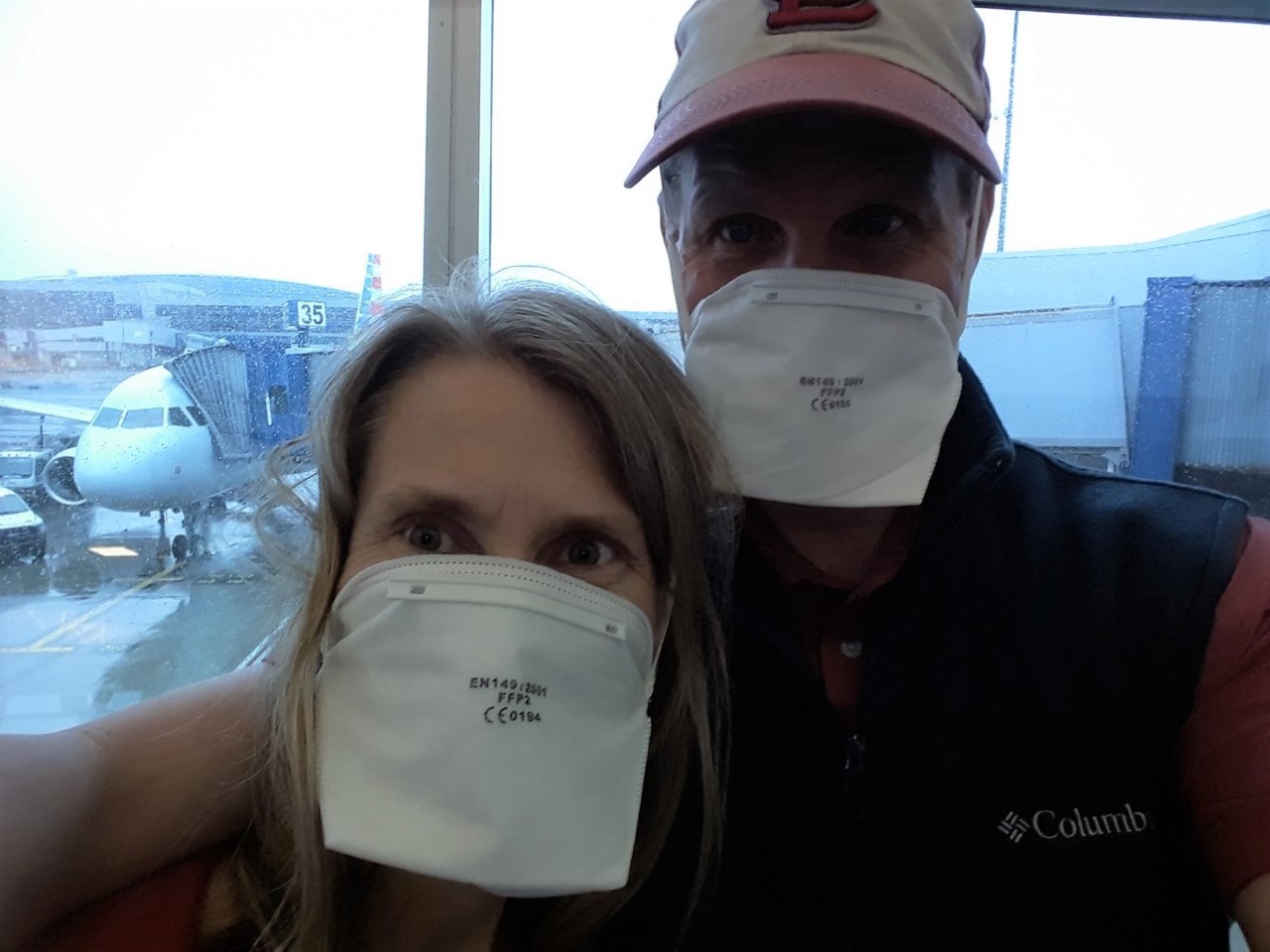
Forced to leave South Sudan during the early stages of the pandemic, they have used the time not only to continue their work, but to also reflect more deeply on the challenges the U.S. faces around systemic racism, continued brutality against people of color and the need for restoration, reconciliation and peace.

“We have read, listened, and engaged with African American and other concerned and prophetic voices who are helping us understand what it means in our United States context to act justly, to love mercy, and to walk humbly with our God (Micah 6:8),” the Rices wrote in a recent mission letter. “We will keep learning, keep growing, keep asking and keep seeking to know how to stand with the poor, the marginalized, the stigmatized and the oppressed, for that is where Jesus dwells. Are we sheep? Are we watchful and ready? Are we taking risks in our faith journey? Only God knows, but we are trying, we are hoping, we are praying, and we are taking steps towards action.”

The Rices have also spent time studying and reflecting on the Presbyterian Church (U.S.A.)’s Matthew 25 invitation.

“In Matthew 25, Jesus tells three parables — the parable of the 10 virgins, the parable of the talents and the parable of the sheep and the goats,” Bob said. “Within these three parables, Jesus interweaves themes worthy of reflection, instructing his disciples to ‘keep watch’ and be ready, to be faithful with what they have been given, and to care for the ‘least of these’ in their midst. Perhaps, in the final analysis, our faith will be authenticated or invalidated according to these themes. Such ponderings can arouse soul-searching questions in us, such as ‘Am I a sheep or a goat? Am I a wise or a foolish virgin? Do I use my resources and gifts to serve our world better?’”

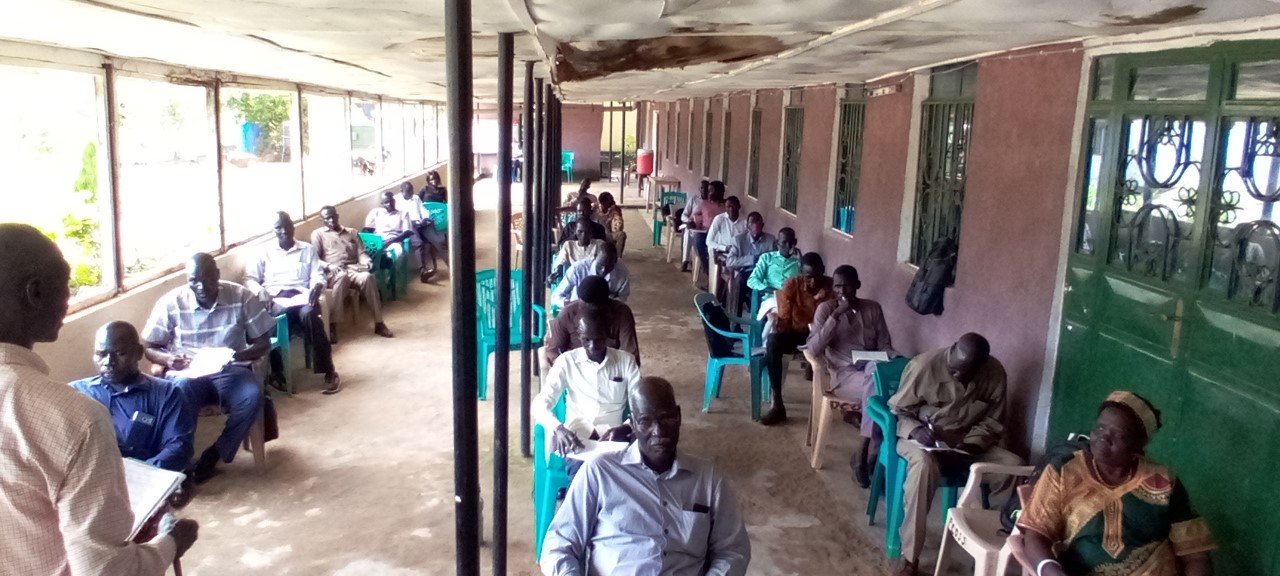
Before the Rices left South Sudan in late March 2020, the government issued an order closing all schools. A few days later, a lockdown order limited movement, prohibited public gatherings, and forced temporary closure of many businesses. While Nile Theological College (NTC), where Bob teaches a broad range of courses in theology and biblical studies, closed during this lockdown, members of the faculty continued to meet in a safe way, praying and exploring ways to remain engaged with students.

First, they created a Facebook Messenger group so they could communicate easily with each other. Secondly, they requested students come individually to the college to pick up notes and assignments from their teachers so that they could study from home. NTC also gathered students in small, socially distanced groups to listen to teachers lecture from a remote location via  WhatsApp on their phones. Unfortunately, that step failed because of South Sudan’s weak internet connections. NTC also solicited the help of two larger churches in Juba, requesting space so that students could safely socially distance while learning in an intensive format so that they could finish the semester.

Bob said he and his wife wept as they left the country they have grown to love since they moved to South Sudan in 2017 to serve at the invitation of the South Sudan Presbyterian Evangelical Church.

“Had we buried our talent? Had we abandoned our post? Upon our return to the United States, there were many days when we felt divided in spirit, recognizing the wisdom in our return but feeling grief over leaving,” he said. “Over time, we have come to realize that God has us here for a reason. We have had unique opportunities to connect virtually with colleagues, family, and friends, which have sustained and strengthened us during the pandemic.”

Of course, the Rices do not know when it will be safe for them to return to South Sudan, but they are asking for prayers for that window to open so they can return to the country they now call home.

 Kathy Melvin, Director of Mission Communications, Presbyterian Mission Agency

Let us join in prayer for: 

PC(USA) Agencies’ Staff
Edwin Gonzalez-Castillo, Presbyterian Mission Agency
Theresa Goodlin, Presbyterian Mission Agency

Let us pray:

God of mercy, we ask you to comfort those who are picking up the pieces after a disaster. May we, your people, be your hands and aid in their recovery. Amen.

Tuesday, March 9, 2021

Today in the Mission Yearbook - A yellow tricycle and a magical plate of biscuits

Finding joy during transition forced by COVID-19

March 9, 2021

Jordan Smith-Mather sits atop the beloved yellow tricycle. (Contributed photo)

Validating loss and understanding our feelings is a concept not difficult to grasp during a global pandemic. But for mission co-workers the Revs. Nancy and Shelvis Smith-Mather, their 7-year-old son Jordan reminded them that sometimes you have to find the courage to lean into the pain to get through it.

Jordan has already lived in four countries. At the start of the pandemic, the Smith-Mather family sheltered-in-place at Mission Haven in the Atlanta area. Through all his visits there over the years, Jordan has had one constant friend: a yellow tricycle enjoyed by more than one “mish kid.”

One early morning recently, Shelvis heard his son crying and went out to investigate.

“I walk out and find Jordan slumping over a trike he can no longer ride,” he said about his growing child. “This trike has accompanied two generations of missionary kids through uncertain transitions back into the States. While the trike doesn’t ‘belong’ to Jordan, he enjoys it each time we return to this mission home in the U.S. Could it be that my son’s sorrow is as much about the pain of change as it is about his knees bruising?”

Following heavy sobs, Jordan asked his father for “alone time” to “sit with his thoughts.”

 Shelvis and Nancy have been Presbyterian Church (U.S.A.) mission co-workers (MCWs) for more than a decade. They first served as Young Adult Volunteers in Kenya, and then as MCWs in South Sudan and Uganda. Shelvis serves as principal of the RECONCILE (Resource Center for Civil Leadership) Peace Institute, while Nancy oversees the South Sudan Education and Peacebuilding Project.

Forced twice to leave South Sudan because of outbreaks of violence near their home in Yei, South Sudan, they spent time conducting trauma healing workshops and peacebuilding training in Uganda in one of the largest refugee camps in the world.

One of the objectives of RECONCILE is to conduct research and document cultural values that promote tolerance, reconciliation and coexistence among people of different cultural backgrounds. That led Shelvis to apply for a four-year program at Oxford to study the role of the Church in peacebuilding. If all goes well, he will have a masters and a doctorate from one of the most prestigious universities in the world.

“I continued to think about how this research could be done in such a way that lifts up the perspective of the South Sudanese peacebuilders and survivors of war that speaks not just to the academic conversation about peacebuilding, but the larger conversation of how to approach reconciliation,” he said.

 “Like my son, I am grappling with unexpected change. Unlike my son, I have not had the courage or wisdom to lean into its sting,” Shelvis said. While living in East Africa, our family encountered several moments when we needed to decide whether we would stay or go. Moments in which we needed to navigate the painful decision of whether the civil unrest or the urgent medical needs of our family dictated we leave to find safety and care. When we moved to Oxford, I assumed we were beginning a season of ‘stability,’ a season promising certainty. I was wrong.”

As the trajectory of the pandemic grew, the PC(USA) suspended travel for all staff and requested that all mission coworkers immediately return to the U.S.

Back in Atlanta early on in the pandemic, Jordan’s bad morning was saved by a surprise gesture of kindness from a neighbor who rang the doorbell and left a care package of fluffy, golden biscuits on the doorstep.

Against a backdrop of pain, the Smith-Mather family still finds joy.

“We all experience moments when we can do little to resist or prevent the pain of change,” said Shelvis. “As the world processes unprecedented uncertainty and struggles to comprehend all that is happening, may we give ourselves permission to grieve our losses and also to be surprised by God’s unchanging ability to bring unexpected joy into our lives — sometimes in the form of love-filled biscuits.”

And there is more good news for the Smith-Mather family. In addition to celebrating their 15th wedding anniversary, they welcomed a fourth child, a girl, in October 2020.

Kathy Melvin, Director of Mission Communications, Presbyterian Mission Agency

Let us join in prayer for: 

PC(USA) Agencies’ Staff
Betsy Ensign-George, Presbyterian Women
Gina Espiritusanto, Presbyterian Mission Agency

Let us pray:

Great God, we give you thanks today. May we continue to find ways in our churches, our homes and our communities to gather, teach, listen and inspire. In Jesus’ name. Amen.

Thursday, October 15, 2020

Today in the Mission Yearbook - On this International Day for Rural Women, South Sudan farmers are not deterred

Women will rebuild after flooding, pandemic

October 15, 2020

A Hope Restoration South Sudan field worker makes her way through the floodwaters in Mayendit County to do outreach to rural farm families.

In South Sudan, more than 1 million people have been displaced in recent months by flooding. Of those displaced, more than 29,000 are from Mayendit County in the southern part of Unity State. Before the flooding, the country was plagued by years of civil war that also contributed to massive displacement.

It is in Mayendit County, where the Presbyterian Hunger Program (PHP) has partnered with Hope Restoration South Sudan (HRSS) , a women-led organization, since 2018 to implement food security projects that empower girls and women, reduce cases of malnutrition and combat poverty through farming activities.

Women and girls are provided with seeds and tools, and trained in farming, record keeping, food processing, post-harvest management and gender-based violence prevention, mitigation and management. With gender-based violence on the increase as poverty and food insecurity persist in South Sudan, providing women with access to land and the necessary tools and skills to produce food close to home liberates them from many of the safety risks posed by the search for food.

Unfortunately, some of the good progress that HRSS and the women farmers of Mayendit County have made has been destroyed by the flooding and will need to be rebuilt.

“The floods have destroyed all crops on the [women’s] farm. The level of floodwaters rose above the crops before harvests could be made. There was okra, tomatoes, cabbages, kale and maize on this farm, but all have been destroyed and the whole place is full of water,” said an HRSS field officer.

The floods alone are devastating, but they have come both during the global COVID-19 pandemic and while South Sudan continues to teeter on the edge of famine (the U.N. declared famine there in 2017).

In April 2020, the U.N. warned that we could see famines of “biblical proportions” due to the layering of difficult conditions, including the coronavirus pandemic, global economic recession, worsening climate change and increasing violent conflicts. South Sudan is on the list of the top 10 countries at risk of famine due to many natural and man-made disasters, including violent conflict, floods, locust invasion, sustained food crises and now COVID-19.

But the women of HRSS and the women farmers with whom they work will not be deterred by the challenges and setbacks.

Angelina Nyajima, the executive director of HRSS, says, “Through the project, women farmers have been able to generate income from their own farms. This has helped them sustain their livelihoods, put food on the table, take children to school and buy clothes. We pray and hope that things will return to normalcy soon so that the displaced women can go back to their homes and the farmlands submerged in water can dry up and farming will continue.”

Eileen Schuhmann, Mission Specialist for International Hunger Concerns, Presbyterian Hunger Program

Let us join in prayer for: 

PC(USA) Agencies’ Staff
Catherine Reuning, Presbyterian Mission Agency
Sue Rheem, Presbyterian Mission Agency

Let us pray:

Gracious God, you know the enormous struggles of our siblings in South Sudan. We pray that you give our partners the strength to remain steadfast in their faith and efforts to do this lifesaving work. We pray that you offer the people of South Sudan some relief from natural and man-made disasters. We pray that you empower rural women and girls in South Sudan and around the world so that all may enjoy a peaceful future and a healthy planet. Amen.

Friday, July 31, 2020

Here for a Reason


A Letter from Bob and Kristi Rice, serving in South Sudan

July 2020

Write to Bob Rice
Write to Kristi Rice
Individuals: Give to E200429 for Bob and Kristi Rice’s sending and support
Congregations: Give to D507528 for Bob and Kristi Rice’s sending and support
Churches are asked to send donations through your congregation’s normal receiving site (this is usually your presbytery)
In Matthew 25, Jesus tells three parables – the parable of the ten virgins, the parable of the talents, and the parable of the sheep and the goats. Within these three parables, Jesus interweaves themes worthy of reflection, instructing his disciples to “keep watch” and be ready, to be faithful with what they have been given, and to care for the “least of these” in their midst. Perhaps, in the final analysis, our faith will be authenticated or invalidated according to these themes. Such ponderings can arouse soul-searching questions in us, such as “Am I a sheep or a goat? Am I a wise or a foolish virgin? Do I use my resources and gifts to serve our world better?”
The day before Kristi and I were requested by our mission leadership to leave South Sudan for the United States in late March, the government of South Sudan issued a declaration to close all schools. A few days later, the government issued a lockdown that limited movement, prohibited public gatherings, and forced many businesses to close temporarily. While Nile Theological College (NTC), where I teach, closed during this lockdown, members of the faculty continued to meet in a safe way, praying about the situation, and seeking ways to remain engaged with the students. Their first action was to create a Facebook Messenger group to communicate easily with each other. The second action was to request students to come individually to the college to pick up notes and assignments from their teachers so that they could study from home. The third action NTC took was to gather students in small groups, socially distanced, to listen to teachers lecture from a remote location via WhatsApp on their phone. Sadly, the weak internet connection in South Sudan foiled this plan. Lastly and most recently, the administration of NTC solicited the help of two larger churches in Juba, requesting the use of space so that students could safely social distance while being instructed in an intensive format so that they could finish the semester.
I have been impressed by Rev. Santino Odong, the principal, and members of the faculty who have persisted in their efforts to serve the students and to remain faithful to the calling of preparing leaders to serve the peoples of South Sudan. Despite limitations and grave challenges, they kept hope alive and found creative solutions to intense problems. Like the wise virgins, they kept “enough oil” on hand to accomplish their task. Like the shrewd holders of talents, they took risks and expanded their influence by finding partners who could help them. Like the sheep, they were aware of their students’ needs, a group often marginalized and forgotten. I am inspired by Rev. Santino and my NTC colleagues, who remain in Juba.
Kristi and I feel challenged by these parables of Jesus as we have had to leave our home, our ministry, and our life in South Sudan. We wept and rebelled in our spirits as we left our beloved country of service. Had we buried our talent? Had we abandoned our post? Upon our return to the United States, there were many days when we felt divided in spirit, recognizing the wisdom in our return but feeling grief over leaving. Over time, we have come to realize that God has us here for a reason. We have had unique opportunities to connect virtually with colleagues, family, and friends, which have sustained and strengthened us during the pandemic.
We have been able to support others and be supported during these tumultuous months. We have had opportunities to reflect more deeply upon the challenges we find in the U.S. regarding systemic racism. We have been challenged by the protests over the death of George Floyd and other African American men and women and the continued police brutality against people of color. There is an ongoing need for repentance, healing, restoration, reconciliation, and peace.
We have read, listened, and engaged with African American and other concerned and prophetic voices who are helping us understand what it means in our United States context to act justly, to love mercy, and to walk humbly with our God (Micah 6:8). We will keep learning, keep growing, keeping asking, and keep seeking to know how to stand with the poor, the marginalized, the stigmatized, the oppressed, the harassed and harangued persons, and peoples of color, for that is where Jesus dwells. Are we sheep? Are we watchful and ready? Are we taking risks in our faith journey? Only God knows, but we are trying, we are hoping, we are praying, and we are taking steps towards action. We trust that God has us here for a reason.
Friends, we want to express to you from the bottom of our hearts how grateful we are for your ongoing prayers and financial support, which sustains us and our ministry. We do not know when we will return to South Sudan, but we invite you to pray with us for that “window” to open so that we can return home. May God grant you strength, wisdom, courage, love, and compassion for the days ahead.
In Christ,
Bob and Kristi

Mission Yearbook: Book encourages a walk of faith

The writing team of the Rev. Dr. Cynthia Campbell and the Rev. Christine Coy Fohr , which previously gave us “ Meeting Jesus at the Table: ...