Showing posts with label WCC NEWS. Show all posts

Monday, October 19, 2026

WCC news: WCC general secretary reflects on “Decolonizing mission: from mission to mutuality”

World Council of Churches general secretary Rev. Prof. Dr Jerry Pillay delivered an address on 15 October during a gathering of the Association of Protestant Churches and Missions in Germany. He focused on “Decolonizing mission: from mission to mutuality.” 
Photo: Corinna Waltz/EMW
15 October 2026

Pillay began by asking what it means to decolonize mission. “It is about freeing mission from those patterns of power, domination, and cultural superiority that have sometimes accompanied Christian witness,” he said. “It is about recovering mission as participation in the mission of God.”

Pillay emphasized that the starting point must be theological. “Mission is not ours,” he said. “Mission is God’s.”

Decolonising mission requires honesty, Pillay added. “Christian mission has a complex history,” he said. “Christianity was sometimes presented as though European culture and Christianity were inseparable.”

We must acknowledge this history, not to condemn previous generations, but to ensure that we do not reproduce their assumptions, Pillay urged. “The question today is: Can we proclaim Christ without reproducing cultural domination?” he asked. “I believe we can. Indeed, we must.”

Plllay also reflected on how the demographic centre of Christianity has shifted. “The churches of the Global South are not junior partners in Christianity,” he said. “They are not simply recipients of theology developed elsewhere. They are theologians, missionaries, teachers, evangelists and agents of God's mission.”

The issue is ultimately about power, Pillay noted. “And Christian power must always be understood through Christ. Jesus does not exercise power by domination. He kneels and washes feet,” said Pillay. “Therefore, Christian mission must be characterised by servant leadership.”

Read the full presentation "Decolonizing Mission: From Mission to Mutuality"

Photo gallery

See more
The World Council of Churches on Facebook
The World Council of Churches on Twitter
The World Council of Churches on Instagram
The World Council of Churches on YouTube
World Council of Churches on SoundCloud
The World Council of Churches' website
The World Council of Churches promotes Christian unity in faith, witness and service for a just and peaceful world. An ecumenical fellowship of churches founded in 1948, today the WCC brings together 356 Protestant, Orthodox, Anglican and other churches representing more than 580 million Christians in over 120 countries, and works cooperatively with the Roman Catholic Church. The WCC general secretary is Rev. Prof. Dr Jerry Pillay from the Uniting Presbyterian Church in Southern Africa.

Media contact: +41 79 507 6363; www.oikoumene.org/press
Our visiting address is:
World Council of Churches
Kyoto Building
Le Grand-Saconnex CH-1218
Switzerland

Tuesday, October 6, 2026

WCC News: Chiang Mai conference opens to explore “Being Church in the World Today”

A gathering of World Council of Churches (WCC) commissions and reference groups on Life, Justice and Peace opened in Chiang Mai, where ecumenical leaders will explore what “Being Church in the World Today” means. 
Rev. Prof. Dr Jerry Pillay, general secretary of the World Council of Churches adressed the Joint Conference of WCC Commissions and Reference Groups on Life, Justice and Peace on the openning day of the conference in Chiang Mai, Thailand, 5 October 2026. Photo: Sean Hawkey/WCC
05 October 2026

WCC general secretary Rev. Prof. Dr Jerry Pillay, in his opening address, offered a WCC perspective on ecclesiology, mission, witness, and hope.

“Humanity faces wars and armed conflicts, growing inequalities, displacement and migration, ecological destruction, technological disruption, artificial intelligence, religious and political polarization, declining confidence in institutions, and profound questions concerning human dignity and the future of life itself,” he said. “At the same time, Christianity itself is experiencing major transformations.”

The church is God's before it is ours, reflected Pillay. “Here unity is not an ecclesial luxury,” he said. “It is related directly to Christian witness.”

He further noted that a divided church struggles to proclaim a reconciled Christ. “This is particularly important for the ecumenical movement,” he said. “The WCC’s understanding of unity cannot be reduced to organizational uniformity.”

Dr Prawate Khid-arn, assistant general secretary for ecumenical relations of the Church of Christ in Thailand, prayed that the meeting will renew people’s hearts, deepen their commitment, and give them fresh energy and courage for the journey ahead.

“May our discussions lead not only to words and recommendations, but also to meaningful actions that bring hope to those who suffer, restore human dignity, strengthen justice, care for God's creation, and contribute to genuine and lasting peace,” said Khid-arn. “May the Holy Spirit guide your conversations, inspire your discernment, and strengthen our common witness.”

Rev. Grace Moon, general secretary of Christian Conference of Asia, noted the context of the meeting in Asia—a region full of spiritual richness, cultural diversity, and resilience, yet also a place where many still face challenges like inequality, displacement, violence, discrimination, and climate change.

“Our Christian faith means we cannot ignore suffering or injustice—we are called to stand with those who are hurting, excluded, or silenced,” said Moon. “We cannot solve these problems alone.”

Moon further noted that climate injustice, conflict, and discrimination are all connected. “Our calling goes beyond charity—it is about working together for justice, healing, and the well-being of all people and creation,” said Moon. 

The conference marks the second time that WCC commissions related to the Life, Justice, and Peace programme are meeting - the first such gathering was held in Geneva in 2024.

The first day of the conference currently underway began with pilgrimage encounters, giving participants an opportunity to meet local communities and organizations in and around Chiang Mai working on issues including clean air, migration, HIV and health justice, and interfaith dialogue.

Address by the WCC general secretary Rev. Prof. Dr Jerry Pillay: Being Church in the World Today: A WCC Perspective on Ecclesiology, Mission, Witness and Hope

PHOTO GALLERY: Conference of the WCC Commissions and Reference Groups on Life, Justice and Peace in Chiang Mai, Thailand

Rev. Prof. Dr Jerry Pillay, general secretary of the World Council of Churches adressed the Joint Conference of WCC Commissions and Reference Groups on Life, Justice and Peace on the openning day of the conference in Chiang Mai, Thailand, 5 October 2026. Photo: Sean Hawkey/WCC
See more
The World Council of Churches on Facebook
The World Council of Churches on Twitter
The World Council of Churches on Instagram
The World Council of Churches on YouTube
World Council of Churches on SoundCloud
The World Council of Churches' website
The World Council of Churches promotes Christian unity in faith, witness and service for a just and peaceful world. An ecumenical fellowship of churches founded in 1948, today the WCC brings together 356 Protestant, Orthodox, Anglican and other churches representing more than 580 million Christians in over 120 countries, and works cooperatively with the Roman Catholic Church. The WCC general secretary is Rev. Prof. Dr Jerry Pillay from the Uniting Presbyterian Church in Southern Africa.

Media contact: +41 79 507 6363; www.oikoumene.org/press
Our visiting address is:
World Council of Churches
Kyoto Building
Le Grand-Saconnex CH-1218
Switzerland

Wednesday, August 19, 2026

WCC NEWS: “Nun Dul Dega Eomne” (Nowhere to Lay My Eyes) wins Locarno Film Festival prize

The film “Nun Dul Dega Eomne” (Nowhere to Lay My Eyes) earned the prize of the Ecumenical Jury at the 79th Locarno Film Festival, held 5-15 August.
Photo: © Jeonwonsa Film
19 August 2026

The Ecumenical Jury, appointed by INTERFILM and SIGNIS, awarded the prize, donated by the Evangelical Reformed Church and the Roman Catholic Church in Switzerland, to director Hong Sangsoo (South Korea).

The film centres on a daughter’s first visit to her mother in ten years. 

The daughter, Sanghee, together with her brother, visits her mother in the South Korean city of Jeju, where her mother runs a successful restaurant. Sanghee’s stepfather is making a film about a “grass grave,” and his daughter has taken up painting. They exchange news, unsolicited advice, and insincere compliments. On the morning of their departure, the other family members watch a film made by Sanghee. 

The jury selected the film for its extraordinary human depth. “What do we focus on in our lives? Do we see the obvious or the invisible? How do we tell a story of truth?” The jury begins its statement with these questions. 

“Nun Dul Dega Eomne takes us on a brief journey to a family reunion where expectations and relationships can be rekindled,” the jury comments. “The dialogues unfold like precious pearls of universal and existential themes, offering an intense reflection on creativity and art.” 

The statement continues: “The film achieves extraordinary human depth in what is only seemingly superficial. With great empathy and subtle humour, it explores alienation and how difficult it can be to truly see one another and accept one another mutually.”

More about the movie: https://www.inter-film.org/filmarchiv/2026/nun-dul-dega-eomne

See more
The World Council of Churches on Facebook
The World Council of Churches on Twitter
The World Council of Churches on Instagram
The World Council of Churches on YouTube
World Council of Churches on SoundCloud
The World Council of Churches' website
The World Council of Churches promotes Christian unity in faith, witness and service for a just and peaceful world. An ecumenical fellowship of churches founded in 1948, today the WCC brings together 356 Protestant, Orthodox, Anglican and other churches representing more than 580 million Christians in over 120 countries, and works cooperatively with the Roman Catholic Church. The WCC general secretary is Rev. Prof. Dr Jerry Pillay from the Uniting Presbyterian Church in Southern Africa.

Media contact: +41 79 507 6363; www.oikoumene.org/press
Our visiting address is:
World Council of Churches
Chemin du Pommier 42
Kyoto Building
Le Grand-Saconnex CH-1218
Switzerland

Wednesday, August 12, 2026

WCC news: A journey of faith, solidarity, and listening across southern Africa

From 3-8 August, the South African Council of Churches, in partnership with the Fellowship of Christian Councils in Southern Africa, welcomed church leaders from Malawi, Zimbabwe, Mozambique, Lesotho, Namibia, Tanzania, and Eswatini for a regional solidarity visit to South Africa.
Photo: SACC
12 August 2026

Taking place in both the Western Cape and KwaZulu-Natal, the visits provided an opportunity for church leaders to engage with communities, faith leaders, government, and civil society, listening to the lived experiences of migrants and reflecting together on the church's role in promoting human dignity, justice, peace, and social cohesion.

They met with migrants and refugees from the Democratic Republic of Congo, Burundi, Ghana, Nigeria, Zimbabwe, Ethiopia, Tanzania, and other African countries, as well as community and church leaders, the KZN Christian Council, African Solidarity Campaign, Refugee Social Services, and Lawyers for Human Rights.

The group listened to deeply personal accounts of conflict, displacement, and the painful realities of rebuilding lives far from home, the uncertainty many continue to live with, even after decades in South Africa, and the longing for peace in the countries they were forced to leave. 

Yet amid these difficult stories, many also spoke with gratitude for the love, welcome, and support they have received from South Africans, churches, and local communities.

Rev. Mzwandile Molo, general secretary of the South African Council of Churches, said that those gathered reflected on what the migration crisis has caused—not only in South Africa, but across the region.

“We know that many people have been intimidated, harassed, and, in many ways, forced to leave South Africa,” said Molo. “Many of them are our brothers and sisters from within the region.”

As they gathered, church leaders across the region raised serious concerns, such as: What is the nature of this crisis? How is it being expressed? And what is its impact on our people and our region?

“Part of this process is listening and understanding what has been happening,” said Molo. 

“They are doing this because part of their responsibility is to offer a pastoral response—to the people here in South Africa and also to those who have returned to their countries.”

In understanding the nature of the crisis, Molo continued, they want to express their solidarity with those who have been affected.

“From that perspective, they will share with South African church leaders and communities the prophetic challenge of our time,” said Molo. “Most importantly, throughout this journey, they will ask: How can we respond in a comprehensive way that ensures that events like this do not happen again?”

Molo urged that all those who contribute to creating and covering up the chaos in the region be called to account.

“And, most importantly, how do we unite the people of our region so that we can restore the values of Ubuntu and the values of Africa, while making a firm commitment to ensuring that migration is managed fairly, humanely, and in a way that strengthens our communities and our region?” he asked. “Our goal is to build a coherent, cohesive, dignified, economically strong, socially united, and politically stable region.”

WCC General Secretary, leadership of South African Council of Churches meet with South African H.E. President Cyril Ramaphosa (WCC news release, 30 July 2026)

See more
The World Council of Churches on Facebook
The World Council of Churches on Twitter
The World Council of Churches on Instagram
The World Council of Churches on YouTube
World Council of Churches on SoundCloud
The World Council of Churches' website
The World Council of Churches promotes Christian unity in faith, witness and service for a just and peaceful world. An ecumenical fellowship of churches founded in 1948, today the WCC brings together 356 Protestant, Orthodox, Anglican and other churches representing more than 580 million Christians in over 120 countries, and works cooperatively with the Roman Catholic Church. The WCC general secretary is Rev. Prof. Dr Jerry Pillay from the Uniting Presbyterian Church in Southern Africa.

Media contact: +41 79 507 6363; www.oikoumene.org/press
Our visiting address is:
World Council of Churches
Chemin du Pommier 42
Kyoto Building
Le Grand-Saconnex CH-1218
Switzerland

Thursday, August 6, 2026

WCC NEWS: Granddaughter of Hiroshima survivor shares her family’s story

Erin Tsutsui is a 16-year-old rising junior at Henry M. Gunn High School in California. She visited the World Council of Churches on 5 August with a group from the League of Creative Minds. She shared her grandfather’s story of surviving the nuclear bomb in Hiroshima on 6 August 1945.
Photo: Pauline Tete/WCC
05 August 2026

You have been growing up listening to your grandfather's stories. Could you tell me a little more about your background and his?

Tsutsui: My grandfather was born and raised in Hiroshima. He was four-and-a-half years old when he became a survivor of the atomic bomb in Hiroshima on 6 August 1945. He tells me that in the morning, he was playing outside behind a large tree when the bomb hit. Everything around him blew up, and he got glass shards stuck in his hand, which he pulled out. Blood came out of his hand, but his life was saved because he wasn't actually that far from the epicenter. He wasn't close enough to die instantly, so it is a miracle that he survived. His family also happened to be safe; his mom and siblings were inside the house or nearby. His dad was actually very close to the epicenter but was underground, so he was also able to survive.

However, I believe maybe a year later, his brother died. I think it was a mixture of radiation sickness, food poisoning, starvation, or something like that. That is what happens in wartime.

My grandfather struggled with radiation sickness for a very long time, so he did not attend most of elementary school. He tells me stories about how his teacher told him he should study for a test, and he told his teacher, "I think I'm going to die anyways." The teacher was very shocked and started crying. His mother always told him that, especially because she was so affected by one of his brothers dying, she said she would, no matter what, make sure that he lives.

He eventually became a medical student and an oral surgeon. He met my grandma, had my mom, and then my mom moved to the US. I was born in the US in Michigan before moving to California. I am Japanese American and have never lived in Japan, but my favorite memories are from visiting my grandpa in Japan. I visited him this year. I think he is now 85 and lives alone, but I think he is really excited about whatever he sees. He is amazing to talk to, and he is open to telling me his stories. Actually, he didn't talk about his experience too much with my mom while she was growing up. My mom told me that only when I was a little kid and very curious did I ask all these questions, and that is when he started opening up. So I am glad that I was able to be part of why he is able to talk about his experience.

How is it for you to be Japanese-American given the history between the two countries?

Tsutsui: It is very interesting and complicated, but I really want to pursue something within US-Japan relations in the future. I think that friendship is super important. Obviously, during the war they were enemies, but now I would love to see how the two countries that I call home can be fast-paced and connected. Also, my grandfather doesn't have any hate towards the US. He actually really likes the United States, which is just fun.

Does he remember the time when the bomb was dropped, or is it something that he was told?

Tsutsui: I think he does remember because he wasn't exactly right next to his family. He just remembers himself being behind this tree and afterwards. I think all the houses except one were completely burned down. So everyone from the neighborhood went to that one house, and he tells me, "All I could think about was when my next meal would be," something like that. I think because it is such a scar, it is seared into his memory, even when he is asleep. 

What motivates you to tell this story today?

Tsutsui: I have been growing up from a young age hearing all of this, and it has motivated me. I think because I know that nuclear warfare is in my bloodline, right? It is in my family, the impact of nuclear weapons. So I want to do anything I can to prevent that from ever happening and to learn from what my grandpa had to go through so that we never have to experience another nuclear weapon.

See more
The World Council of Churches on Facebook
The World Council of Churches on Twitter
The World Council of Churches on Instagram
The World Council of Churches on YouTube
World Council of Churches on SoundCloud
The World Council of Churches' website
The World Council of Churches promotes Christian unity in faith, witness and service for a just and peaceful world. An ecumenical fellowship of churches founded in 1948, today the WCC brings together 356 Protestant, Orthodox, Anglican and other churches representing more than 580 million Christians in over 120 countries, and works cooperatively with the Roman Catholic Church. The WCC general secretary is Rev. Prof. Dr Jerry Pillay from the Uniting Presbyterian Church in Southern Africa.

Media contact: +41 79 507 6363; www.oikoumene.org/press
Our visiting address is:
World Council of Churches
Chemin du Pommier 42
Kyoto Building
Le Grand-Saconnex CH-1218
Switzerland

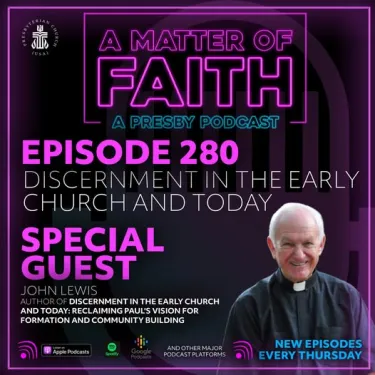
Mission Yearbook: Author and scholar discusses early church discernment

Image The early church, especially the faith communities that Paul started, prioritized moral formation and community building, and employed...