Showing posts with label Liz Theoharis. Show all posts

Wednesday, November 19, 2025

Mission Yearbook: Theoharis: Faith and justice must walk hand in hand

Image
St. John the Baptist by Donatello. Photo by Phil Botha Unsplash
St. John the Baptist by Donatello (Photo by Phil Botha via Unsplash)

When the crowds asked him, John the Baptist knew just what people should do: share, behave and be satisfied.

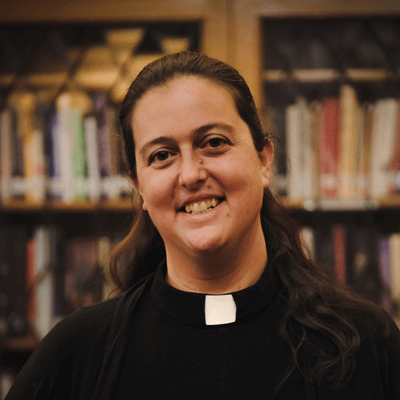
With Luke 3:10-14 as the centerpiece for a worship service at Synod School, the Rev. Dr. Liz Theoharis was ready to preach on one of her favorite Bible passages.

But before she could, the Rev. Brendan McLean, associate pastor at First Presbyterian Church in Tyler, Texas, led a children’s time to illustrate John’s admonition. McLean gave each child who came forward two pieces of candy — one for themselves and one to give “to a new friend” seated in Schaller Chapel. The children quickly and gracefully carried out their assignment.

Theoharis said she’s always appreciated this portion of Luke’s gospel because John is “moving away from the trappings of empire into the wilderness to wake people up, shape them and send them out to fight the good fight.”

“They want to know what they are supposed to do. People in the wilderness have detoxed from the hustle and bustle. … They are ready for something life-giving and liberating, and they are sure curious” about what that might be, she said.

“For years I believed that if people just knew what we could do to abolish poverty and end injustice, we would do it,” said the founder of the Kairos Center for Religions, Rights and Social Justice and the co-founder of the Poor People’s Campaign. “When we knew what made for justice and peace, we would do it.”

“That’s what’s happening in Luke 3,” she said. “It’s about justice, truth and love, and righting wrongs. It’s biblical rather than political.”

Or, “as we say in the movement: When you lift from the bottom, everyone rises.”

She traced the liberation movement of the Bible back to Aaron, Moses and Miriam, who “sang their way out of enslavement. God sent plagues and pandemics that only hardened the hearts of the authorities.” God’s people “entered the Reed Sea, crossed to the other side, and the weapons and chariots of empire were swallowed up,” Theoharis noted.

The people “passed so many liberatory prescriptions, and it continues into the New Testament. Acts 4 reminds us that God’s grace was so powerfully at work there was no needy person among them.”

Today we might be asking ourselves, do I have the capacity to do more? What happens if people push back? “It doesn’t end so well for John the Baptist,” Theoharis said.

“This is where my mom comes in,” she said.

“When I would get serious and questioning, she would remind my siblings and me she wasn’t raising ballet dancers and baseball players,” Theoharis said, which she and her siblings practiced hard at. “She would remind us she was raising children to make a difference in the world.

Her mother would quote Micah 6, especially verse 8. She gave her daughter the stole Theoharis had been wearing all week during Synod School. “My mom ordered her life around fulfilling Micah’s call,” she said, “and told us that’s what we were supposed to do.”

“She knew that working for peace and justice required being connected to people across the world,” Theoharis said. “She knew that doing justice and loving kindness and walking humbly was the true instruction and meaning for our lives. For my mom, faith and moral action were one.”

In this very moment, “there are millions of people doing such good work,” she said. Food banks are supporting hungry people. Churches are providing sanctuary for the unhoused. Women and LGBTQ folks “are getting the health care they need,” she said.

Theoharis repeated the question asked of John: What should we do?

“Are we willing to sign up to be an ambulance driver? To ask others to stand in the gap? To ask them to link arms and say, ‘Here I am, Lord. Send me.’ We should ask ourselves and others, are we ready to get out of our comfort zone, to respond when people come to us and ask, ‘What should we do? What does the Lord require of me?’”

“If you’re able to answer, ‘Do justice, love kindness and walk humbly with your God,’ you’re not alone. Thanks be to God.”

Mike Ferguson, Editor, Presbyterian News Service, ncy (Click here to read original PNS Story)

Let us join in prayer for:

Bequi Jump, Translator, Global Language Resources, Administrative Services Group
Kevin Keaton, Engagement & Church Relations, Church Consultant, Houston, TX, The Board of Pension          

Let us pray:

Lord God, we pray that you make a way to build a healthy ministry. Multiply our limited resources. Help men, women, and youth of the church to recognize the talents and gifts you have given them. May we serve the common good, giving all glory and honor to you. Amen.

Friday, November 14, 2025

Mission Yearbook: Liz Theoharis urges worshipers to let their light shine through justice and hope

Image
Lisa Tarbell photo of Synod School cropped
Synod School attendees sing “This Little Light of Mine.” (Photo by Lisa Tarbell)

Synod Schoolers wrapped up worship one of their meeting evenings by illuminating their cellphones, waving them in the air and enthusiastically singing “This Little Light of Mine.”

That song came from the evening’s Scripture, Matthew 5:14–16, from Jesus’ Sermon on the Mount: “You are the light of the world. A city built on a hill cannot be hid. People do not light a lamp and put it under the bushel basket; rather, they put it on the lampstand, and it gives light to all in the house. In the same way, let your light shine before others, so that they may see your good works and give glory to your Father in heaven.”

“It’s a song I have sung in church and at peace vigils so many times,” said the Rev. Dr. Liz Theoharis, who offered a reflection during each evening worship service. “In this moment in our nation, that song and the Bible verse it comes from has taken on new meaning for me. It is connected to hope and where hope comes from.”

Image
Liz Theoharis leads worship
The Rev. Dr. Liz Theoharis speaks during Synod School worship (photo by Kim Coulter)

In arguments ranging from Manifest Destiny to Christian nationalism, the United States has been depicted as a city on a hill, a beacon of hope, Theoharis said.

“But Jesus isn’t actually talking about the United states here. Neither was he exhorting his audience about the future,” she said. Recall, she noted, that “he had just finished telling how blessed the poor in spirit and the meek are.”

She quoted a fourth-century theologian who maintained Jesus was saying in the Sermon on the Mount that “you are accountable not only for your own life, but for that of the world.”

“To me,” Theoharis said, “it’s a pretty Matthew 25 idea.”

“Nowhere does God say my abundance will trickle down from the rich to the rest,” Theoharis said, drawing cries of “preach!” and “amen!” “Jesus doesn’t tell the unhoused to get a job, nor does he attach work requirements to Medicaid.” Instead, “he traveled the countryside setting up health clinics, never charging a leper a copay.”

Matthew 5 is all about offering “encouragement to those who need encouragement.” Those who hunger and thirst for righteousness are satisfied. Peacemakers are called children of God.

“Asking about how can we change things for the better, we can go back to the beatitudes,” she said. We can also “go to the abandoned, forgotten corners” of the Earth “and hear what they say to us.”

Theoharis recently paid a visit to Christ Lutheran Church in Harrisburg, Pennsylvania. The pastor there, the Rev. Michael Best, “has transformed a resplendent church into a community mission,” Theoharis said. Volunteer dentists pull out rotten teeth and perform root canals, cost-free. Fifty flags hang from the ceiling, representing the people who have found services there. “No one,” she said, “is asked for payment or documentation.”

Best preached a sermon “reminding the congregation they were not alone feeling like exiles in their own land,” she said. Best translated Jeremiah 29, the prophet’s letter to the exiles in Babylon, into what he called “Harrisonburg English,” including, “build your own homes, even one-bedroom apartments. Grow food, even if it’s a tomato plant in a pot. Don’t check out and don’t give up [on the community], for in its healing, you will find your own.”

Theoharis asked those in worship to turn to a neighbor to tell them one thing their faith community is doing that fits with Jeremiah’s letter to those in exile. “I know there are hundreds of stories right here in this congregation,” she said, and those stories got told.

Then congregants reprised “This Little Light of Mine.”

Mike Ferguson, Editor, Presbyterian News Service (Click here to read original PNS Story)

Let us join in prayer for:

Matt Hinkle, Analyst, Information Systems, The Presbyterian Foundation
Patricia Hoehn, Production Clerk, Presbyterian Distribution Center, Administrative Services Group    

Let us pray:

God of mercy and love, may our people continue to grow in faith and numbers, and may your abundant provision be visible to all, to thy praise and glory. Amen.

Tuesday, July 30, 2024

Today in the Mission Yearbook - Without passages on justice for the poor, the Bible is a very slim volume

‘Lift from the bottom, and everyone rises,’ the Rev. Dr. Liz Theoharis says on the ‘New Way’ podcast

July 30, 2024

The Rev. Dr. Liz Theoharis

“I was raised to see that faith and justice were completely linked, and so I just think it’s about living out one’s faith,” says the Rev. Dr. Liz Theoharis, who talks with the Rev. Sara Hayden on the “New Way” podcast about being raised by an activist mother and where she is finding hope and challenge in her own activism and motherhood today.

The “New Way” podcast is a production of the 1001 New Worshiping Communities movement, hosted by Hayden and produced by Rev. Marthame Sanders through Mudeif Productions.

Theoharis is the executive director of the Kairos Center For Religions, Rights & Social Justice  and the co-chair of the Poor People’s Campaign: A National Call for Moral Revival.

“Church was my second home,” says Theoharis, who remembers accompanying her mother every week to North Shore Presbyterian Church in Shorewood, Wisconsin, and to social justice meetings in the city. Theoharis taught Sunday school by age 13 and was ordained a deacon by age 16.

Theoharis encourages people, “especially church folk,” to see solutions beyond charity. Citing Deuteronomy and the Jubilee and Sabbath codes, Theoharis describes the idea in the Bible as “lift from the bottom, and everyone rises.” While she admits that this is the opposite of the logic of our current economic system, there is evidence that it works.

Theoharis estimates that the United States spends $1 trillion annually on children in poverty, because childhood poverty results in more expansive policing and higher incarceration rates later in life. “A $1 investment in ending child poverty saves $7 in the future,” says Theoharis, who calls this “good economics.”

Investments like this are possible through policy changes. She cites the success of the child tax credit offered during the Covid pandemic shutdown. “That raised tens of millions of people up, and 4 million kids who are living below the poverty line were raised above the poverty line with just one social program of a couple hundred dollars a month.”

“When we organize society around the needs and demands of those who have little instead of those who have much, then actually everybody is lifted up,” she adds. The lifting up is both physical and spiritual for Theoharis, who describes how accepting the scarcity mentality and injustice of our current system limits our capacity to envision and worship a God who created enough and supports the thriving of Creation. “It’s literally only a very small percentage of the [wealthiest] 1% who do not benefit. And those folk will lose some resources, but probably they’ll gain more humanity,” says Theoharis.

In the second part of their conversation, Hayden and Theoharis look to the Bible for inspiration regarding anti-poverty programs and healthier societies through tending to the needs and health of the most vulnerable. Theoharis describes the “arc that starts in Genesis and goes all the way to Revelation,” where caring for the poor, welcoming the immigrant, and including and supporting others are the most common themes in the Bible. “There are 2,000 passages in the Bible about justice for the poor,” says Theoharis. “If you cut those passages out, you don’t have a Bible anymore. It all falls apart.” Alongside this imperative to care for the downtrodden and the disenfranchised is a vision of a society living within God’s spiritual and economic blessing.

“There need be no poor people among you,” Theoharis reads aloud from the Jubilee codes of Deuteronomy 15 (NIV), “for in the land the Lord your God is giving you to possess as your inheritance, he will richly bless you, if you only fully obey the Lord your God and are careful to follow all of these commands I am giving you today.”

To live into this vision, Theoharis draws on the communities and movements she’s helped to establish and sustain, such as the Freedom Church of the Poor and the Poor People’s Campaign, but she also leans into daily reflection and practice. Theoharis tells Hayden she reads the Bible daily and asks herself, “What am I doing today and every day to help poor people take action together?”

Beth Waltemath, Communications Strategist, Presbyterian Church (U.S.A.)

Today’s Focus: Rev. Dr. Liz Theoharis, guest on the ‘New Way’ podcast

Let us join in prayer for:

PC(USA) Agencies’ Staff
Martha Miller, Manager, Ministry Education & Support, Office of the General Assembly 
Victor Min, Senior Translator, Global Language Resources, Administrative Services Group (A Corp) 

Let us pray

Loving God, help us to be people of faith, hope and love in a world that needs them desperately. Help us to express your love. Teach us to cling to the possibilities of your transforming power and allow us to help others to do the same. In your loving and welcoming presence, we pray. Amen.

Thursday, February 29, 2024

Today in the Mission Yearbook - The Rev. Dr. Liz Theoharis entreats Presbyterians to organize to end poverty

‘Poor has become a four-letter word,’ opening speaker at Matthew 25 Summit tells capacity crowd

February 29, 2024

The Rev. Dr. Liz Theoharis delivers the opening plenary

during the Matthew 25 Summit. (Photo by Rich Copley)

A powerful sermon by the Rev. Hodari Williams, team leader of New Life Presbyterian Church in South Fulton, Georgia, deftly set the stage for the Rev. Dr. Liz Theoharis, who brought conference-goers to their feet with her opening plenary on the first day of the historic Matthew 25 Summit.

Theoharis, executive director of the Kairos Center for Religions, Rights, and Social Justice at Union Theological Seminary in the City of New York and co-chair of the Poor People’s Campaign: A National Call for Moral Revival with the Rev. Dr. William J. Barber II, is an ordained minister in the Presbyterian Church (U.S.A.) and teaches at Union Theological Seminary.

After Williams poignantly compelled worshipers to see and to value those who are invisible in society, Theoharis rendered the invisible — the poor — manifestly visible through her use of video, her skillful exegesis of Matthew 25 and her bold call to organize to fight and end poverty.

Opening her address by invoking the Rev. Dr. Martin Luther King Jr. “in one of his hometowns just a day after his birthday,” Theoharis cited King’s final work, “Where Do We Go from Here?”

“’The prescription for the cure rests with the accurate diagnosis of the disease,’” she said, quoting King. “‘A people who began a national life inspired by a vision of a society of brotherhood can redeem itself. But redemption can come only through a humble acknowledgment of guilt and an honest knowledge of self.’ We owe it to [King] and to ourselves to take these words seriously.”

After painting a bleak but realistic portrait of the 45 million people currently experiencing hunger and food insecurity in America Theoharis asserted that policymakers in Washington and so many states continue to legislate as if inequality weren’t an emergency.

“When it comes to accurately diagnosing what ails America, let alone prescribing a cure,” she said, “our nation falls short … ‘Poor’ has become a four-letter word.”

Then, turning to the Bible, which she called “the only [media source] that has something good to say about the poor,” and addressing her particular audience of Matthew 25 Presbyterians, she said, “As a people, too often we believe we can claim to be Christian just by going to church on Sunday rather than committing ourselves to the issues to which Jesus committed himself.”

The Rev. Denise Anderson, director of Compassion, Peace & 

Justice in the Presbyterian Mission Agency, introduces the 

Matthew 25 Summit’s first plenary speaker, the Rev. Dr. Liz 

Theoharis. (Photo by Rich Copley)

As Theoharis began to unpack the Scripture that served as the inspiration for the Summit, she corrected a common misperception.

“The first thing we get wrong about Matthew 25 is that it’s a message for individuals,” she said. “Matthew 25 tells us that Jesus is speaking to the nation, perhaps to those with the political and economic power to meet the needs of the people. … The message of Matthew 25 is when a nation acts, the whole society flourishes.”

Theoharis practices what she preaches. As co-chair of the Poor People’s Campaign: A National Call for Moral Revival, she and Barber have helped to build a movement that seeks to revive the message of the original campaign, which declared that racism, militarism and poverty are interconnected evils and must be fought together — and that the poor and dispossessed must lead that fight.

“When we build a movement of those considered expendable, we can end poverty,” she said. “If we refuse to organize our society, our nation, around the needs of the poor, poverty and want will never be banished and we will have abandoned Jesus.”

As she continued to ground her thesis in both Scripture and the actions of the early Church, Theoharis said that organizing a movement today very much looks like the agency of those early Christians and their acts of civil disobedience.

“Both back then and today, we have to figure out how to meet each other’s needs and keep on fighting,” she said. “If we are to follow God’s economy, there is no poverty, there is no hunger, there is no homelessness. The absence of poverty isn’t just an absence of poverty, but the presence of justice.”

Theoharis also invited attendees to visit the website of the Poor People’s Campaign to learn more about and take part in nationwide rallies on March 2 and a June 15 event in Washington, D.C.

Emily Enders Odom, Associate Director of Mission Communications, Presbyterian Mission Agency

Today’s Focus: Rev. Dr. Liz Theoharis, opening speaker at the Matthew 25 Summit

Let us join in prayer for:

PC(USA) Agencies’ Staff
Katie Carter, Manager I, Faith Based Investing, EDO, Presbyterian Mission Agency 
Laura Caruthers, Client Specialist II, Presbyterian Foundation 

Let us pray

Gracious God, we give thanks that you draw us and all Creation toward your perfect will. You work through us to give newness of life to neighbors down the street and neighbors around the globe. We pray for ministries that bring your message of reconciling love to our broken world. Amen.

Mission Yearbook: Different ways of being church are explored on ‘Leading Theologically’ podcast

The primary work the Rev. Catherine Neelly Burton puts in with the Presbytery of Southern Kansas is with the 75% of churches in the presbyt...