Showing posts with label Black History Month. Show all posts

Monday, February 2, 2026

Minute for Mission: Black History Month begins

Image
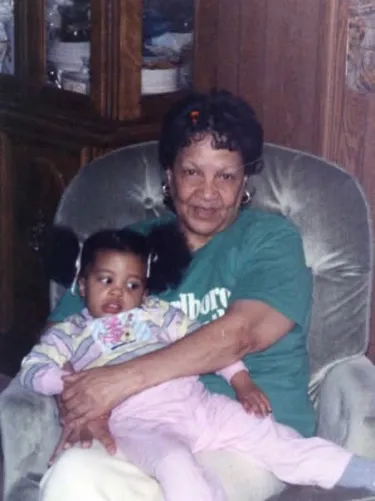
grandmother holding a grandchild
Samantha and her Nana (provided)

Western society has used two great tools to oppress Black people. One, the Bible, spewing oppressive theology to justify first the acts of enslavement, and still to safeguard harmful laws and practices that disproportionately impact Black people. Two, the erasure of Black stories, Black history and the stripping of Black culture. I will not spend the next 600 words declaring what I hope you already know; that we serve a JUST GOD.

So, instead, I will challenge us to take heed to these Scriptures, breathe them, live them, allow them to guide you whenever you have doubt. Consider this piece my attempt to model one small way we can combat systemic racism this Black History Month through telling, celebrating, and honoring Black stories, Black history and Black culture.

My Nana painted the walls of her two-bedroom townhome on the Southside of Pittsburgh the color of Pepto Bismol. She covered every inch with images of Black people from all over the world and called it beautiful. It was. Black people, 140 million in the diaspora, 1.2 billion on the continent, connected by water, land, history and culture. I see them, I feel them. And while we were taught that they should bring us shame, it brings me immense pleasure ... so let us honor it.

Honor our dance. It is both our rebellion and our freedom, connecting us across the diaspora to the souls of our ancestors. Connected by Bomba of Puerto Rico, as our bare feet repel from the land and our bodies move with the vibrations of the drums. Connected by Second Line of Louisiana, as the sound of brass instruments pair with our footwork and we parade down the streets of our homes. Let us honor it.

Honor our hair. Hair, like our melanin, both envied and adored. Our coils, locs and kinks that rise with the sun, act as a reminder of who our people are. We are the people of the Zulu tribe in South Africa rocking our Bantu Knots, the Mbalantu women of Namibia with our box braids and we are every Black girl across the diaspora today. Let us honor it.

Honor our food. The very nourishment of Black people, sustaining us in the darkest of hours and aiding in our joy in the daylight. Recipes, many never written, but inherently known, ingredients derived from the land our ancestors freely farmed. Let us honor it.

Honor our creativity. The holder of culture, embodying the authentic, diverse and unapologetic expression of our people. The hands, the voices, the words, the music, the eye, the rhythm, the style — Augusta Savage. Nina Simone. Raoul Peck. Josephine Baker. Creativity is the pathway to our liberation. Let us honor it.
Image
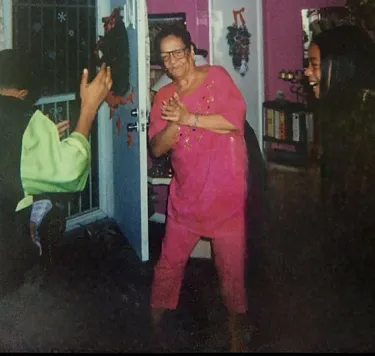
elderly woman dancing
Samantha and her Nana (provided)

Honor our spirituality. It connects us to what has passed, what is and what is yet to come, reminding us of our innate power, reminding us of our divinity. It links us in practice through the pouring out of libations in memory of our ancestors from the ocean shores of Ghana to the street corners of Chicago. It grounds us in collective care and community as the Black churches create safe havens from Selma, through Louisville, to Delaware. It is our knowing that we will win. Let us honor it.

My Nana painted the walls of her two-bedroom townhome on the Southside of Pittsburgh the color of Pepto Bismol. She covered every inch with images of Black people from all over the world and called it beautiful. It was.

Let us honor it today, tomorrow, and all of our tomorrows by telling, celebrating and honoring our stories, Black stories, Black history, Black culture. AND you don’t have to stop there.

  1. Proclaim your commitment to inclusion clearly and often. Concede nothing at the expense of inclusion, at the expense of the safety for the “other.”
  2. Challenge oppressive interpretations of the Word.
  3. Speak out against injustices. Ask how you can stand in solidarity with those that are oppressed. How can you be an ally?
  4. Intentionally seek opportunities for yourself and others to learn and unlearn.
  5. Acknowledge impact. Take/hold each other accountable.
  6. When all else fails, lead with love. Do no harm.

Samantha Davis, Associate for Gender & Racial Justice, Racial Equity & Women’s Intercultural Ministries, Presbyterian Church (U.S.A.)

Let us join in prayer for:

PC(USA) Agencies’ Staff:

Beth Zornick, Vice President, Customer Business Systems, Plan Operations, The Board of Pensions
Princeton Abarahoa,  Associate, African Immigrant Congregational Support, Interim Unified Agency

Let us pray:

To the Most High, Creator of this Universe, Olodumare, Olorun, Mawu, Nzambi Mpungu, Unkulu Unkulu, Chukwu and the many other names by which African peoples have acknowledged you across the stage of human history, we humbly ask that you continue to be with us. Empower us, as you always have, even when we may have been ignorant of your presence. Remind us to honor our spirituality, creativity, food, hair and bodies as the Divine gifts that they are. Be with us this month and every month, from now until the end of time. Ase’ and Ase’-O

Saturday, February 1, 2025

Minute for Mission: Black History Month begins

Samantha and her Nana (provided)
Western society has used two great tools to oppress Black people. One, the Bible, spewing oppressive theology to justify first the acts of enslavement, and still to safeguard harmful laws and practices that disproportionately impact Black people. Two, the erasure of Black stories, Black history and the stripping of Black culture. I will not spend the next 600 words declaring what I hope you already know; that we serve a JUST GOD.

So, instead, I will challenge us to take heed to these Scriptures, breathe them, live them, allow them to guide you whenever you have doubt. Consider this piece my attempt to model one small way we can combat systemic racism this Black History Month through telling, celebrating, and honoring Black stories, Black history and Black culture.

My Nana painted the walls of her two-bedroom townhome on the Southside of Pittsburgh the color of Pepto Bismol. She covered every inch with images of Black people from all over the world and called it beautiful. It was. Black people, 140 million in the diaspora, 1.2 billion on the continent, connected by water, land, history and culture. I see them, I feel them. And while we were taught that they should bring us shame, it brings me immense pleasure ... so let us honor it.

Honor our dance. It is both our rebellion and our freedom, connecting us across the diaspora to the souls of our ancestors. Connected by Bomba of Puerto Rico, as our bare feet repel from the land and our bodies move with the vibrations of the drums. Connected by Second Line of Louisiana, as the sound of brass instruments pair with our footwork and we parade down the streets of our homes. Let us honor it.

Honor our hair. Hair, like our melanin, both envied and adored. Our coils, locs and kinks that rise with the sun, act as a reminder of who our people are. We are the people of the Zulu tribe in South Africa rocking our Bantu Knots, the Mbalantu women of Namibia with our box braids and we are every Black girl across the diaspora today. Let us honor it.

Honor our food. The very nourishment of Black people, sustaining us in the darkest of hours and aiding in our joy in the daylight. Recipes, many never written, but inherently known, ingredients derived from the land our ancestors freely farmed. Let us honor it.

Samantha and her Nana (provided)
Honor our creativity. The holder of culture, embodying the authentic, diverse and unapologetic expression of our people. The hands, the voices, the words, the music, the eye, the rhythm, the style — Augusta Savage. Nina Simone. Raoul Peck. Josephine Baker. Creativity is the pathway to our liberation. Let us honor it.

Honor our spirituality. It connects us to what has passed, what is and what is yet to come, reminding us of our innate power, reminding us of our divinity. It links us in practice through the pouring out of libations in memory of our ancestors from the ocean shores of Ghana to the street corners of Chicago. It grounds us in collective care and community as the Black churches create safe havens from Selma, through Louisville, to Delaware. It is our knowing that we will win. Let us honor it.

My Nana painted the walls of her two-bedroom townhome on the Southside of Pittsburgh the color of Pepto Bismol. She covered every inch with images of Black people from all over the world and called it beautiful. It was.

Let us honor it today, tomorrow, and all of our tomorrows by telling, celebrating and honoring our stories, Black stories, Black history, Black culture. AND you don’t have to stop there.

  • Proclaim your commitment to inclusion clearly and often. Concede nothing at the expense of inclusion, at the expense of the safety for the “other.”
  • Challenge oppressive interpretations of the Word.
  • Speak out against injustices. Ask how you can stand in solidarity with those that are oppressed. How can you be an ally?
  • Intentionally seek opportunities for yourself and others to learn and unlearn.
  • Acknowledge impact. Take/hold each other accountable.

When all else fails, lead with love. Do no harm.

Samantha Davis, Associate for Gender & Racial Justice, Racial Equity & Women’s Intercultural Ministries, Interim Unified Agency

Let us join in prayer for:

  • Katie Dosset, Assistant Trust Officer, Presbyterian Foundation
  • Charlotte Downs, Virtual YAV, Young Adult Volunteer Program, Interim Unified Agency

Let us pray:

To the Most High, Creator of this Universe, Olodumare, Olorun, Mawu, Nzambi Mpungu, Unkulu Unkulu, Chukwu and the many other names by which African peoples have acknowledged you across the stage of human history, we humbly ask that you continue to be with us. Empower us, as you always have, even when we may have been ignorant of your presence. Remind us to honor our spirituality, creativity, food, hair and bodies as the Divine gifts that they are. Be with us this month and every month, from now until the end of time. Ase’ and Ase’-O!


Monday, April 15, 2024

Today in the Mission Yearbook - Bethesda Presbyterian Church in Gaffney, South Carolina, hosts a Black History Month concert

Featured were hymns interpreted by musicians with a flair for contemporary gospel and jazz

April 15, 2024

From left, the Rev. Rafus Camp, pastor of Bethesda Presbyterian 

Church, the Rev. Pat Parker-Reid and the Rev. Lynne Miller, pastor 

of Limestone Presbyterian Church play during Sunday’s concert. 

(Photo by Latanya Carpenter)

A concert offered on a recent Sunday at Bethesda Presbyterian Church in Gaffney, South Carolina, featured musicians who reimagined hymns in contemporary gospel and jazz styles.

People from different Christian denominations and races praised the Lord by singing hymns such as “Amazing Grace,” “Wade in the Water,” and a “What a Fellowship/Pass Me Not” medley.

The musicians who accompanied them performed the songs in a contemporary gospel/jazz style with keyboards, drums, guitar and saxophone. They also performed a reggae version of “Soon and Very Soon” and a heart-wrenching version of the contemporary gospel song “Falling in Love with Jesus.”

From left are the Rev. Rafus Camp, pastor of Bethesda Presbyterian 

Church, the Rev. Pat Parker-Reid, and the Rev. Lynne Miller, pastor 

of Limestone Presbyterian Church. (Photo by Latanya Carpenter)

The idea for the concert was loosely based on a series of recorded concerts organized in 1998 by saxophonist Kirk Whalum. The two-album set, “Gospel According to Jazz,” reinterpreted hymns in a gospel/jazz style.

“The spirit was there. You could feel it,” said Stan Rendleman, one of the saxophone players from Lincolnton, North Carolina, who performed at Bethesda. Reflecting on the concert, he said, “It was the ambiance of the church. The audience was in awe of how musicians took hymns and gave them a new flavor with jazz improvisation” by inventing another melody on the spot.

“We wanted to brighten up the hymns for young people while respecting the traditional hymns that older congregants sang,” said Dr. Kim Smith, who lives in Gaffney, is a member of Bethesda Presbyterian Church, organized the concert, and played saxophone. “We played hymns that everybody knew and tried not to go beyond the first two stanzas.”

Guitarist David Toliver plays guitar during Sunday’s 

concert. (Photo by Latanya Carpenter)

“With the addition of Walker’s Chapel’s quartet from Reidsville, South Carolina, we introduced young people to quartet singing, which is the foundation of gospel, rhythm and blues, and hip-hop,” Smith said.

“It was one of those rare times when Black and white church members from different congregations and denominations gathered to praise the Lord,” said Latanya Carpenter of Gaffney and a member of Bethesda Presbyterian Church.

Attendees included members from Limestone Presbyterian Church and Dunton United Methodist Church, both in Gaffney; Walkers Chapel Presbyterian Church in Reidville, South Carolina; and Mattoon Presbyterian Church in Greenville, South Carolina. Noting the different hues, Carpenter said, “It was about unity and praising the Lord. It was good, it was different. It was unique.”

The Rev. Rafus Camp, the pastor at Bethesda Presbyterian Church, presided over the concert and delivered introductions.

The Rev. Lynn Miller, the pastor at Limestone Presbyterian Church, delivered the opening prayer. The Rev. Pat Parker-Reid, a retired minister from Charlotte, North Carolina, served as host.

“We hope to tweak this concert and send it on the road,” Smith said. “If we can get some grant money, we hope to expand this concert, add commentary to explain the stories behind these hymns, and use music to help musician-starved churches infuse their congregations with young people. Music may be one way to bring them back to church.”

Band members included Kim Smith, Gaffney, South Carolina, alto sax; Stan Rendleman, Lincolnton, North Carolina, tenor sax; Andon White, Bessemer City, North Carolina, keyboards; William Paul Robinson, Lincolnton, North Carolina, drums; and Thelma Harold, Hickory, North Carolina, vocalist.

Dr. Kim Smith is an associate professor in the Department of Journalism and Mass Communication at North Carolina A&T State University in Greensboro, North Carolina.

Today’s Focus: Bethesda Presbyterian Church in Gaffney, South Carolina, hosts a Black History Month concert

Let us join in prayer for:

PC(USA) Agencies’ Staff
Lynne Foreman, Ministry Engagement Advisor, Ministry Engagement & Support, Administrative Services Group (A Corp)  

Valdir Franca, Coordinator, Latin America & the Caribbean Office, World Mission, Presbyterian Mission Agency  

Let us pray

Gracious God, we thank you for Bethesda Presbyterian Church and ask you to bless their efforts as they seek opportunities to not only serve, but also promote harmony. We ask that they commit themselves to your grace and love and continue to glorify you in these efforts. Amen.

Mission Yearbook: Author discusses how churches can change their own stories to hopeful

Mark Yaconelli remembers receiving a story Bible from his grandmother when he was 5 years old.  “It had all the glossy pictures; I especiall...