 Alternative Christmas Market: 2020 has been a year that none of us will forget any time soon. With COVID-19 still causing us problems, Christmas will likely look very d...
Friday, September 4, 2020
Alternative Christmas Market
Alternative Christmas Market: 2020 has been a year that none of us will forget any time soon. With COVID-19 still causing us problems, Christmas will likely look very d...

Medical Missions Live | MBF
 Medical Missions Live | MBF: The Future of Missions - Translating Compassion to Thoughtful Action We are honored that our next guest is one of the foremost leaders i...
Today in the Mission Yearbook - A ministry of intellect and street smarts
The Rev. Fred Hanna’s career switch from microbiologist to pastor of Delaware’s first black Presbyterian church was orchestrated for such a time as this
September 4, 2020

The Rev. Frederick A Hanna Sr. is the third installed pastor at Community Presbyterian Church in New Castle, Delaware. (Photo by Fred Hanna)
As a scientist and science lover since he was a child, Fred Hanna has always found the disconnect between science and religion to be odd, if not utterly horrifying. Once, in his early 30s, he was having a conversation about dinosaurs with a Christian who told him, “Dinosaurs aren’t real. They were made up. Science made them up.”
“Why would you say that?” Hanna asked.
“Because they aren’t in the Bible,” the person said.
“I’m like, ‘Oh, my God, this is why I stayed away from church all my life. You people, you don’t get it.’” There are lots of people like that, he said, people who can’t seem to connect the Creation story to some aspects of evolution.
“I’ve never had a problem connecting my ideas about science to my faith,” said Hanna. “For me, science and the universe prove God, they don’t disprove God.”
Early in his career, Hanna was an analytical microbiologist working at a pharmaceutical plant. As he moved into other positions, his core was always science.
“As a microbiologist, we’d break down an element into its smallest element, and then we’d try to split that open and understand it,” he said. “So, I use that to connect to my way of studying the Scriptures. Scripture had to have some kind of meaning. It had to make sense. It had to follow a pattern. There had to be principles there that my faith was built on, so I would literally ‘mine’ the Scriptures. My love for and affinity for expositional preaching comes from there. It’s line upon line, precept upon precept. It’s very much a scientific discipline that I follow. Even in my study discipline. The whole process is methodical.”
As pastor of Community Presbyterian Church in New Castle, Delaware, where he has served since 2013, Hanna has been leading his congregation in online daily devotions and virtual church worship on Sunday mornings, since the state government limited the number of people who could gather publicly due to the COVID-19 pandemic.
“I think I have an advantage in that I didn’t grow up in the church,” Hanna said. “So, I’m not as attached to the building and these sacred articles as some people are. I’ve always thought that these walls can be a hindrance to God’s work; I might be in the minority as far as that’s concerned, but I don’t have any emotional attachment to being in this space that’s going to allow me to put people’s lives in danger.”
Community Presbyterian, the first African American congregation in New Castle Presbytery, was founded in 1955 by civil rights activist the late Rev. Maurice J. Moyer. The new church building opened in 1998. It is connected to the original building and has a sanctuary that seats 250 people. On a typical Sunday, average attendance is about 90.
While nothing has been typical or average in these days of coronavirus, “the support of our members has been amazing,” Hanna said.
Community Presbyterian Church is proud of its heritage and rich traditions, but it is also striving to be a socially and culturally relevant church “talking to you in language you can understand and about things you can relate to,” Hanna said.
Looking back, Hanna said he noticed something happening in the church world the past couple of years — especially the past year.
“The church has to figure out something other than the old machine, which was ‘butts in the pews, coins in the plate’ and that’s how we fund the ministry. That’s just not going to work anymore, going forward,” Hanna said. “We see that even more now with us being out of our buildings. A lot of churches were already cash-strapped and are even more cash-strapped now.”
Hanna has worked quite a bit in the past couple of years writing grants and trying to be creative in looking at the future of church and ministry.
“My dream,” he said, “is that we’d be able to take our church to a place where we do all the work of ministry through grants, and the plate money kind of takes care of payroll and that’s about it. That’s where I’d like to see us progress to.”
Tammy Warren, Communications Associate, Presbyterian Mission Agency
Let us join in prayer for:
PC(USA) Agencies’ Staff
David Maxwell, Presbyterian Publishing Corporation
Deidra May, Presbyterian Mission Agency
Let us pray:
God of grace, we thank you for the joy of serving you by serving others. Continue to open our hearts to the needs around us, and may we show forth our concern with hearts and hands, so that your children may be showered with your love. Through Jesus Christ our Lord. Amen.
Thursday, September 3, 2020
Today in the Mission Yearbook - Returning to public worship
New PC(USA) resource offers theological and practical guidance for those deciding on when and how to worship in public again
September 3, 2020
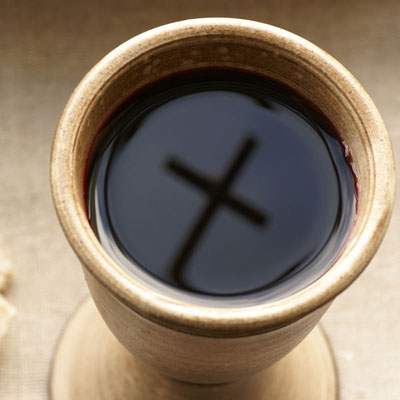 The Presbyterian Church (U.S.A.) has released “Returning to Public Worship: Theological and Practical Considerations” for congregations and leaders in the midst of making decisions about how and when to return to public worship in the wake of the COVID-19 global pandemic.
While strongly encouraging churches to follow state and local rules, regulations and guidelines as minimum standards for reopening, the resource includes:
- a pastoral statement on reentry to public life and worship
- PC(USA) constitutional considerations and risk evaluation
- a provisional timeline for resuming public worship
- general considerations for returning to public worship
- specific guidelines organized around the order of worship
- links to additional resources that may be of interest.
According to the Rev. Dr. J. Herbert Nelson, II, Stated Clerk of the General Assembly of the PC(USA), this resource will help churches make faithful and responsible decisions about reopening for public worship.
“We are a church in transition changing each and every day,” he said, “truly reforming to keep up with contextual realities of our day.”
The Rev. Dr. David Gambrell, associate for worship in the PC(USA)’s Office of Theology and Worship, worked on the resource with the Office of the General Assembly and colleagues in Theology, Formation & Evangelism.
Acknowledging that this is not a one-size-fits-all document, and that sessions and presbyteries will make decisions based on the latest COVID-19 developments and local circumstances, Gambrell said one of his primary concerns was to provide resources to help church leaders think theologically and pastorally about their decisions.
“Congregations and leaders need to use their own wisdom and judgment, informed by other experts, as they prayerfully discern how and when to return to public worship,” he said.
For Gambrell, the critical thing is that PC(USA) congregations continue to be the church, and the body of Christ, in this complicated time as decisions are being made, even as information and understanding about the coronavirus is changing all the time.
“As we move through these challenging times, we must seek the mind of Christ, stay connected, care for each member and honor the gifts of all,” he said.
The offices of Theology and Worship and Christian Formation in the Presbyterian Mission Agency have released a one-page document,” Beginning Conversations for Re-Entry,” for use with both the “Returning for Public Worship” resource and an updated “Remote Faith Formation For the Long Haul with Guidelines for Re-Entry.”
Paul Seebeck, Communications Strategist, Presbyterian Mission Agency
Let us join in prayer for:
PC(USA) Agencies’ Staff
Karl Mattison, Presbyterian Foundation
Jessica Maudlin, Presbyterian Mission Agency
Let us pray:
God in heaven, we thank you for your compassionate presence in our lives and ask that you help us to be a compassionate presence to the people around us, regardless of who we may encounter. In Jesus’ name we pray. Amen.
World Mission Initiative News - Register Now for a Month of Mission Online Series
World Mission Initiative News - Register Now for a Month of Mission Online Series: Registration Now Open! W. Don McClure Lectures and World Mission Initiative's Month of Mission Online Series Jesus Christ a...
Wednesday, September 2, 2020
Today in the Mission Yearbook - Are you ready for hybrid online/in-person worship?
A Presbyterian pastor suggests ‘the truly fresh start you need’
September 2, 2020

The Rev. Richard Hong
Sunday morning has become a stressful time for so many pastors who never imagined that their job would involve being an AV tech. “Hallelujah!” is the cry when the internet connection stays up and Zoom properly connects to Facebook Live. After weeks of working on this, many churches are finally thinking, “We’ve got this down.” And now that it’s working,
it’s time to go to the next step. Here’s what you need to consider.
Virtual worship is still a necessity
You may be reading about churches planning to reopen and doing so in phases. Among the discussions of reopening is how to worship while maintaining “social distancing.” But have you actually considered what 6 feet of distance looks like?
Six feet is farther than you may think — and as churches, we should err on the side of caution. The standard distance between rows/pews is 36 inches. So, sitting in every other row is right at the limit. Laterally, a seat is typically 18 to 22 inches wide. So, you really need four empty seats between unrelated people (let’s presume family members would sit together because they live together).
So, your seating capacity will be extremely reduced if you want to strictly adhere to distancing guidelines. Then it will also be recommended that people in high-risk groups — the elderly, the immuno-compromised, etc. — continue to abstain from attending larger gatherings.
Therefore, when we are allowed to resume in-person worship, it seems clear that a lot of people may continue to watch from home. And if you aren’t ready to continue to serve them online, you could lose them.
Congregations that had not been livestreaming, or those for whom livestreaming was not a focus of their ministry, often completely reworked what they were doing in order to adapt to the online-only environment. The symmetry was that in each case, whether before or after the crisis, the worship experience had been designed with a single focus. The focus that used to be on the in-house congregation became a focus on the at-home congregation.
When reopening happens, you will now have a different challenge: creating a worship experience that is appealing to both the in-church and at-home congregants.
My congregation at First Presbyterian Church of Englewood, New Jersey, has been livestreaming since 2017, and that caused us to have already addressed some of the problems mentioned below:
Camera positions — Is your camera(s) in a place now where it cannot be when in-person worship resumes? If you’re recording with a camera directly in front of the pulpit, that’s not sustainable. You may need new cameras that shoot well from afar. Hint: Keep them at ground level. Don’t put them in the balcony. But the ideal height is about 7 feet. You want a very slight down-angle toward the people.
Sound — If you’re using the native microphone in a smartphone, that isn’t sustainable. You need to run audio from your sound system into the livestream. You may need additional microphones to pick up ambient sound, or sound from instruments such as organs that don’t normally feed through your sound system.
Interaction — Are you doing worship over Zoom, where congregants have a way to interact by doing things such as submitting a prayer request? How will you continue that? We always permitted people to text their prayer requests to a special text message service, though you could just buy an inexpensive smartphone for that purpose.
Giving — Most of you already had or instituted online giving during the crisis. People won’t want to have an offering plate touch 50 hands. How will you receive “contactless offerings”?
If this sounds like starting over, you’re not. You’re starting fresh — this time with a knowledge base that you didn’t have before and congregants who know how to access your services online. You have a head start that you didn’t have before.
Use this time now to reconfigure your worship. If you shift to building a service that is appealing to both people who are in your sanctuary and those who are at home, you will be laying the foundation for a level of connection you could never achieve before. And that could be the truly fresh start you need.
Rev. Richard Hong, Pastor, First Presbyterian Church of Englewood, New Jersey
Let us join in prayer for:
PC(USA) Agencies’ Staff
Brad Masters, Presbyterian Foundation
John Matekovic, Board of Pensions
Brad Masters, Presbyterian Foundation
John Matekovic, Board of Pensions
Let us pray:
Eternal God, thank you for the signs of new life that give us hope during life’s dark times. Amen.
Tuesday, September 1, 2020
Minute for Mission: World Day of Prayer for Care of Creation
September 1, 2020

Universe
The environmental work of the Presbyterian Hunger Program is grounded in Scripture, Reformed theology, General Assembly policies that call us to care for Creation, including the 1990 foundational policy “Restoring Creation for Ecology and Justice,” and prayer.
Sept. 1 is the World Day of Prayer for Creation and the start of the Season of Creation. This day of prayer was established by Patriarch Dimitrios I for the Orthodox in 1989 and was then embraced by major Christian European churches in 2001 and by Pope Francis for the Roman Catholic Church in 2015 when he issued a new statement for the day of prayer, calling for a “renewed and sound relationship between humanity and Creation.”
Today, Christians around the world unite to pray as one. On World Day of Prayer for the Care of Creation, the Hunger Program offers the prayer from Laudato Si’ below.
Jessica Maudlin; Associate for Earth Care Concerns; Presbyterian Hunger Program; Compassion, Peace & Justice
Let us join in prayer for:
PC(USA) Agencies’ Staff
Michael Marrone, Board of Pensions
Rhonda Martin, Presbyterian Women
Rhonda Martin, Presbyterian Women
Let us pray:
A Prayer for Our Earth:
All-powerful God, you are present in the whole universe
and in the smallest of your creatures.
You embrace with your tenderness all that exists.
Pour out upon us the power of your love,
that we may protect life and beauty.
Fill us with peace, that we may live
as brothers and sisters, harming no one.
and in the smallest of your creatures.
You embrace with your tenderness all that exists.
Pour out upon us the power of your love,
that we may protect life and beauty.
Fill us with peace, that we may live
as brothers and sisters, harming no one.
O God …
Bring healing to our lives,
that we may protect the world and not prey on it,
that we may sow beauty, not pollution and destruction.
that we may protect the world and not prey on it,
that we may sow beauty, not pollution and destruction.
Touch the hearts
of those who look only for gain
at the expense of the poor and the earth.
Teach us to discover the worth of each thing,
to be filled with awe and contemplation,
to recognize that we are profoundly united
with every creature
as we journey towards your infinite light …
of those who look only for gain
at the expense of the poor and the earth.
Teach us to discover the worth of each thing,
to be filled with awe and contemplation,
to recognize that we are profoundly united
with every creature
as we journey towards your infinite light …
Subscribe to:
Posts (Atom)
Mission Yearbook: Author discusses ‘Sacred Curiosity’
Image Britney Winn Lee (photo courtesy of Britney Winn Lee) Author Britney Winn Lee literally wrote the book on sacred curiosity, and she ha...

-
Betsy Shirley , the editor in chief of Sojourners , recently told the hosts of “A Matter of Faith: A Presby Podcast” that resilience in diff...
-
Image Photo by Sincerely Media via Unsplash The Rev. Dr. Jermaine McKinley, the co-chair of the Self-Development of People Ministry Team for...
-
For their sixth episode, podcast hosts reach out to a sage and seasoned pair of Presbyterian pastors July 1, 2024 Photo by Benarelexander vi...


