Showing posts with label Armenian Genocide Remembrance Day. Show all posts

Friday, April 24, 2026

Minute for Mission: Armenian Genocide Remembrance Day

Image
Armenian Church Collage

They left their homeland in fear of persecution and ethnic cleansing …

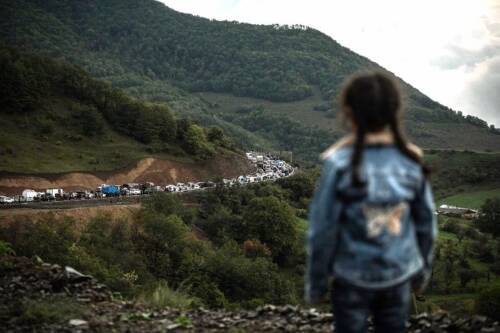
A heartbreaking tragedy is unfolding in Armenia due to continuous greedy and barbaric invasions by Azerbaijan. More than 120,000 innocent people of Artsakh (the Nagorno-Karabakh Republic), who endured starvation for over nine months under severe blockade, have been forced to flee their homeland to save their lives. They left in fear of persecution and ethnic cleansing, abandoning an irreplaceable cultural and religious landscape that includes at least 300 Armenian heritage sites, ranging from exquisite medieval monasteries to historic cemeteries adorned with iconic Armenian engraved cross stones. Recent history, just over the past two years, demonstrates the inevitable risk of dismantling, destruction, and falsification of these cultural and religious sites. 

Their escape was perilous and fraught with danger. Numerous casualties and assaults occurred along the journey until they reached Armenia. Furthermore, young men crossing the border faced the risk of unlawful detention, with many destined to join the list of over 500 missing individuals.

As of Sept. 30, 2023, more than 120,000 forcibly displaced people are in Armenia, all in critical condition: their bodies exhausted from malnutrition and continuous flight, their hope shaken by injustice and betrayal, and their minds severely traumatized by war. Most require urgent medical attention. Once nourished and healed, they will need shelter and employment to care for their families. Later, they will face a range of psychological and physiological consequences from the trauma of relocation and adjusting to a new life they never chose. We can all empathize with their plight to some extent. 

What can we do together now to assist in immediate relief?

  • Provide medication and rehabilitation services to those severely harmed.
  • Provide food and means to cover basic human needs.
  • Provide free physical and psychological treatment to the injured at the Dr. Norayr Baboumian Sevan Rehabilitation Center.

What do we plan to do later as a development program for those who have already settled?

  • Provide knowledge, skills and capital to start small businesses.
  • Involve children and youth in our Education and Civil Society projects to speed up their integration into their new environment.

With approximately 120,000 people affected, including children and the elderly, additional resources will enable us to assist more individuals. We are grateful to be on this noble journey together with you, inspired by your trust and generosity. 

We firmly believe that acts of kindness can change the world, motivating us to remain committed to a mission that supports countries facing dire circumstances. No gift is too small. Whether you contribute to covering daily or monthly basic human needs or support a long-term sustainability plan, we know it will be life-changing for these children and their families. 

For details about the Jinishian Memorial Program, please visit pcusa.org/about-pcusa/agencies-entities/interim-unified-agency/ministry-areas/global-ecumenical-partnerships/mission-networks/jinishian-memorial-program. 

May God bless and protect you and your loved ones.

Eliza Minasyan, Executive Director, Jinishian Memorial Program, Presbyterian Life & Witness

Let us join in prayer for:

PC(USA) Agencies’ Staff:

Christopher Drane, IT Specialist, Information Technology, The Presbyterian Foundation
Angela Duffy, CFO, Trust Services, The Presbyterian Foundation    

Let us pray:

On the day I called, you answered me; you made me bold with strength in my soul (Psalm 138:3). In Jesus’ name we pray. Amen.

Wednesday, April 24, 2024

Minute for Mission: Armenian Genocide Remembrance Day

April 24, 2024

They left their homeland in fear of persecution and ethnic cleansing …

A heartbreaking tragedy is unfolding in Armenia due to continuous greedy and barbaric invasions by Azerbaijan. More than 120,000 innocent people of Artsakh (the Nagorno-Karabakh Republic), who endured starvation for over nine months under severe blockade, have been forced to flee their homeland to save their lives. They left in fear of persecution and ethnic cleansing, abandoning an irreplaceable cultural and religious landscape that includes at least 300 Armenian heritage sites, ranging from exquisite medieval monasteries to historic cemeteries adorned with iconic Armenian engraved cross stones. Recent history, just over the past two years, demonstrates the inevitable risk of dismantling, destruction and falsification of these cultural and religious sites.

Their escape was perilous and fraught with danger. Numerous casualties and assaults occurred along the journey until they reached Armenia. Furthermore, young men crossing the border faced the risk of unlawful detention, with many destined to join the list of over 500 missing individuals.

As of Sept. 30, 2023, more than 120,000 forcibly displaced people are in Armenia, all in critical condition: their bodies exhausted from malnutrition and continuous flight, their hope shaken by injustice and betrayal, and their minds severely traumatized by war. Most require urgent medical attention. Once nourished and healed, they will need shelter and employment to care for their families. Later, they will face a range of psychological and physiological consequences from the trauma of relocation and adjusting to a new life they never chose. We can all empathize with their plight to some extent.

What can we do together now to assist in immediate relief?

  • Provide medication and rehabilitation services to those severely harmed.
  • Provide food and means to cover basic human needs.
  • Provide free physical and psychological treatment to the injured at the Dr. Norayr Baboumian Sevan Rehabilitation Center.

What do we plan to do later as a development program for those who have already settled?

  • Provide knowledge, skills and capital to start small businesses.
  • Involve children and youth in our Education and Civil Society projects to speed up their integration into their new environment.

With approximately 120,000 people affected, including children and the elderly, additional resources will enable us to assist more individuals. We are grateful to be on this noble journey together with you, inspired by your trust and generosity.

We firmly believe that acts of kindness can change the world, motivating us to remain committed to a mission that supports countries facing dire circumstances. No gift is too small. Whether you contribute to covering daily or monthly basic human needs or support a long-term sustainability plan, we know it will be life-changing for these children and their families.

For details about the Jinishian Memorial Program, please visit: presbyterianmission.org/ministries/world-mission/jinishian.

May God bless and protect you and your loved ones.

Eliza Minasyan, Executive Director, Jinishian Memorial Program, Presbyterian Mission Agency

Today’s Focus: Armenian Genocide Remembrance Day

Let us join in prayer for:

PC(USA) Agencies’ Staff
Megan Genovese, Religious New Services Project Archivist, Presbyterian Historical Society 
Alexander Germosen, Cook, Stony Point Center, Presbyterian Mission Agency

Let us pray

On the day I called, you answered me; you made me bold with strength in my soul (Psalm 138:3). In Jesus’ name we pray. Amen.

Monday, April 24, 2023

Minute for Mission: Armenian Genocide Remembrance Day

Jinishian Memorial Program helps Armenians facing poverty and the aftermath of war

April 24, 2023

As part of JMP’s Community Development Program, students debate current political and social issues, as part of the Youth Engaged in Society project. The project aims at fostering democracy and developing civically responsible citizens through the establishment of debate clubs in Armenia. The project began in 2005 and is active in more than 100 schools throughout the regions. (provided)

The men were taken first, and then the women and children were brutalized. Witnesses saw the Euphrates run with blood, and women plunged into the river to escape the terrors of the desert march.

Throughout the Ottoman territories of 1915, Armenian villages were emptied out in a systematic campaign to demean and destroy innocent victims. Although authorities in modern-day Turkey deny this genocide, historians have gathered indisputable evidence of at least 1.5 million Armenians killed and a million more dispersed from their ancient homeland, the world’s first Christian nation.

Today’s Armenia is the size of Maryland, locked among Turkey, Iran, Azerbaijan and Georgia. The fledgling republic fell under communist rule for most of the 20th century, followed by harsh and hungry years of early independence in the 1990s.

For a people who have endured genocide and communism, their faith and their future might seem tenuous. Indeed, many of today’s young adults have been demoralized, unemployed and ready to flee. Yet voices of hope and change began to rise. In April 2018, peaceful protests dismantled the corrupt dictatorship and led to fair elections of new leadership.

In 2020, however, Armenia was faced with yet another humanitarian crisis. Azerbaijan launched surprise missile attacks on Armenia’s enclave — the Republic of Artsakh (Nagorno-Karabakh) — forcing their defense army into war to protect its people and homeland. During the 45 days of war, Azerbaijan, backed by Turkey, conducted horrible war crimes. Consequently, over 2,500 men perished fighting for their homeland, and thousands of civilians, including the elderly and children, were either wounded or killed. Armenia was thus forced to sign a painful ceasefire agreement with Azerbaijan and Russia, giving up a big part of its sacred land with vital Christian heritage (more than 5,000 ancient churches and Christian monuments) to stop the massacre of its people — shaking once again, their spirit of hope. The war brought more than 100,000 displaced people from Artsakh, mainly women and children, who were forced to find refuge throughout Armenia. In the fall of 2022, fighting flared again when Azerbaijan attacked military and civilian targets along the boarders of the Republic of Armenia itself,  as a result of which 204 Armenian servicemen were killed or went missing. A cease-fire put a temporary end to the bloodshed; however, since Azerbaijan still occupies Armenian territory, the constant threat of another attack ways heavy on the shoulders of a nation of people whose perseverance is constantly tested.

The Jinishian Memorial Foundation in Armenia, under Presbyterian Church (U.S.A.) administration, developed a nationwide strategy to empower young leaders. Hundreds of young entrepreneurs in rural areas are using affordable loans to start their businesses and are provided with a coach and technical support. Since 2005, thousands of university students have learned about human rights, the economy, and the environment and have used small grants to tackle local problems. For example, Jinishian support helped one young man channel his expertise in radio electronics into a STEM program for dozens of youths, including many from a local orphanage.

Jinishian’s indigenous, ecumenical teams empower Armenians living in poverty throughout the Caucasus and Middle East. In Armenia, 90% of the projects are designed to promote long-term, sustainable change so people can earn a decent living, grow healthy families and help their communities thrive. The program offers dignity and hope through relief, development and spiritual uplift.

In response to the war in the fall of 2020, Jinishian swiftly expanded its programs to include medication and rehabilitation for wounded soldiers and humanitarian relief for displaced families.

To promote understanding of Armenian culture and history, the Jinishian Memorial Program is hosting a “Discover Armenia Mission Trip” from Oct. 5–14,  2024. The tour focuses on culture, outreach and faith. Join us to connect with Armenia’s people and see faith in action. Details will be forthcoming as we move closer to the date.

Cara Taylor and Gina Guida, Jinishian Memorial Program

Let us join in prayer for:

PC(USA) Agencies’ Staff
Serrita Bell, Director of Communications & Marketing, Presbyterian Foundation
Sharon Bell, 1001 apprentice, 1001 New Worshiping Communities, Presbyterian Mission Agency

Let us pray

On the day I called, you answered me; you made me bold with strength in my soul (Psalm 138:3). In Jesus’ name we pray. Amen.

Sunday, April 24, 2022

Minute for Mission: Armenian Genocide Remembrance Day

April 24, 2022

As part of JMP’s Community Development Program, youth who struggle in school are provided with tutoring by local college students for academic and spiritual uplift.

The men were taken first, and then the women and children were brutalized. Witnesses saw the Euphrates run with blood, and women plunged into the river to escape the terrors of the desert march.

Throughout the Ottoman territories of 1915, Armenian villages were emptied out in a systematic campaign to demean and destroy innocent victims. Although authorities in modern-day Turkey deny this genocide, historians have gathered indisputable evidence of at least a million Armenians killed and a million more dispersed from their ancient homeland, the world’s first Christian nation.

Today’s Armenia is the size of Maryland, locked among Turkey, Iran, Azerbaijan and Georgia. The fledgling republic fell under communist rule for most of the 20th century, followed by harsh and hungry years of early independence in the 1990s.

For a people who have endured genocide and communism, their faith and their future might seem tenuous. Indeed, many of today’s young adults have been demoralized, unemployed and ready to flee. Yet voices of hope and change began to rise. In April 2018, peaceful protests dismantled the corrupt dictatorship and led to fair elections of new leadership.

In the fall of 2020, Armenia was faced with yet another humanitarian crisis. Azerbaijan launched surprise missile attacks on Armenia’s enclave — the Republic of Artsakh (Nagorno-Karabakh) — forcing their defense army into war to protect its people and homeland. During the 45 days of war, Azerbaijan, backed by Turkey, conducted horrible war crimes. Consequently, over 2,500 men perished fighting for their homeland, and dozens of civilians, including the elderly and children, were either wounded or killed. On Nov. 10, Armenia was forced to sign a painful ceasefire agreement with Azerbaijan and Russia, giving up a big part of its sacred land to stop the massacre of its people — shaking, once again, their spirit of hope. The war brought more than 100,000 displaced people from Artsakh, mainly women and children, who were forced to find refuge throughout Armenia.

The Jinishian Memorial Foundation in Armenia, under Presbyterian Church (U.S.A.) administration, developed a nationwide strategy to empower young leaders. Hundreds of young entrepreneurs in rural areas are using affordable loans to start their businesses and are provided with a coach and technical support. Since 2005, thousands of university students have learned about human rights, the economy, and the environment and have used small grants to tackle local problems. For example, Jinishian support helped one young man channel his expertise in radio electronics into a STEM program for dozens of youths, including many from a local orphanage.

Jinishian’s Indigenous, ecumenical teams empower Armenians living in poverty throughout the Caucasus and Middle East. In Armenia, 90% of the projects are designed to promote long-term, sustainable change so people can earn a decent living, grow healthy families and help their communities thrive. The program offers dignity and hope through relief, development and spiritual uplift.

In response to the war in the fall of 2020, Jinishian swiftly expanded its programs to include medication and rehabilitation for wounded soldiers and humanitarian relief for displaced families.

To promote understanding of Armenian culture and history, the Jinishian Memorial Program is hosting a “Discover Armenia Mission Trip” this fall from Oct. 1–10. The tour focuses on culture, outreach and faith. Join us to connect with Armenia’s people and see faith in action.

 Cara Taylor and Gina Guida, Jinishian Memorial Program

Let us join in prayer for:

PC(USA) Agencies’ Staff
Maria Perry, Manager, Synod of Boriquen (PR), Plan Operations, Board of Pensions
Lisa Pesavento, Human Resources Coordinator, Presbyterian Foundation

Let us pray

May the God of hope fill you with all joy and peace as you trust in him, so that you may overflow with hope by the power of the Holy Spirit. (Romans 15:13) In Jesus’ name we pray. Amen.

Saturday, April 24, 2021

Minute for Mission: Armenian Genocide Remembrance Day

April 24, 2021

Refugee girls in Armenia. (provided)

The men were taken first, and then the women and children were brutalized. Witnesses saw the Euphrates run with blood, and women plunged into the river to escape the terrors of the desert march.

Throughout the Ottoman territories of 1915, Armenian villages were emptied out in a systematic campaign to demean and destroy innocent victims. Although authorities in modern-day Turkey deny this genocide, historians have gathered indisputable evidence of at least a million Armenians killed and a million more dispersed from their ancient homeland, the world’s first Christian nation.

Today’s Armenia is the size of Maryland, locked among Turkey, Iran, Azerbaijan and Georgia. The fledgling republic fell under communist rule for most of the 20th century, followed by harsh and hungry years of early independence in the 1990s.

For a people who have endured genocide and communism, their faith and their future might seem tenuous. Indeed, many of today’s young adults have been demoralized, unemployed and ready to flee. Yet voices of hope and change began to rise. In April 2018, peaceful protests dismantled the corrupt dictatorship and led to fair elections of new leadership.

In the fall of 2020, Armenia was faced with yet another humanitarian crisis. Azerbaijan launched surprise missile attacks on Armenia’s enclave — the Republic of Artsakh (Nagorno-Karabakh) — forcing their defense army into war to protect its people and homeland. During the 45 days of war, Azerbaijan, backed by Turkey, conducted horrible war crimes. Consequently, over 2,500 men perished fighting for their homeland, and dozens of civilians, including the elderly and children, were either wounded or killed. On Nov. 10, Armenia was forced to sign a painful ceasefire agreement with Azerbaijan and Russia, giving up a big part of its sacred land to stop the massacre of its people — shaking, once again, their spirit of hope. The war brought more than 100,000 displaced people from Artsakh, mainly women and children, who were forced to find refuge throughout Armenia.

The Jinishian Memorial Foundation in Armenia, under Presbyterian Church (U.S.A.) administration, developed a nationwide strategy to empower young leaders. More than 70 young entrepreneurs in rural areas are using affordable loans to start their businesses; they also have a coach and technical support for five years. Since 2005, thousands of university students have learned about human rights, the economy and the environment and have used small grants to tackle local problems. For example, Jinishian support helped one young man channel his expertise in radio electronics into a STEM program for dozens of youths, including many from a local orphanage.

Jinishian’s Indigenous, ecumenical teams empower Armenians living in poverty throughout the Caucasus and Middle East. In Armenia, 90% of the projects are designed to promote long-term, sustainable change so people can earn a decent living, grow healthy families and help their communities thrive. The program offers dignity and hope through relief, development and spiritual uplift.

In response to the war in the fall of 2020, Jinishian swiftly expanded its programs to include medication and rehabilitation for wounded soldiers and humanitarian relief for displaced families.

To promote understanding of Armenian culture and history, the Jinishian Memorial Program sponsored a “Discover Armenia Tour” in the fall of 2018.The tour focused on culture, outreach and faith. Jinishian looks forward to sponsoring this tour again.

 Cara Taylor and Gina Guida, Jinishian Memorial Program

Let us join in prayer for: 

PC(USA) Agencies’ Staff
Courtney Hoekstra, Presbyterian Mission Agency
Cathy Holland, Administrative Services Group (A Corp)

Let us pray:

God of Light, you hear our cries in the darkness. Deliver the weak from wicked hands and let your mercy bring comfort to the oppressed. Make us instruments of your peace in a world of sin and struggle. In Jesus’ name we pray. Amen.

Friday, April 24, 2020

Minute for Mission: Armenian Genocide Remembrance Day

April 24, 2020
In Gavar, Armenia, a young family runs a fruitful greenhouse business thanks to a micro‐loan and mentorship through
the Jinishian Memorial Program. Photo credit: Hasmik Sevumyan, JMF
The men were taken first, and then the women and children were brutalized. Witnesses saw the Euphrates run with blood, and women plunged into the river to escape the terrors of the desert march.
Throughout the Ottoman territories of 1915, Armenian villages were emptied out, in a systematic campaign to demean and destroy innocent victims. Although authorities in modern-day Turkey deny this genocide, historians have gathered indisputable evidence of at least a million Armenians killed and a million more dispersed from their ancient homeland, the world’s first Christian nation.
Today’s Armenia is the size of Maryland, locked among Turkey, Iran, Azerbaijan and Georgia. The fledgling republic fell under communist rule for most of the 20th century, followed by harsh and hungry years of early independence in the 1990s.
For a people who have endured genocide and communism, their faith and their future might seem tenuous. Indeed, many of today’s young adults have been demoralized, unemployed and ready to flee. Yet voices of hope and change are rising. In April 2018, peaceful protests dismantled the corrupt dictatorship and led to fair elections of new leadership.
 The Jinishian Memorial Foundation in Armenia, under Presbyterian Church (U.S.A.) administration, has developed a nationwide strategy to empower young leaders. More than 70 young entrepreneurs in rural areas are using affordable loans to start their businesses; they also have a coach and technical support for five years. Since 2005, thousands of university students have learned about human rights, the economy and the environment and have used small grants to tackle local problems. For example, Jinishian support helped one young man channel his expertise in radio electronics into a STEM program for dozens of youth, including many from a local orphanage.
Jinishian’s indigenous, ecumenical teams empower Armenians living in poverty throughout the Caucasus and Middle East. In Armenia 90 percent of the projects are designed to promote long-term, sustainable change so people can earn a decent living, grow healthy families and help their communities thrive. The program offers dignity and hope through relief, development and spiritual uplift.
To promote understanding of Armenian culture and history, the Jinishian Memorial Program sponsored a “Discover Armenia Tour” last fall. The tour focused on culture, outreach and faith.
Let us join in prayer for: 
PC(USA) Agencies’ Staff
Monica Buonincontri, Board of Pensions
Cherrie Burch, Presbyterian Foundation

Let us pray:

God, you hear our cries in the darkness. Deliver the weak from wicked hands and let your mercy bring comfort to the oppressed. Make us instruments of your peace in a world of sin and struggle. In Jesus’ name we pray. Amen.

Mission Yearbook: Faith leaders honor retiring Lutheran bishop in West Bank

Local and international faith leaders, including a contingent from the Presbyterian Church (U.S.A.) led by the Rev. Jihyun Oh, Stated Clerk ...