Monday, March 22, 2021

Today in the Mission Yearbook - Washington state church donates land for affordable housing

Co-pastor: ‘We had a heart to house people, and we had a vacant lot’

March 22, 2021

In partnership with Housing Opportunities of Southwest Washington, presently vacant land donated by Longview Presbyterian Church will provide space for 48 affordable housing units. (Rendering provided by Community Frameworks)

With unanimous approval from Olympia PresbyteryLongview Presbyterian Church in Longview, Washington, is donating a 2-acre vacant lot adjacent to the church property to Housing Opportunities of Southwest Washington (HOSWWA). The land will provide space for 48 affordable housing units, about half of which will be reserved for people transitioning from homelessness.

“Our city is going through a housing crisis,” said the Rev. Dexter Kearny, co-pastor of Longview Presbyterian Church along with his wife, the Rev. Liz Kearny. “There is not enough housing for the number of people who live here, and we have a very high homeless population in town. Our session put together a task force with the blessing of the congregation to pursue different options.

“We looked at everything,” Kearny said. “We looked at tiny homes. We looked at selling the land and purchasing a duplex. We looked at trying to build housing ourselves. None of the ideas quite worked.

“What we had was … we had a heart to house people, and we had a vacant lot,” Kearny said. “We did not have the money. We did not have the expertise in running housing. We didn’t want to be landlords, kicking people out or anything like that.”

After years of discernment, in 2018 the affordable housing task force at Longview Presbyterian connected with HOSWWA through a member of the congregation who previously served on the organization’s Board of Commissioners.

Over the past two years, the shared vision and partnership between Longview and HOSWWA has developed into a project that will mix one-, two- and three-bedroom units in six to eight two-story buildings, surrounded by a small courtyard and children’s play area. To provide as much green space as possible, parking will be on the outer edge of the complex. A community building is planned to provide space for resident gatherings, community meetings, tutoring and possibly an early childhood education center.

Longview Presbyterian is next door to an elementary school, another church and some apartments. A major goal of the new housing complex will be to provide stability to people who are currently unhoused, especially young families.

“In our school district, there is a large number of children who are unsafely housed and unhoused completely,” Kearny said.

The missional focus of Longview Presbyterian has been clear to the Kearnys since their first day as co-pastors in 2016. They were welcomed into a sanctuary that had been transformed into a food bank. People who needed food were pushing shopping carts while being assisted by members of the congregation. Early on, the church supported Vietnamese refugee families and challenged the city council when funds were at risk of being taken away from a neighborhood in need. The congregation has fought for many years to eradicate systemic poverty and to lift up the voices of LGBTQ+ individuals.

“These last few years, I have seen our congregation double down on eradicating systemic poverty, while continuing current missions of the food bank and serving meals at the homeless shelter,” Kearny said. “They have started supporting Family Promise, an organization that uses church buildings to host homeless families and help get them into stable housing.”

Longview also supports Hagar’s Community Church, a new worshiping community inside the Washington Corrections Center for Women, and the Cowlitz County Cold Weather Shelter.

Home & Hope, a statewide initiative of Enterprise Community Partners with grant funding from the state of Washington, assisted the project by providing predevelopment feasibility studies. The Community Foundation for Southwest Washington, the City of Longview’s federally funded HOME Investment Partnership Program and others are providing financial support to get the project off and running. Through its Home & Hope initiative, Enterprise works with elected officials, public agencies, educators, nonprofits and developers to turn underutilized tax-exempt sites statewide into developable space for affordable housing and early childhood education centers.

The vacant lot being donated was purchased by Longview Presbyterian Church in the 1970s with the hope of expansion, yet the congregation has remained steady for nearly 50 years. “We sort of felt like now is the time to live into our mission,” Kearny said.

“Hopefully, if all goes well, construction could begin in spring 2022,” lead developer Adam Lee said.

Tammy Warren, Communications Associate, Presbyterian Mission Agency

Let us join in prayer for: 

PC(USA) Agencies’ Staff
Lemuel Garcia-Arroyo, Presbyterian Mission Agency
Debbie Gardiner, Presbyterian Mission Agency

Let us pray:

Holy Lord, may our words, our work and our hearts welcome all your children into the broad and beautiful kingdom of God. Amen.

Sunday, March 21, 2021

Today in the Mission Yearbook - Churches discern creative approaches and start new traditions

A ‘rummage sale’ has begun

March 21, 2021

First Presbyterian Church of Hightstown, N.J., took its breathtaking indoor displays outdoors. Here, Pentecost “flames” pouring out of the building become a powerful symbol for the church today. Courtesy of First Presbyterian Church

Phyllis Tickle, the late author and founding editor of the religion department at Publishers Weekly, once wrote that every 500 years the church experiences a “massive upheaval,” where old ideas are rejected and new ones emerge. Tickle used the analogy of a “500-year rummage sale” to illustrate how the church enters into a period of cleaning house, deciding what to keep and what to toss in order to make way for the new thing God is doing.

And, a great rummage sale has begun as Presbyterian congregations grapple to make sense of the changes the pandemic has brought not only to Sunday morning worship, but to what it means to be a Christian in this new world.

While it’s too early to tell what the long-term effects of the pandemic will be on churches, congregations are discerning what traditions to keep and what to toss, and what innovations are here to stay. For congregations who are dipping their toes back into the waters of in-person worship, there are noticeable changes. At Putnam United Presbyterian Church in Putnam, New York, the risk of spreading the coronavirus through congregational singing has led to a new worship experience that session plans to continue even when communal singing returns. That is incorporating an extended period of silence after the preacher’s sermon. Traditionally, after the preaching of the Word, the congregation would sing a hymn. But in the time of COVID-19, a holy space for stillness was presented to — and welcomed by — the congregation.

Churches are also finding creative ways to take the message out to the community that while the building might be closed, the church is still alive and well. One way to do that is to literally use its outdoor space as its billboard.

Since 2011, First Presbyterian Church of Hightstown, New Jersey, has been wowing worshipers with its art installations that have taken the traditional sanctuary from beautiful to breathtaking. The six-member Art Ministry team creates decorative displays that enhance the worship experience. In the past, yards of orange, red and yellow fabric were draped around the sanctuary, with the remaining yardage pooled at the front of the pulpit, representing a burst of Pentecost flames.

It was a sight to behold in past years, but one that would not be seen by anyone in 2020. That’s when the art team decided to create a Pentecost display outdoors.

A wooden cross wrapped in chicken wire, allowing for prayers to be written on paper and attached to it, would have Pentecost “flames” draped around it. Wanting to achieve the feeling of movement, it was decided that the fabric should be draped from the very top of the church building and have it cascade out and down to the ground.

When the team was done, they were in awe as to what had just been created. Before their eyes was the most perfect symbolism of Pentecost — God’s mighty and fiery Spirit pouring out of a building and onto the streets below.

“It was like the very first Pentecost with the Spirit descending upon those gathered and leading them out to share the good news,” said Anne Willis, a member of the art team. And share the good news First Presbyterian of Hightstown has done, with the “feedback from the community being overwhelming.”

In July, when the Pentecost installation was disassembled — as the “fabric was fading,” Willis said — a person was found kneeling in prayer at the cross.

Willis is excited with this opportunity to create eye-catching art displays outdoors. The team has talked “for years” about doing more installations beyond the sanctuary.

“It’s something we never got around to. The pandemic has made it all happen,” said Willis.

 Donna Frischknecht Jackson, Editor, Presbyterians Today

Let us join in prayer for: 

PC(USA) Agencies’ Staff
David Gambrell, Presbyterian Mission Agency
Jeremy and Luta Garbat-Welch, Presbyterian Mission Agency

Let us pray:

O God, who transforms seeds of faith into a great garden of blessings, we thank you for the witness of congregations that see beyond their limits to the unlimited resources you provide. Though Christ our Lord we pray. Amen.

Saturday, March 20, 2021

Minute for Mission: Mr. Rogers Day

March 20, 2021

I have always wanted to have a neighbor just like you
I’ve always wanted to live in a neighborhood with you
So let’s make the most of this beautiful day
Since we’re together, we might as well say
Would you be mine?
Could you be mine?
Won’t you be my neighbor?  — “Mister Rogers’ Neighborhood” theme song

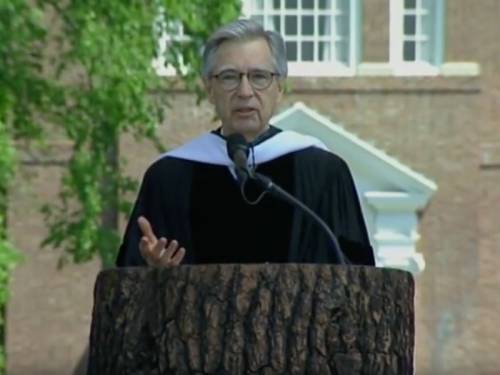
When I close my eyes, I can see Mr. Rogers changing his shoes, putting on his sweater and singing … “Won’t you be my neighbor?” Growing up in the early 1970s, “Mister Rogers Neighborhood” was one of several PBS shows my younger sister and I watched. And when I reflect now on over 30 years of educational ministry, it’s easy to see how he influenced me, whether through his gentle, direct, respectful voice or the use of puppets and music or his emphasis on neighborliness, inclusion and peacemaking.

Fred Rogers was, after all, an ordained minister of word and sacrament for the PC(USA) and is a notable public figure whose work around peace and reconciliation are worth remembering. Rogers was also a pioneer in the world of Christian education and formation of young children. March 20 was his birthday and the day that the PC(USA) has chosen to highlight all we can learn from his work. Find ideas and resources for communities to engage in Mr. Rogers Day at pcusa.org/formation

Miatta Wilson, Mission Specialist, Office of Christian Formation, Presbyterian Mission Agency

Let us join in prayer for: 

PC(USA) Agencies’ Staff
Louisa Gallup, Presbyterian Mission Agency
Marissa Galvan-Valle, Presbyterian Publishing Corporation

Let us pray:

Gracious God, give us listening ears, gentle hearts, inquiring minds and feet ready for the work of peacemaking and reconciliation lived out so well by your servant Fred Rogers.  Amen.

Friday, March 19, 2021

Today in the Mission Yearbook - Crestfield camp thrives through community partnerships

Creativity is key to providing camp ministry in a pandemic

March 19, 2021

In a normal year, Crestfield Camp & Conference Center would be the summer home for more than 600 youth campers and nearly 3,000 conference and retreat attendees. But 2020 was anything but normal. Christian camps throughout the country had to rely on outside-the-box thinking for survival through the summer. For Crestfield’s executive director, Gene Joiner, survival mode came head-on: He joined Crestfield in January 2020, and in mid-March the pandemic hit, effectively shutting down the facility.

As an 18-year Christian camp veteran, Joiner is familiar with the pace and nuance of the yearly camp schedule. But the shutdown eliminated that rhythm and normalcy, and he found himself with a lot more reflection time on his hands.

“Camp people get into a rhythm depending on the time of year,” said Joiner. “We were working hard visiting churches and trying to get people excited about camp. Things were going great. Then the pandemic hit, and everything shut down in an instant. That was tough; because we were so new to Pennsylvania our family didn’t have a core support group. But I have four kids who are camp kids, so we had evening conversations about rebuilding the camp experience from the ground up — essentially starting over.”

Set in western Pennsylvania near Slippery Rock and north of Pittsburgh, Crestfield’s origins date back to 1947. It was created to serve the families of Pittsburgh Presbytery, a covenant relationship that still exists today. Its core mission is to create an environment for people to encounter Christ. But according to Joiner, one result of the pandemic was the realization by camp staff and its board of directors that their biggest mission now was to help neighbors. And as Joiner talked to families, he saw a huge need for moms and dads to have a break.

“We decided to provide a day camp experience for kids to be outside and do social things. We’d never done a day camp before, so we launched the first week with four kids,” said Joiner. “By the end of the summer we served more than 165 kids. It grew by word-of-mouth, people sharing their experience from the week prior. We stepped out on faith and God blessed us immensely with an ability to be significant to our neighbors during a time that we were officially closed for the summer.”

As schools in Pennsylvania and across the country began their year, many families transitioned to online learning or nontraditional instruction, which created a new set of obstacles for parents. During the summer, Joiner sustained his conversations with parents about their continued needs, many centered around new school norms. Through Crestfield’s Online Learning Center program, parents who are home schooling, or whose kids are doing online learning through their schools, can bring their kids to Crestfield for a day of supervision. The camp provides a block of time in the morning and another during the afternoon for students to work on their online assignments. There is another block of time set aside for kids to do camp activities.

“Virtual learning is a reality of what kids are doing, so as a camp we decided to provide a safe space and give moms and dads an opportunity to do their daily work or spend time with their younger children,” said Joiner. “We’re just trying to extend our day camp success and significance into our off season.”

Joiner notes that all the programs are following the new social norms and physical distancing rules, and he’s ecstatic that there are new families on Crestfield’s campus who’ve never experienced what Crestfield has to offer — even if the short-term rewards are minimal.

“There isn’t a lot of revenue in what we’re doing now,” admits Joiner. “But the influence we can create by having people on our site is priceless. I believe we can turn this into phenomenal growth for our camping ministry. It’s a time of new self-discovery; it’s a time to reinvent the wheel and push some boundaries. This is also a tough time, but let’s be excited to glorify God and be successful within this opportunity.”

Scott O’Neill, Communications Strategist, Presbyterian Mission Agency

Let us join in prayer for:

PC(USA) Agencies’ Staff
Stephanie Fritz, Presbyterian Mission Agency
Rosemary Gallagher, Board of Pensions

Let us pray:

Gracious Lord, you alone are the head of the church. We praise you that your Holy Spirit is alive and moving through the body. We thank you for the love given and the gifts shared by our camp and conference centers and their communities. May we always give you the glory and honor in all we do. Amen.


Thursday, March 18, 2021

Today in the Mission Yearbook - Day of Service brings out volunteers for cleanup and conversation

Faith communities in Buffalo gather for Week of Action finale

March 18, 2021

Members of Lafayette Avenue Presbyterian Church and Westminster Presbyterian Church, which are both in Buffalo, New York, visit Martin Luther King Jr. Park to hold a cleanup for the Day of Service, the final event in the recent Presbyterian Week of Action. (Contributed photo)

The Presbyterian Church (U.S.A.)’s recent Week of Action concluded with a Day of Service on a Sunday that prompted youths and families from two churches in Buffalo, New York, to gather for a park cleanup.

People from Lafayette Avenue Presbyterian Church and Westminster Presbyterian Church converged at Buffalo’s Martin Luther King Jr. Park after following various events that the PC(USA) hosted or streamed online for the Week of Action, an international effort to affirm the value of Black lives.

To close out the week, churches and mid-councils were encouraged to engage in public service projects of their own choosing.

For example, First Presbyterian Church of Allentown, Pennsylvania, collected gift cards for the Promise Neighborhoods of the Lehigh Valley. People could donate online or drop off cards at the church to benefit volunteers of the partner organization, which works to improve children’s lives and transform neighborhoods.

In New York, pastor Micah Nutter Dowling of Lafayette Avenue Presbyterian Church explained the congregation’s participation this way: “We looked at this Day of Service that the PC(USA) called us to as an opportunity to once again be in solidarity with our siblings of color that are disproportionately affected by forms of violence and oppression every day.”

The intended goal as people of privilege was to “not just lament but repent and that means to turn and move (in) a different direction,” Nutter said.

The park visit and Earth-care initiative was a joint project with his partner, the Rev. Katelyn Nutter Dowling, who brought members of the young adult ministry of Westminster, where she is an associate pastor. Lafayette’s youth ministry also participated, along with the church’s newly formed social justice committee and the Buffalo Olmsted Parks Conservancy.

“We hope to do more events like that in the future,” said Micah Nutter Dowling, who found the park visit to be eye-opening for both himself and other participants who were unfamiliar with MLK Jr. Park or being in African American spaces.

The park is on the east side of the city, which currently and historically is an area that has had great poverty, he said, so it was assumed that having a group come through to pick up litter would be helpful. But as it turned out, the park is “absolutely gorgeous” and beloved by the community, with school groups, volunteers and neighbors using their time, effort and energy to keep the park tidy.

So, the park visit ended up “being an educational experience of just presence, of just being there and experiencing the beauty of people enjoying their Sunday afternoon,” he said.

The group was able to collect a few bags of trash along the periphery of the park. But overall, “it was a great lesson for us in really what’s needed right now,” he said. “Yes, picking up (litter) is great … but maybe what’s needed even more is relationship.”

The event initially was intended primarily for youth and young adults. But families also chose to participate, making it an intergenerational gathering and an opportunity to talk with children about what it means to embody welcome, he said.

“We had conversations in the park that we hope are just the springboard for a lot more interconnectedness with the beautiful park and the communities that are right by our churches but yet we allow divisions in our society to create what the lines will be in church,” he said.

Being willing to go into minority communities and interact with residents is important because privilege is a blind spot, he said.

“There’s so many voices in our head of stories and narratives,” he said, “and when we actually get in relationship those things are refuted.”

Recordings of various Week of Action events, including a Town Hall, Bible studies and rally, can be found here.

 Darla Carter, Communications Associate, Presbyterian Mission Agency

Let us join in prayer for: 

PC(USA) Agencies’ Staff
Mark Frey, Board of Pensions
Brian Frick, Presbyterian Mission Agency

Let us pray:

Gracious and wonderful God, we thank you for the magnificent world you created. We thank you that you have made us a people who seek relationships with others and with you. Keep us ever mindful of your presence among us. Amen.

Wednesday, March 17, 2021

Today in the Mission Yearbook - ‘Keep singing the Matthew 25 vision’

Asking for what is fair and just for all: It’s time to take a stand

March 17, 2021

The Rev. Dr. David Gambrell, associate for worship with the Office of Theology and Worship, preached during Triennium Thursday on “Prone to Wander.” (Photo by Rich Copley)

The bold vision and invitation of Matthew 25:31-46 to be the hands and feet of Jesus, serving people who are hungry, oppressed, imprisoned or poor, is awakening compassionate faith to new possibilities in the Presbyterian Church (U.S.A.).

Now that faith has been set to music in a hymn, “Jesus Be With Us,” with text and tune by the Rev. Dr. David Gambrell, associate for worship in the Office of Theology and Worship, with singing and musical arrangement by Phillip Morgan, director of music at Central Presbyterian Church in Louisville.

“The idea to write the hymn came from Phillip,” Gambrell said, explaining that Morgan had asked Gambrell if he had considered writing a Matthew 25 hymn. This question prompted Gambrell to write the hymn and send it to Morgan for his feedback. The following day, Gambrell said, “to my surprise and delight, Phillip sent back this beautiful recording.”

The refrain is based on Matthew 1:23, “and they shall name him Emmanuel, which means, ‘God is with us,’” and Jesus’ closing words in Matthew 28:20, “I am with you always, to the end of the age.”

“I wrote the hymn in a ‘gospel’ style because I want Presbyterians to remember that eradicating systemic povertydismantling structural racism and building congregational vitality is ‘gospel work’ — how we proclaim and respond to the good news of Jesus Christ,” Gambrell said. “My prayer is that the hymn will help congregations and mid councils keep singing the Matthew 25 vision as they worship and work in the world.”

Morgan recognized the need for a Matthew 25 hymn while he was working on long-range music planning for Central Presbyterian Church. He noticed the November lectionary devotes three weeks to Matthew 25: Nov. 8 (Matthew 25:1-13), Nov. 15 (Matthew 25:14-30) and Nov. 22 (Matthew 25: 31-46). This led to searching for music to incorporate into worship, and then realizing options were few and far between.

“I fired off an email to David and said, ‘Wouldn’t it be cool if …’ and hours later there was this hymn in my inbox covering each of the points of Matthew 25,” Morgan said.

As he sat down to play and record it, Morgan accidentally changed a few of the chords, which Gambrell liked better. “So, we’ll call it the work of the Holy Spirit,” Morgan said, “But actually, some of it was an accident of my sight reading.”

Central Presbyterian, a More Light congregation welcoming all of God’s people, has accepted the Presbyterian Church (U.S.A.)’s Matthew 25 invitation. It seemed only natural, Morgan said, since the church has been working to dismantle structural racism and eradicate systemic poverty for more than 30 years, particularly as these areas relate to equity in education. The church is located in one of the poorest ZIP codes in the nation and is across the street from Simmons College of Kentucky, which is among the nation’s registered Historically Black Colleges and Universities.

During the COVID-19 pandemic, Central Presbyterian Church has been feeding an average of 100 people each Wednesday during its socially distanced walk-through lunch line. The church has discovered that working on issues of racism and poverty has given it new vitality, the first focus area of being a Matthew 25 church.

Morgan is a member of Presbyterian Association of Musicians’ executive board. He has served on faculty and planning teams for the Montreat Music and Worship Conference and has led the choir at Presbyterian Youth Triennium. He is also a member of the Louisville Chamber Choir and has performed as a soloist with the Louisville Orchestra, the Louisville Choral Arts Society and the Kentucky Opera.

Gambrell was co-editor (with Kimberly Bracken Long) of the latest edition of “The Book of Common Worship” (WJKP, 2018) and is author of “Breathing Spirit into Dust: Fifty Hymn Texts” (GIA, 2015) and “Presbyterian Worship: Questions and Answers” (WJKP, 2019).

The author/composer and arranger/performer grant permission for use of the hymn and recording in worship, online or otherwise. For other uses, please consult the copyright holders.

To learn more about becoming a Matthew 25 church, click here. The hymn “Jesus Be With Us” is included among the Matthew 25 resources.

Tammy Warren, Communications Associate, Presbyterian Mission Agency

Let us join in prayer for: 

PC(USA) Agencies’ Staff
Kathy Francis, Presbyterian Mission Agency
Penny Franklin, Presbyterian Foundation

Let us pray:

Almighty God, give us grace that your knowledge may become ours. May we grow in faith and bear fruit worthy of your people, living and growing in the Holy Spirit, both now and forevermore. Amen!

Tuesday, March 16, 2021

Today in the Mission Yearbook - God’s vineyard parable exposes privileges taken for granted

Asking for what is fair and just for all: It’s time to take a stand

March 16, 2021

Christian Wilhelm Ernst Dietrich, “Parable of the workers in the vineyard,” (ca. 1790)

In Matthew, Jesus tells the story of a landowner needing workers for his vineyard. Before dawn, he strikes a deal with some workers, promising to pay a full day’s wage for a full day’s work. Apparently needing more help, he finds more laborers midmorning, assuring them that they’ll also be paid fairly. By lunchtime, he’s returned for more help. He goes out again midafternoon for workers and then again, with only an hour before closing time. At dusk, the last to begin working are the first to get paid — and instead of receiving the rate for one hour, they receive enough for a full day. They are ecstatic! The only people happier are those early birds — the first workers of the day — whose imaginations go wild dreaming about what they might do with the pay they will be getting. They might also be thinking that they’ll never show up for work that early again. Their dreams crash when they get paid what they had agreed to at the breaking of dawn’s first light. They shout, “It’s not fair!”

If we’re honest, we shout it with them. Whether it’s Jesus’ skill as a storyteller or our proclivity to feel aggrieved, we usually place ourselves with the early-to-rise workers in this story, thinking of the times when we have been treated unfairly. This passage reminds me of my first post-college job when a new graduate got paid the same as me, though I had already been working for two years. Let’s talk about fairness.

A few years ago, when teaching on this passage, I asked others to share a time when they had been treated unfairly. I expected stories like mine, but the tone quickly shifted when an immigrant from Nigeria spoke about his move to Oklahoma for college in the mid-1970s. The third week in his new home, he visited an all-white (non-PC[USA]) congregation where the pastor told him, “Your kind is not welcome here.” Hearing his experience, I realized instantly how privileged my perceived injustice was over my already-generous pay in my first job. I also saw the parable in a new light. I realized that in America, we who are white are often the late afternoon workers, receiving a metaphorical full day’s wage without having to put in all the work required by people of color. Let me explain.

One of the far too many unjust murders of African Americans last year was that of Ahmaud Arbery, who was out jogging when white vigilantes shot him. In the days following his killing, an article in the Chicago Tribune noted, “Arbery’s shooting death — and fears of racial profiling — weighs heavily on Chicago’s Black running community.” The article described all the precautions these runners take to stay safe. We might say they’re like the parable’s 6 a.m. workers, putting in a lot of work to get the payoff they want running a few miles without danger.

Meanwhile, like the parable’s 5 p.m. workers, I don’t have to put in much work to get the same payoff: running a few miles without danger.

The Belhar Confession, one of our denomination’s statements of faith, reminds those who are in the category of God’s late afternoon workers — showing up, doing half the work and getting full pay — that, “We believe that the church must therefore stand by people in any form of suffering and need, which implies, among other things, that the church must witness and strive against any form of injustice, so that justice may roll down like waters, and righteousness like an ever-flowing stream.”

We are called to live faithfully, joining Christ in service to those who are having to take precautions we would never think of just to live.

Chip Hardwick, Transitional Synod Executive of the Synod of the Covenant

Let us join in prayer for: 

PC(USA) Agencies’ Staff
Sarah Foreman, Presbyterian Publishing Corporation
Valdir Franca, Presbyterian Mission Agency

Let us pray:

Living God, you are a God on the move and you call us to follow you. Give us courage that we may share your love and grace with others. Help us to hear your call and respond in faith by bearing good fruit and growing in the knowledge of you. Amen.

Mission Yearbook: Seminary offers free and low-cost resources for worship

Image Garrett-Evangelical Theological Seminary For the past five years, I’ve lived in coastal Maine and have brought queer theology sermons ...