Friday, March 4, 2022

Minute for Mission: World Day of Prayer

March 4, 2022

“Informed prayer and prayerful action.”

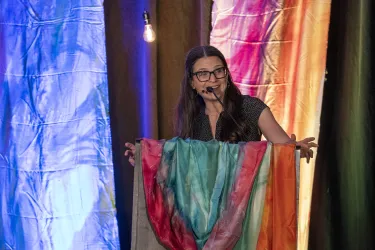
World Day of Prayer (WDP) is a global ecumenical movement, celebrated in more than 170 countries, led by Christian women who welcome all to join in prayer and action for peace and justice. World Day of Prayer is celebrated annually on the first Friday of March; for 2022 that is today, March 4.

This year’s theme, “I Know the Plans I Have for You,” was selected by the WDP Committee of England, Wales and Northern Ireland, which also prepared this year’s worship materials.

As people of faith, we know that our lives matter to God and that God is with and for us. “I know what I’m doing. I have it all planned out—plans to take care of you, not abandon you, plans to give you the future you hope for.” (Jeremiah 29:11, TMG). Jeremiah’s message — first shared with the exiles in Babylon who were in a place of uncertainty and suffering — continues to resonate with us today. World Day of Prayer 2022 invites each of us to reflect on God’s love for us no matter our circumstances. Our most loving response to our loving God is to reflect God’s love to others: never abandon them, care always about their plans and hopes, and work to protect their well-being through care, concern and advocacy.

To learn more about World Day of Prayer and order resources, visit wdp-usa.org.

Carissa Herold is marketing associate for Presbyterian Women in the Presbyterian Church (U.S.A.) Inc.

Let us join in prayer for:

PC(USA) Agencies’ Staff

Gabriella Lisi, 1001 Apprentice, 1001 New Worshiping Communities, Presbyterian Mission Agency
Sara Lisherness, Director, Compassion, Peace & Justice/Interim Director, World Mission, Presbyterian Mission Agency

Let us pray

God of our whole lives, thank you for being with each of us every day. Even in times of suffering, loss or uncertainty, we know that we are never alone. We give thanks and promise to strive to reflect your love to our neighbors. Amen.

Thursday, March 3, 2022

Today in the Mission Yearbook - ‘It’s not rocket science’

Taking the mystery out of understanding church finances

March 3, 2022

The Rev. Dr. Brandi Casto-Waters (Photo by Gregg Brekke)

The Rev. Dr. Brandi Casto-Waters learned a lot in seminary, but, she admits, not everything.

For example, she didn’t have a full understanding of the effects of asbestos until she served at a church that had some that had to be removed. She said she didn’t know how problematic termite infestation could be until the church’s sanctuary was being tented and treated for it.

And, she thought the bankers and accountants on her session would handle her church’s finances and money matters.

She described her first church finance meeting as “terribly boring.” During it, there was talk of “projected revenue” and the finance meeting conversation led her to believe it was her responsibility to see revenue increase.

“I was supposed to convince people to give more so that we could spend more,” she said, adding she remembered thinking her call was misunderstood.

Casto-Waters, minister at Faith Presbyterian Church in Cape Coral, Florida, spoke at the annual ecumenical Stewardship Kaleidoscope, a conference on stewardship and generosity held in the Cincinnati area.

She remembered thinking, “I was here to do ministry,” she said. “God called me to proclaim the good news, visit the sick, and do justice and love mercy and walk humbly. I did not want to be an expert in church finances.”

She realized she didn’t have a choice so she “embraced the learning opportunity” before her. And, thanks to some elders with financial backgrounds, she learned how to understand the reports, spreadsheets and budgeting process.

And once she learned it, she taught others.

She equipped the saints by “teaching them the mysteries of church finance,” she said, adding, “Church finances should not be mysterious.”

Every officer training class should offer one segment on church finances and how to understand church financial reports.

Understanding the reports is important because transparency is essential when it comes to church finances.

She shared the story about a church secretary who had embezzled hundreds of thousands of dollars over a number of years. She used credit cards, stole from the offering plate and forged checks.

Casto-Waters told the story to emphasize that fiscal transparency and responsibility are “essential to the life and health of the congregation,” she said.

She suggested churches use two books in officer training: J. Clif Christopher’s book “Not Your Parents’ Offering Plate,” and his subsequent book, “Whose Offering Plate Is It?”

She suggested pastors talk about money and generous giving and encourage their congregations to ask questions about church finances.

And she encouraged churches to hold their financial reports next to their mission statement to make sure the two are complementary.

For example, if a church’s mission statement says it values youth ministry, is there a line item on the budget for it? If the church values mission partnerships, why is less than 1% of the annual budget dedicated to it?

“The church’s annual budget should support the church’s mission and ministry,” Casto-Waters said. “That report tells the story of what we value and how we’re managing the resources that God has entrusted to our care.”

Offering gratitude for what is entrusted to our care is good Reformed theology, she said. Our lives are to be lived as a grateful response to God. We are called to give with glad and generous hearts, she said.

Casto-Waters told the story of a young boy who, after sitting with other children at the front of the church for a children’s message in worship, was heading off to children’s church. He suddenly realized he’d forgotten to put his coins in the children’s offering jar. He ran back to the front of the church, emptied his pocket and skipped out of worship.

The story of the boy was shared as a call to the offering at another church at another time. And, after the ushers had collected the offering and the doxology was played and the ushers were on their way to return the offering to the front of the church, the ushers skipped all the way down the center aisle.

One of the other things she didn’t learn in seminary?

“An invitation to be a joyful giver has to be central in worship,” she said.

 Sally Scherer for the Presbyterian Foundation, writer and communications consultant based in Lexington, Kentucky. She is a member of Second Presbyterian Church, where she is an elder, deacon and a member of the choir.

Let us join in prayer for:

PC(USA) Agencies’ Staff
Mary Lidtke, Administrative Assistant, Presbyterian Disaster Assistance, Presbyterian Mission Agency
Lora Limeberry, Accountant, Financial Reporting, Administrative Services Group (A Corp)

Let us pray

O God who transforms seeds of faith into a great garden of blessings, we thank you for the witness of congregations that see beyond their limit to the unlimited resources you provide. Through Christ our Lord we pray.  Amen.

Wednesday, March 2, 2022

Today in the Mission Yearbook - Praying intimately, with expectation and power

8 Habits of Evangelism author says prayer is the only way we can live like Jesus

March 2, 2022

Dr. Tom Bagley, Jr.

As he began to talk exclusively with unchurched people, Dr. Tom Bagley heard the same thing again and again from people who were spiritually curious about God and faith: They wanted nothing to do with the church because of its hypocrisy, judgmentalism and exclusivity.

“People spoke about the brokenness they’d feel after dealing with church,” Bagley said. “Which is about us, our lifestyle and how we’re [not] living out what we are talking about.”

During that time, Bagley, who was starting a new worshiping community after leading an established PC(USA) congregation for 18 years, realized churches could no longer wait for people to come to them.

“If we’re ever going to bring perspective to the Christian church and its message, we need to go where people are,” he said. “With an alternative, distinct way of living that is all about our habits and practices.”

This is why Bagley, who is now a church revitalization and evangelism consultant and pastor of a small Presbyterian congregation in Normandy, Tennessee, chose to write about prayer in the 8 Habits of Evangelism resource produced by Theology, Formation & Evangelism ministries.

During an online discussion recently, Bagley said that a work by Alan Kreider, which focused on the distinctive habits of Christians in the early church, changed his life.

“The early Christian communities grew by leaps and bounds,” Bagley said. “There was a radical welcome for diversity of people.  They were not just teaching beliefs about Jesus but practicing the things Jesus taught.”

As he reflected on the Book of Acts and its stories of the early Christians loving their enemies and showing generosity by taking care of everyone including the poor, Bagley made observations about their prayer habits.

“I saw intimacy, how they related to God as Jesus did,” Bagley said. “Concerned about everyone and everything, they prayed for courage to stand up to systemic persecution.”

They also had expectations that they were going to see God’s activity, which gave him pause. “How often do we pray and forget about it, with expectation that God would do something?” he asked.

The early church also prayed with power, which Bagley said was the Holy Spirit magnified when they prayed.

The congregation Bagley serves as a part-time pastor had no online presence until the pandemic, which he says helped the church to begin to look outward. Members and friends began to see new ways of God’s activity through people yearning for justice and dignity.

Now every Sunday, people who live even a block from the church join them for online worship.

“We had no idea they had spiritual yearnings, or that they were hungry for God,” Bagley said. “They’ll probably never come inside to church. But now, people who drive in and out of this neighborhood for church have an incredible connection.”

And once churches start talking about outward presence in the community, Bagley says, prayer becomes incredibly important.

“Because how can you and I live like Jesus?” he asked. “The only way is through prayer. That’s when you begin to see where God is at work, active in our neighbors, our coworkers, our communities — in the world.”

Normandy Presbyterian Church has started the practice of prayer walking in the neighborhood around the church. One day Bagley and a congregant met someone suffering from neck pain.  They asked if they could pray for him, which they did. Calling it a good thing, Bagley said they came back later to see how he was doing.

The man’s physical situation hadn’t changed, but here’s what he said to them: “I haven’t known people in the church in a really long time.  But it means so much to me that you care and are interested enough in me to check on me.”

“I believe that’s how it happens, how people get cured,” Bagley said.

Bagley hopes Presbyterians will take these practices of prayer, along with other the habits of evangelism, and begin to practice them in a regular and disciplined way, with more intentionality.

For if we pray with intimacy, expectation and power, Bagley said he’s convinced the world will notice and be drawn to Jesus, and to the communities that follow Jesus.

Paul Seebeck, Communications Strategist, Presbyterian Mission Agency

Let us join in prayer for:

PC(USA) Agencies’ Staff
Shelly Lewis, Administrative Manager, Controller’s Office, Administrative Services Group (A Corp)
Tony Lewis, Operations & Accounting Associate, Presbyterian Publishing Corporation

Let us pray

Lord, thank you for making us participants in your work. Please allow us to come together to share in your plans for Creation and to place your plans above our own. Keep us in your love and grace. Amen.

Tuesday, March 1, 2022

Today in the Mission Yearbook - A paintbrush in one hand, the Bible in the other

A Sanctified Art’s Lisle Gwynn Garrity can create evocative paintings during worship — and exegete the text for good measure

March 1, 2022

The Rev. Lisle Gwynn Garrity, founder and creative director of A Sanctified Art, was the guest Monday on Between Two Pulpits. (Photo courtesy of Lisle Gwynn Garrity)

Far from “the peaceful easy feeling we experience when all is well and all is right,” God’s peace is “something really robust and active,” a peace “that is the most present in the presence of pain, in the hardest moments of my life, in situations that feel impossible.”

Those were among the insights provided by the Rev. Lisle Gwynn Garrity, the founder and creative director of A Sanctified Art, who was the guest of Special Offerings’ Bryce Wiebe and Lauren Rogers on “Between Two Pulpits.” Watch their 36-minute discussion here.

Gwynn Garrity discussed peace, worship, the creative process and her thoughts on the story of the rich man asking Jesus what he must do to inherit eternal life as told in Mark 10:17–31.

Since God’s peace has a robust quality, peacemakers must be robust and active, too, she said. Making art — Gwynn Garrity often paints during worship or in conferences and workshops in front of God and everybody — requires a similar effort.

“The creative process for me is often deeply tumultuous,” she said, often requiring “a lot of surrender to the initial vision that I thought I had.” It comes about in four stages: birth, life, death and “if we are persistent enough and resilient enough,” a resurrection stage.

“I go through those cycles with every painting, every creative endeavor,” she told Wiebe and Rogers. “That’s also the story of our faith: birth, life, death, resurrection.”

Gwynn Garrity called A Sanctified Art a “collaborative cohort” of visual artists and pastors, writers and theologians who work with “an increasing group of guest collaborators to create multimedia resources for worshiping communities around the world,” primarily for liturgical seasons, especially Advent and Lent.

“We are stirred by what is happening in the world, the issues of justice that are impacting our communities,” she said. “That should infiltrate the expressions of what we create and offer to others.”

“It’s an expression,” she said. “It provides a window into a new way of thinking or a window into somebody’s heart, somebody’s mind, somebody’s experience. I think that’s the most valuable, transformative work we can do.”

During the broadcast, Gwynn Garrity shared two pieces of art. She created the first, “In the Deep,” during worship services at First Presbyterian Church in High Point, North Carolina. It’s intended for people “who feel stuck in the depth of a really difficult season that feels impossible,” including family tensions and dismal diagnoses, “that feeling of trying to stay afloat in the current.”

“God’s peace is robust and active and determined to find me,” she said, “determined to find each of us.”

Asked to select the lectionary text she’d preach on during a recent worship, Gwynn Garrity chose Mark’s account of the rich man questioning Jesus, the version that includes the action of Jesus looking at him and loving him. To illustrate how stuck this man was, Gwynn Garrity discussed a painting by her colleague at A Sanctified Art, the Rev. Lauren Wright Pittman, the founding creative partner and branding director who painted “Finding Release” to help illustrate A Sanctified Art’s resource, “Our Money Story.”

“Jesus sees what [this man] doesn’t have and invites him into something deeper, which is, ‘Come, follow me,’” Gwynn Garrity said, to the place where he’ll find true belonging, true connection and true community. “His possessions are a barrier, and so Jesus invites him to remove that barrier. But he can’t, and he goes away grieving.”

If the story were “flipped toward me, what are the barriers I have set up that prevent me from being truly in touch with community and from belonging, from truly seeing my neighbors?” Gwynn Garrity wondered. “We might have to release those barriers to find a fuller and deeper life.”

When we’re afraid, we turn inward, Gwynn Garrity said, reading from Pittman’s artist statement on her painting. The man’s wealth affects others, particularly those on the margins of society. Jesus can give him freedom from entanglement with his wealth, offering him a way forward.

“Jesus may be calling his bluff, saying, ‘This is the thing you lack,’” she said. The man “saw the cost but not the gift, the gift of community — not just having, but sharing.”

 Mike Ferguson, Editor, Presbyterian News Service

Let us join in prayer for:

PC(USA) Agencies’ Staff
Clare Lewis, Vice President, Sales & Marketing, Presbyterian Investment & Loan Program  
Nina Lewis, Administrative Assistant, Self-Development of People, Presbyterian Mission Agency

Let us pray

Gracious God, we give thanks that you draw us and all Creation toward your perfect will. You work through us to give newness of life to neighbors down the street and neighbors around the globe. We pray for ministries and all who bring your message of reconciling love to our broken world. Amen.

Monday, February 28, 2022

Today in the Mission Yearbook - Mission co-worker serving as pastor for Moscow Protestant Chaplaincy

The Rev. Jessica Derise is already reviving a congregation fatigued by COVID-19 and Zoom worship

February 28, 2022

The Rev. Jessica Derise

The Rev. Jessica Derise has served as a mission co-worker for more than a year, but for the first time is able to do so in person.

Derise is serving in an interim capacity as chaplain for the Moscow Protestant Chaplaincy (MPC), an international congregation founded in the 1960s as a Protestant worshiping community for the U.S. Embassy. From the beginning, five denominations have worked together to ensure that the congregation has had pastoral leadership — the Presbyterian Church (U.S.A.), the Evangelical Lutheran Church in America, the United Methodist Church, the American Baptist Church and the Reformed Church of America.

Ellen Smith, World Mission’s regional liaison for Russia, Belarus, Ukraine and Poland, met Derise in Moscow to introduce her to the partners there. Smith and her family lived in Russia for more than 10 years as mission co-workers.

“Jessica is already reviving the MPC congregation fatigued by COVID restrictions and Zoom worship, brainstorming with colleagues in the social ministry for trafficked people, and in conversation with ELCER (the Evangelical Lutheran Church of European Russia) about ways to engage with a French-speaking congregation,” she said. “After 18 months of ministering from afar, she has hit the ground running.”

Smith said with the collapse of the Soviet Union three decades ago, the congregation left the Embassy compound and began serving the larger expat community in the city. During the days after the collapse, MPC responded to the dire needs of the Russian community around them with soup kitchens to feed the elderly. During that time, the congregation attracted members from all over the English-speaking world, including students from many African and Asian countries.

During the impoverished years of the early 2000s, there were many racially motivated attacks in Moscow. With the help of the African members of the community, MPC began to respond to the needs of young Africans who had been attacked, many of whom had lost their documents or become homeless. As they got to know the needs of this community, they expanded their ministry.

Today, the social ministry of MPC is working with people who have been trafficked into Russia. They have a medical advice center, a food sharing ministry, a clothing ministry, language lessons, and health and nutrition lessons. COVID-19 has been difficult for this ministry, but, except for the periods of lockdown in Moscow, it has continued to function.

Smith said Zoom fatigue has been real, and the congregation there has suffered without a pastoral presence. The Presbyterian Mission Agency implemented a travel ban when the pandemic began in March 2020, but in August 2021, Derise was granted an exception to travel, arriving in Moscow on Aug. 30. The news of her arrival spread throughout the congregation and her first Sunday saw a nearly tenfold rise in attendance. She was officially installed on Sept. 12. She is focusing on creative ways to engage members.

She is partnered with MPC and the Social Ministry, as well as ELCER.

Derise was ordained for ministry in the UCC in August 2010. She earned an M.Div. from Columbia Theological Seminary in 2005 and is a board-certified chaplain. She received a bachelor’s degree from the University of Florida in 1993 in English Education. She has done settled and interim pastor work for Presbyterian, Lutheran and UCC congregations. She has also served as a trauma and hospice chaplain.

Kathy Melvin, Director of Mission Communications, Presbyterian Mission Agency

Let us join in prayer for:

PC(USA) Agencies’ Staff
Amy Lewis, Mission Specialist, Presbyterian Peacemaking Program, Presbyterian Mission Agency
Bridgette Lewis, Mission Specialist, Young Adult & National Volunteers, Presbyterian Mission Agency

Let us pray

You who are Word made flesh, we thank you for the many ways we have to spread your good news. May the presence of your churches reach many who are in need of ministry and the news of your living presence in our midst.

Sunday, February 27, 2022

Today in the Mission Yearbook - Church embraces a history of service

Early Matthew 25 church welcomes everyone to the ‘table’

February 27, 2022

Kevin Kouba, music director and coordinator for The Welcome Table ministry, shows off his industrial-size strainer, which is needed to cook for over 225 people each week. (Contributed photo)

The Welcome Table is the feeding ministry at Briargate Presbyterian Church on the southwest side of Louisville. Since April 2019, this small but mighty church of approximately 50 members is following the Matthew 25:31–46 call to actively engage in the world around us.

For The Welcome Table, it is about hospitality.

Briargate signed on to the Matthew 25 vision in May 2019 as the third church to join the journey. Today, more than 1,000 churches, mid councils and groups have signed on to become a Matthew 25 church recognizing Christ’s urgent call to be a church of action.

Kevin Kouba, music director for Briargate for more than 20 years, took on the mantle of leading this ministry because he felt right at home in a kitchen. With a background in restaurant management, it was a good fit — and a good call.

“As the congregation began to shrink, the music part of my ministry has become less of a necessity and demand on my time,” said Kouba. “So, we took on this hospitality ministry as a team.”

Women in the church had various fundraisers to help with a $100,000 project to make the church kitchen a commercial kitchen equipped to feed upward of 225 people per week. Other local Presbyterian churches also donated from their own capital campaigns.

Most volunteers are familiar with home kitchens and are good cooks as well, but they don’t have to be. The Welcome Table volunteers are not all from the church, but the local community as well.

“This is more than just poverty work,” said Kouba. “We didn’t intend just to feed. We had plans for other resources, but then COVID-19 happened.”

With The Welcome Table as the only Dare to Care kitchen in the area, the pandemic increased the number of people needing to be fed. They knew they couldn’t stop, but they had to find a way to continue and keep everyone safe.

They started with making relationships with local restaurants, like Kentucky Fried Chicken, where they now pick up their leftovers to reheat and distribute. They are using disposable containers, rethinking the process of serving outside, addressing physical access issues and improving traffic flow around the pickup site.

“Because John [Odom, presbyter for Community Life at Mid-Kentucky Presbytery] and I have both volunteered at The Welcome Table, we see the difference it is making in the community, continuing with its hunger ministry/feeding program despite the challenges of COVID-19,” said the Rev. Emily Enders Odom, mission interpretation project manager for Mission Engagement & Support. “When you consider the size of the Briargate congregation, it’s remarkable that these faithful volunteers have kept this ministry going.”

This isn’t Briargate’s first ministry in community service or food. It’s had a community garden for over 10 years. “It provides more than just food,” said Kouba. “For gardeners, they consume some of what they grow and sell the rest. It provides a path for self-sustainability.”

When considering how and when to bring people back inside, they have new challenges to overcome. Because they have grown the numbers of how many they serve during the pandemic, they are unsure as to how to do it safely and practically inside. However, they are determined to figure it out.

In the meantime, they continue to help in other ways, like assisting people through the process of financial and housing assistance applications and ministering to their spiritual and support needs as well.

“We couldn’t do it without support of our volunteers,” said Kouba. “Service has always been part of our church’s history.”

Melody K. Smith, Manager of Organizational Communications, Presbyterian Mission Agency

Let us join in prayer for:

PC(USA) Agencies’ Staff
Kristen Leucht, Church Consultant, Los Angeles, Board of Pensions
Brad Levy, Production Clerk, Presbyterian Distribution Center, Administrative Services Group (A Corp)

Let us pray

Compassionate Christ, Lord of all people, races, colors and creeds, give us compassion to see the other, courage to cross over the barriers that separate us from one another and commitment to live lives worthy of your calling. Amen.

Saturday, February 26, 2022

Today in the Mission Yearbook - Figuring out how we share the gospel in Chandler and the world

An Arizona pastor who’s also a film producer uses his brief films to provide his congregation with real answers to honest questions

February 26, 2022

The Rev. Robert Felix is pastor of Chandler Presbyterian Church. (Photo courtesy of Robert Felix)

Each Sunday, the Rev. Robert Felix has been giving parishioners at Chandler Presbyterian Church in Chandler, Arizona, real answers to honest questions. The way he goes about providing those answers — producing a short film each week based on a top faith question identified on Google Trends, then discussing the film and the question together — has proven to be an effective and innovative platform for, as he says, “figuring out how we share the gospel in Chandler and the world.”

Five years ago, the Presbytery of Grand Canyon ordained Felix, a film producer and graduate of Princeton Theological Seminary, to a validated ministry to make films and visual sermons — a model that, as Felix points out, goes back nearly six decades to Pittsburgh Presbytery’s experience with a young Presbyterian pastor named Fred Rogers. Felix continues to work as a film producer even as he ministers to the Chandler congregation and its 55 or so members.

Felix has aired brief films to the congregation on three topics: “God and Suffering,” “Lucifer’s Fall” and “Why the Cross?”

Each week, the pastor and filmmaker weaves photographs and very brief film clips into his visual sermon to further explain the topic: shots of a cemetery and ambulance, for example, punctuate “God and Suffering.”

“People get a lot of information from the internet and from watching YouTube, but you almost never hear a perspective from a Presbyterian,” Felix said. “There’s not much of a public presence for Reformed Christians, even though we have a really relevant message to share.”

Felix said the focus is “on answering questions for people without a strong background in the Christian faith. I can’t communicate in a way that’s jargony, like ‘washed in the blood of the Lamb.’ That doesn’t make sense on a colloquial level to the average person on the street.”

It’s not easy, he said, to produce a short film that answers a difficult question.

“The shorter the message, the harder it is,” he said. “There’s a lot of work in translation, making a draft and thinking it through. I imagine myself in someone else’s position to make sure I am clearly explaining [the topic at hand]. People have said they appreciate it’s so clear.”

On Tuesdays, Felix offers a Zoom Bible study where he exegetes Bible passages that speak to the previous Sunday’s film topic.

When he began his validated ministry, Felix said he heard “some real skeptical voices” who told him, “A sermon is a dialogue. With a video, there is no dialogue.”

“I think what they really meant was, ‘Does the Holy Spirit really work in that way?’” Felix said. “I think I have way more dialogue than most sermons. … There is this hidden idea that a pastor is a priest, connecting the congregation with God, and if that person isn’t with you, then the Holy Spirit isn’t going to work.”

“As I have worked with people, what I have found is that people respond well to a message with visuals. They enjoy the music [that the gifted musicians at Chandler Presbyterian Church provide each week] and they enjoy that the film is edited and tight. … Most of the criticism is a feeling that things have to be the way they have been.”

“The pandemic started this ministry,” Felix said. “It was almost impossible before that.”

Outside of his validated ministry, Felix is working to develop a feature film and is part of Act One, a Christian community of entertainment industry professionals who, according to the group’s website, “train and equip storytellers to create works of truth, goodness and beauty.”

A few years back, Felix wrote and co-directed “The Road Back Home,” a 51-minute film during which viewers meet five of the approximately 14,000 people who were experiencing homelessness in the Phoenix area. Since Chandler Presbyterian Church has been participating in a ministry to the homeless, Felix and other church leaders decided to screen the film at the church. They established a theater-like setting and invited other Chandler residents, including local government officials, to watch the film and then talk about homelessness.

“It was cool to bring that to a different context,” Felix said. “We had a good time talking about that.”

Mike Ferguson, Editor, Presbyterian News Service

Let us join in prayer for:

PC(USA) Agencies’ Staff
Shanea Leonard, Associate, Gender, Racial & Intercultural Justice, Presbyterian Mission Agency
Heather Leoncini, Mission Specialist, Presbyterian Youth and Triennium, Presbyterian Mission Agency

Let us pray

Jesus, who worked in a carpenter’s shop and understands what is needed to turn rough-hewn wood into objects of beauty, bless those who use similar skills to bring out of rough lives the beauty of your image. Amen.

Mission Yearbook: Rabbi calls connection, vulnerability keys to supporting communities of faith

Rabbi Sharon Brous, senior and founding rabbi of IKAR in Los Angeles, urged church leaders to resist isolation, embrace vulnerability and d...