Showing posts with label Princeton Theological Seminary. Show all posts

Monday, June 12, 2023

Today in the Mission Yearbook - Princeton Theological Seminary panel looks at our faltering faith in institutions

The Future of American Democracy series concludes the academic year with a thoughtful and wide-ranging discussion

June 12, 2023

Thursday’s panelists were, from left to right, Jamelle Bouie, the Rev. Dr. Walter Kim and Shannon Watts. (Photo courtesy of Princeton Theological Seminary)

During the final installment for the 2022–23 academic year in Princeton Theological Seminary’s Future of American Democracy series, three panelists took on the consequences of people’s faltering faith in institutions.

“That is unfortunate,” said the seminary’s president, the Rev. Dr. Jonathan Lee Walton, who welcomed the panel. Then Walton quoted educator Edith Hamilton: “Love cannot live where there is no trust.”

The panel, moderated by Dr. Heath W. Carter, associate professor of American Christianity at Princeton Seminary, included:

Watch the discussion here.

Is there a path, Carter wondered, for institutions to win back trust?

The Rev. Dr. Jonathan Lee Walton

During the 1950s, trust was “sky-high across many sectors,” Bouie said. “That period of trust and social cohesion was very unusual, the great exception in American history.” Indeed, mistrust is “what’s typical about this country’s history.”

“Democracy can’t survive without institutions, and it can’t survive without activists who force them to do the right thing,” said Watts, who started Moms Demand Action 10 years ago as a Facebook page for 75 friends and has since helped it grow into a 10-million-member organization. “When you tell people all the success we have had, they understand that progress is incremental because that’s the way the system is set up. Moms are specialists at incrementalism, and I say that as a mom of five.”

Today, Watts said, many members of Congress proudly wear their “F” pins, which reflects their failing legislative rating from the National Rifle Association.

“I have been struck by Robert Putnam’s work, ‘The Upswing,’” Kim said of the 2020 book with the subtitle “How America Came Together a Century Ago and How We Can Do It Again.” “Can the upswing be reproduced? It seems like there is a way in which God has designed us not merely to find the image of God in all of us, but the institutional expression of that,” Kim said.

In the early days of Moms Demand Action, “people came to this thinking we will get an assault-weapons ban and then go back to our lives,” Watts said. They soon learned “you have to go to every [legislative] hearing and create relationships with lawmakers.” Now Moms Demand Action is twice the size of the NRA, “but we still have a lot of work to do.”
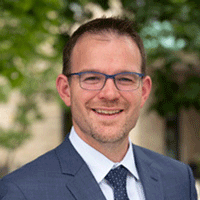
Dr. Heath W. Carter

“The people I take inspiration from is the abolitionists,” Bouie said. “No one living through a period knows how the story will end.” People working for abolition in 1840 “had no idea that in 25 years their life goal would be accomplished … Everyone involved was just doing the work because they thought it was important.” Then Bouie cited a quote attributed to Vladimir Lenin: “There are decades when nothing happens, and there are weeks when decades happen.”

“Transformation happens at the speed of trust, and trust is built over time,” Kim said, adding that evangelicalism “is going through massive transformation.”

“The board [of the NAE] looks different,” Kim said. “How that leads to diversity of conviction remains to be seen.”

Watts said her own father has over time changed his views on gun legislation, but only after long and deep and sometimes painful conversations between them. He now wears Moms Demand Action T-shirts to the events he attends.

“Jesus talked to everyone,” Kim reminded those attending the discussion in the atrium of Wright Library on campus and those attending online. “He had dinner with Pharisees. If evangelicals seek to be good news people of Jesus, there should be a willingness to engage for the common good and to a posture of persuasion and friendship, not domination. I would pray to be part of a movement that’s diverse.”

“I want to be part of this creative moment we’re in right now, with new institutions arising,” Kim added. “I am convinced we are on the cusp of a new wave of institution-making.”

Mike Ferguson, Editor, Presbyterian News Service

Let us join in prayer for:

PC(USA) Agencies’ Staff
Cindy Ealy, Budget Assistant, Office of the General Assembly
Lindy Ebbs, Administrator, Constituency Relationships, Relationship & Development Operations, Administrative Services Group, (A Corp)

Let us pray

Triune God, help us, rejoicing in your providential love, to exercise the same generosity with others that you share with us. Empower us to let go of the few loaves and fishes that we possess so that other hungry people can be fed, too. Then open our eyes to the miracles that follow. In Christ. Amen.

Thursday, March 9, 2023

Today in the Mission Yearbook - Princeton Seminary’s Center for Asian American Christianity hosts webinar on second-generation churches

Tapestry LA lead pastor speaks on challenges, transitions and opportunities

March 9, 2023

Charles Choe is lead pastor at Tapestry LA. (Photo courtesy of Tapestry LA)

Charles Choe is lead pastor at Tapestry LA, a downtown Los Angeles church serving a mainly Korean and Chinese American congregation. He was the guest during “Challenges, Transitions and Opportunities in the Second Generation Asian American Church,” a recent 90-minute webinar offered by the Center for Asian American Christianity at Princeton Theological Seminary. About 70 people joined online with an additional crowd listening in person at the seminary. The Center’s director, Dr. David Chao, hosted the webinar and led a question-and-answer session following Choe’s talk.

Tapestry LA was planted eight years ago near the intersection of U.S. Interstates 110 and 10. It’s walking distance from Crypto.com Arena, the home of the Los Angeles Lakers. Those who attend worship there are mostly Millennial and Gen Z age, Choe said. About 65% are Korean American and about 30% Chinese American, with “others” comprising the remaining 5%. The University of Southern California is 10 minutes away, and students from UCLA and Pepperdine also attend. “They come, connect, get married and have their first kids,” Choe said. “I feel like I’m at a wedding almost every weekend.”

Tapestry LA is part of Acts Ministries International, a second-generation Asian American network of churches. For its mission statement, Tapestry LA — following considerable thinking and praying — adopted this: “Inviting broken people to be restored by Jesus in the whole of life.”

Choe laid out challenges and transitions that second-generation Asian American churches are facing. Among the challenges he’s identified is the sheer number of pastors who attended seminary along with Choe who have since found other things to do, including selling real estate and insurance. Choe himself was a bi-vocational pastor for many years, working as an educator in the Los Angeles Unified School District.

Dr. David Chao is director of the Center for Asian American Christianity at Princeton Theological Seminary.

Other challenges include the feeling that Choe used to have, a “sense of being treated like a worker, not as a family. … It’s a struggle many of us had, finding our identity and our satisfaction in ministry, having success and making a livelihood to support a family.”

During his own time of transition, Choe took a year off from ministry to focus on teaching. “I didn’t know if I wanted to get back into ministry, but a handful of people kept insisting I lead them in a Bible study, and I thought, why not?” he said. “We met for Bible study and prayer, and at some point, someone asked about becoming a church. I had never even Googled ‘church planting.’” He and about 15 others attended a church-planting conference in Florida “where all the people looked ordinary like we did,” he said. “I felt for the first time I could plant a church.”

“We didn’t have a blueprint,” he said of those early days, “but we felt determined.”

But after about two years, “I realized the church wasn’t working. I was sick and tired of looking over my shoulder wondering why more people weren’t coming,” he said. “These were my friends, the people who had left a bigger church for this opportunity. But we weren’t growing, and we were fighting a lot. It wasn’t what I had in mind.”

He talked to his wife, and they decided “to take a season to pray and fast.” At about the same time, a friend told him he wouldn’t make it as a church planter “because you’re an island. Whether you live or die as a church, no one’s going to know.”

“I realized I needed to be better connected,” Choe said. The friend arranged a talk between Choe and the man who would become his mentor.

That’s where Choe’s presentation turned to opportunities. “We relaunched the church, and that’s how Tapestry LA was born,” he said. From the beginning, “we tried to create opportunities and excitement to encourage people to come to church.”

If you want diversity on staff, you have to hire for diversity, he said. At Tapestry LA, one of the first hires was a counselor who has assembled a team trained to provide help for people struggling with their mental health. “We are constantly taking in people. We get people with high-grade and low-grade problems,” Choe said. “That’s a big part of our culture here.”

Learn more about the Center for Asian American Christianity at Princeton Theological Seminary here.

 Mike Ferguson, Presbyterian News Service

Let us join in prayer for:

PC(USA) Agencies’ Staff
Shawnda Styles, Client Services Specialists, Presbyterian Foundation
Ralph Su, Associate, Asian Intercultural Congregational Support, Racial Equity & Women’s Intercultural Ministries, Presbyterian Mission Agency

Let us pray

Gracious God, you lavish on your people a profusion of gifts for mission and ministry, evangelism and outreach. Continue to inspire and guide us as we strive to be more responsive to the needs of our churches. Energize and equip us for those kingdom tasks to which we are called as Christ’s followers in a hurting world. Amen.

Wednesday, March 16, 2022

Today in the Mission Yearbook - Princeton Theological Seminary dedicates its library in memory of a prominent abolitionist

The Wright Library is named in honor of the Rev. Theodore Sedgwick Wright, PTS Class of 1828

March 16, 2022

The Rev. Theodore Sedgwick Wright (Photo courtesy of Princeton Theological Seminary)

The Princeton Theological Seminary community held a library dedication service recently to name one of its most visible and revered buildings on campus after alumnus Theodore Sedgwick Wright, class of 1828, who was a prominent abolitionist and pastor. An unveiling of the entrance revealed “Wright Library” etched in stone.

“Theodore Sedgwick Wright was extraordinarily courageous in his pursuit of justice, and his life still serves as an example for us all as we reflect upon how we live out our faith in society today,” said Princeton Seminary President M. Craig Barnes, according to a seminary news release.

“Theodore Sedgwick Wright was a giant,” said Lisa Bowens, PhD ‘14, associate professor of New Testament, during her biographical presentation of Wright’s life. “He was a well-known abolitionist, preacher and pastor who was a part of a group of leading abolitionists of his day that included people such as Frederick Douglass, Daniel Payne, Samuel Eli Cornish and David Walker.”

Read Bowens’ full speech here.

Wright was the first African American to graduate from Princeton Theological Seminary. He served as the pastor of the Shiloh Presbyterian Church of New York City (formerly First Colored Presbyterian Church of New York City) from 1829 until his death in 1847. Wright was one of the founders of the American Anti-Slavery Society and served as chair of the New York Vigilance Committee, which worked to prevent the kidnapping of free African Americans.

The service also included an opening prayer given by Tamesha Mills, MDiv candidate and moderator for the Association of Black Seminarians, and remarks were given by Michael Fisch, chair of Princeton Seminary Board of Trustees. The Rev. Dr. David Latimore, director of the Betsey Stockton Center for Black Church Studies, concluded the ceremony with a closing prayer. The highlight of the evening was the unveiling of the new name led by the Rev. Dr. John White, dean of students and vice president for student relations.

The Princeton Theological Seminary Library is among the world’s most comprehensive theological research libraries serving both the seminary and the global community. The library strengthens teaching, inspires learning, broadens access, fosters research, embraces change, and advances and preserves knowledge, in support of the seminary’s mission. Shaped by two centuries of development, the library embraces its role at the intersection of the theological record and the community of scholars; continues Princeton Seminary’s commitment to build collections of depth; and promotes an environment of broad access to the theological heritage. With more than 1.3 million print and electronic books and journals in its general collections, a digital library (Theological Commons) of more than 150,000 resources, a robust Special Collections and Archives department of rare books, manuscripts, archives, cuneiform tablets, art, artifacts, and digital archival collections, as well as an inspiringly beautiful building, the library is a heavily utilized resource.

The naming of the library is a milestone in the implementation of a multi-year action plan to repent for the seminary’s historical ties to slavery.

Princeton Theological Seminary, Special to Presbyterian News Service

Let us join in prayer for:

PC(USA) Agencies’ Staff
Myles Markham, Mission Specialist for National Response Networks & Administration, Presbyterian Disaster Assistance
Michael Marrone, Vice President, Strategic Planning & Execution, Board of Pensions

Let us pray

When we feed your people, Lord, your Spirit feeds us all. When we clothe them, we wear your good news. Amen.

Mission Yearbook: SDOP ministry team co-chair discusses ‘Working for the Common Good’

Image Photo by Sincerely Media via Unsplash The Rev. Dr. Jermaine McKinley, the co-chair of the Self-Development of People Ministry Team for...