Wednesday, August 25, 2021

Today in the Mission Yearbook - Compassion fatigue in the church

What to do when trauma and crisis take their toll

August 25, 2021

The COVID-19 pandemic has increased the need for more ministries that feed the hungry. But increasing needs can lead to compassion fatigue. Courtesy of the Holy Way Presbyterian Church

A year of shepherding God’s people through a pandemic has put a strain on pastors as they have had to rethink how to do everything from pastoral care to worship. And the strain of constantly thinking differently and creatively while tending flocks that are eager for some sense of normalcy can result in developing compassion fatigue.

Compassion fatigue, as defined in a resource kit offered by the Office for Victims of Crime, is “a combination of physical, emotional and spiritual depletion associated with caring for others who are in significant emotional pain and physical distress.” That trauma, as well as other stressors, can build up over time in pastors, as well as other caregivers and first responders, making it difficult to cope, whether it’s during a pandemic or a natural disaster.

Ministering to trauma survivors can also lead pastors and other caregivers to “feeling their own level of secondary trauma,” explained the Rev. Dr. Kathy Riley, associate for emotional and spiritual care for Presbyterian Disaster Assistance (PDA). “They can feel all sorts of things — anxious, depressed, just kind of depleted and just not able to figure out how they can keep going with the caring work that they’re doing.”

Compassion fatigue, however, should not be confused with burnout. According to the Rev. Dr. Laurie Kraus, director of PDA, “burnout is basically more about your perception of the environment in which you’re working.” Kraus, a compassion fatigue author and expert, points out that compassion fatigue is “a combination of the internal effect of secondary traumatization and the whole effect of feeling like you’re in a context where your resources are constantly being outweighed by the demands that are being placed on you.”

 The Rev. John Cheek, interim pastor of The Holy Way Presbyterian Church in Tucson, Arizona, has firsthand experience with the challenges pastors are facing, from preaching to an empty sanctuary during recorded services to working solo for hours while relying heavily on phone and virtual communication to reach members. “It’s not uncommon for me to sit in this office alone for eight hours or 10 hours a day, for five days straight; that is not good for most of us,” Cheek said. “And even for people who are introverts — and I’m fairly strong in the introvert side of the scale — that kind of isolation is not healthy for a lot of us. In addition, we sort of live to lead worship and preach, and if we are not having regular interactive worship, then part of what feeds us is not available to us.”

Ministers like Cheek also are missing the congenial fellowship that churches are known for. “I love this congregation that I’m serving and haven’t had the chance to be with them, to shake hands and to hug and to follow up — all of those things,” said Cheek. “I think the isolation, however, that looks for pastors, can set up an environment in which the thing that gives them stamina is missing or at least is diminished.”

Meanwhile, the demands on pastors around the country continue as COVID-19 deaths climb, even as vaccinations move forward. Church members are hurting as they struggle with losses. Hearing people’s trauma, even during regular pastoral counseling, “is a big contributor to compassion fatigue, and it’s really important to have a set of strategies and a set of interventions that can prevent that emotional trauma from impacting negatively either on our health or on our capacity to do the work that we’re called to do,” said Cheek, who is also a member of PDA’s National Response Team.

Anticipating that the pandemic would have a huge impact on faith leaders, PDA took steps in 2020 to begin providing more training and assistance for churches and presbyteries.

“We beefed up our spiritual-emotional care staffing and added several more offerings that we can do with presbyteries and congregations,” Kraus said. “We are ready to provide that support.” This support, especially the available PDA webinars, can be transformative for people.

 Darla Carter, Communications Associate, Presbyterian Mission Agency

Let us join in prayer for:

PC(USA) Agencies’ Staff

Katie Snyder, Curriculum Specialist & POINT Coordinator, Curriculum Resources & Geneva Press, Presbyterian Publishing Corporation
Samuel Son, Manager, Diversity & Reconciliation Associate, Advocacy, Presbyterian Mission Agency

Let us pray

Redeeming and restoring God, we give thanks for the varied ministries of the church. Help us to make good use of the skills and talents as we share in the building and rebuilding of Christ’s church. Amen.

Stuffed animals minister to young and old

Toys bring comfort and joy

By Donna Frischknecht Jackson | Presbyterians Today

A variety of stuffed animals, part of East Side Presbyterian’s stuffed animal ministry, sit in a pew waiting for their new homes. The animals are free for the taking and often shared with those needing a hug. Ellen Jacobs

As a therapist, Ellen Jacobs knows something about the healing power that can be found in a hug. She also knows all too well the great need among young and old alike to feel loved. That is why Jacobs, a member of East Side Presbyterian Church in Ashtabula, Ohio, can often be found playing with stuffed animals. Well, maybe not playing, but rather inspecting and cleaning cuddly bears, giraffes, bunnies and more, before tying a tag on them and placing them in the church’s pews.

The animals are part of East Side’s stuffed animal ministry, which Jacobs freely admits was not her idea, but one that she was introduced to while visiting a church in Florida some years ago.

Jacobs remembers entering the sanctuary with her then young children and noticing a teddy bear in each pew. When she asked about them, a woman told her they were part of the church’s outreach ministry and were there for anyone to take who might need comfort.

Jacobs didn’t take a bear that day. “But I did take the tag describing the ministry so that I could bring the idea to my church,” she said.

Session blessed the stuffed animal ministry. A call for new or slightly used animals was well received, says Jacobs, adding that it was decided to welcome all stuffed animals and not limit the ministry to just teddy bears. Word spread about the animals, with a local hospital reaching out to East Side, inquiring if some could be shared with patients. “The stuffed animals do provide comfort,” said Jacobs, recalling one story of a young boy placed in foster care who was given a stuffed frog by a member of East Side.

“He loved frogs, so we searched for one just for him,” said Jacobs. The boy was read the tag attached to the frog, which told him that it has “ … spent time in the midst of our congregation. It has heard Scriptures read, sermons preached, prayers prayed and songs of praise sung. … It comes to offer you comfort and peace with the blessings of worship and love.”

Over the years, the stuffed animal ministry has also been blessing adults, as Jacob reminds, “Even grown-ups need something to hold.” The animals also find their way into care baskets, especially at Christmastime.

There is, though, another aspect to the stuffed animal ministry that no one saw coming. With the focus on giving the toys away, there was also the opportunity to invite children to help others by donating their beloved toys to the ministry.

Jacobs’ friend, also a therapist, in fact, suggested to a little girl she was trying to wean from her own “stuffy,” as she called the stuffed toy, to give the animal to another child.

“The girl decided that it would be a wonderful thing to do, and she gave her ‘stuffy’ to the church,” said Jacobs. The girl was later told that it soon got adopted.

East Side Presbyterian has been gradually taking steps to move back to in-person worship. As they do, Jacobs has been getting ready, too, cleaning and inspecting the stuffed animals.

After all these months of digital worship, it is safe to say the stuffed animals will be the first worshipers back in the pews, ready to soak in the prayers and the songs, and then go out to share the love of God — one bear, giraffe, frog or bunny hug at a time.

Donna Frischknecht Jackson is editor of Presbyterians Today.

Tuesday, August 24, 2021

Today in the Mission Yearbook - Finding a spiritual practice that enlivens your soul

Everyone is unique when it comes to devotional preferences

August 24, 2021

I’ve been on an intentional spiritual formation journey for most of my adult life. As a young person, I struggled to find a prayer routine that felt right for me — body and spirit. I followed the more traditional ways to nurture spirituality: worship services, prayer groups and Bible studies. I even tried to establish a personal devotion routine. For guidance, I looked into the practices of the most spiritual people I knew — my abuela, Jovina, and my abuelo, Edgar. My grandparents’ prayer routine included reading the Bible following a book of devotions and kneeling beside their bed to pray silently. I was convinced that, with some modifications, this would work for me. It did not. My attempt to follow this routine ended up with knee pain, wandering thoughts, climbing into bed and falling asleep, prayer unfinished. I woke the next day feeling frustrated with “my lack of commitment” to a life of prayer.
I continued, though, pursuing some version of this model in the following years, still feeling that something was missing. Years later, I realized the spiritual practices that fit the needs of my grandparents would not necessarily fit my “very Vilmarie” ones.

In the early 2000s, I attended a denominational conference for Committees on Preparation for Ministry. There, I heard the term “spiritual disciplines” for the first time. We participated in different spiritual practices specifically in the context of vocational discernment. Engaging in lectio divina — where you take a Scripture passage and read and reflect on it several times — and walking the labyrinth for the first time was eye- opening. An awareness of spiritual possibilities awoke.

I firmly believe that when one seeks to cultivate a deeper, closer relationship with God, the Holy Spirit will make way, bringing forth opportunities to continue this exploration. I had such an experience while attending a CREDO conference, when I heard these words by Dom John Chapman: “Pray as you can, not as you can’t.” I realized then that an effective spiritual routine had to resonate with who I am. Such a routine is based on personality, ways of learning and processing information, and when/how a person might feel most connected to God, self and others. Brian C. Taylor said it best: “Engage in practices that enliven you, not the ones you think you should do.”

I also learned that this journey was best traveled with the guidance of a trained spiritual director. I am grateful for the presence of the Rev. Diane Shoaf in my life. Together we have worked on exploring practices that deepen, broaden and strengthen my relationship with God. These days I feel closer to God through art and movement, and my preferred spiritual practice is called “Praying in Color,” a practice developed by Sybil MacBeth that involves praying while doodling and coloring. While sitting still, quietly reading the Bible and praying would be fine at times, the spirit of this extreme extrovert, music and color enthusiast needed to explore other areas and develop an inventory of spiritual practices that responded to particular spiritual needs.

John Calvin said, “Prayer itself is properly an effusion and manifestation of internal feeling before [God] who is the searcher of hearts.” May the Holy Spirit continue to guide us as we find those spiritual practices that evoke a wholehearted expression of faith, without restraint, before the presence of God.

Put into Practice:

 Don’t force practices that don’t feel right for you.

  • There are many spiritual practices to make your own. Like Vilmarie Cintrón-Olivieri, you might find spiritual wellness at the other side of a colored pencil.
  • Seek the guidance of a certified spiritual director to explore a routine that responds to your needs. Consult your mid council leaders or Spiritual Directors International at sdiworld.org for a certified spiritual director in your area.
  • Be mindful that preferences and needs are found to change throughout your life.

Vilmarie Cintrón-Olivieri, an educator and a Presbyterian ruling elder, member of First Spanish Presbyterian Church, Miami, most recently serving as co-moderator of the 223rd General Assembly (2018)

Let us join in prayer for:

PC(USA) Agencies’ Staff

Shelvis and Nancy Smith-Mather, Mission co-workers in South Sudan, World Mission, Presbyterian Mission Agency
Becca Snipp, Administrative Project Manager, Presbyterian Disaster Assistance, Presbyterian Mission Agency

Let us pray

Holy and loving God, we thank you for journeying with your church through our times of learning joy, change and sorrow. Please bless all your people with the ability to be bold in sharing the good news and in loving you, themselves and their neighbors. Amen.

Where hope comes postmarked

Discovering  thriving ‘church’ at my little rural post office

By Donna Frischknecht Jackson | Presbyterians Today

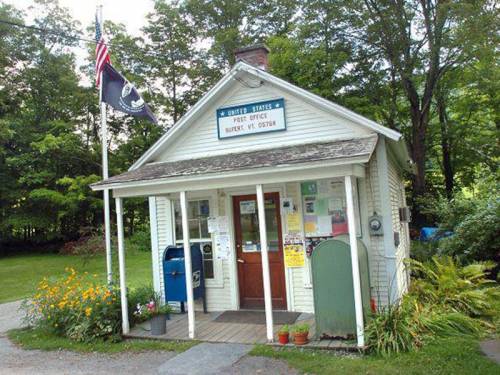
Rural Vermont post officeLoneliness was one of the challenges that colleagues warned me of when becoming a rural pastor. As I prepared leaving luxuries such as high-speed internet, reliable cell service and pizza delivery behind, they offered their best advice: Find hobbies outside the church and learn how to make your own pizza. 

I wasn’t concerned. I’ve always been drawn to monasticism. As a girl, I visited the Met Cloisters in New York City with my grandparents. I can still hear Gregorian chants drifting from a window above the courtyard where I stood entranced. A nun interrupted the spell I was under, asking if someday I would like to join them. I shrugged my shoulders shyly.

I eventually did take holy vows that didn’t require chanting. I joined the sisterhood of rural ministry, seeking to serve God’s children in places that have been traditionally overlooked by lawmakers and judicatory leaders alike. Sadly, this oversight heightens the challenges where the problems inside church walls are outside as well. Many congregations are in villages where infrastructures are crumbling, and social services are almost nonexistent.

This has been especially apparent where I live in Vermont, where two local colleges have closed, medical care is at least an hour’s drive, and a farm producing artisanal cheese for some of Manhattan’s best purveyors of gourmet food ceased operating. And word on the street — more like word in my post office, as news is often spread in rural America — is another farm is closing. The challenges are many. Loneliness, though, hasn’t been one of them. I’ve found that the tie that binds in rural communities is knotted tightly and that there’s a determination to overcome trials — together.

So, when a virus kept folks from physically coming together in their churches, where coffee hour chatter is more sought after than the pastor’s sermon, it was hard. Some small churches were able to connect digitally. Some, though, just didn’t have the capability. The frustration of having no access to high-speed internet is real. Even more frustrating, though, is unreliable internet. Nothing gets your blood pressure up quicker than technology failing the moment you need it the most.

Yet in the year of isolation and frozen computer screens, I witnessed how warding off loneliness could really be as simple as a card, a phone call or a jar of homemade jelly left on the porch. I was also reminded of a truth too often forgotten. Church can happen at any time and anywhere. I discovered this at my post office. 

The size of a child’s playhouse with chickens strutting about, the post office has been in operation since 1816. Leaf-peepers stop to take pictures of it. What they don’t know as they smile for the camera is that the little post office almost closed a few years ago until residents — not all 714 according to the 2010 Census, but a good number — rallied to save it. They had to. It’s a place of connection, a lifeline of sorts. So much so that it’s often hard to find a place to park in the post office’s tiny dirt lot. When you do, chances are you will be sandwiched between a pickup truck and a Subaru. Inside only three people fit comfortably. Before COVID-19, a group of widowers began congregating there on Saturday mornings. I often found myself caught in this gathering, leaving my husband wondering what was taking so long to get our mail. When he asked, I told him I was at “church.” For that’s what the post office had become for these widowers and for this pastor — a place where in the coming together, hope is found.

A pandemic has made connecting challenging, but it also made us work harder to be there for one another in ways we could never have imagined. I got to see, too, the fierce resiliency of rural communities refusing to add loneliness to an already long list of challenges. Where is “church” happening in your community, beyond a steepled building? 

I went to the post office today. There was a pickup truck and a Subaru taking up most of the dirt lot. With my mask on, I stepped inside and found individually wrapped cinnamon buns on the counter. I took one and began chatting with the elderly man who shuffled in after me. I lingered longer to chat. I told him about the bear I saw on my morning run. He told me about the house on the mountain that finally sold. He asked me to pray for a sick neighbor. I asked him where to get chicken feed. When I returned home, I started making coffee to go with my cinnamon bun. I felt lighter — happier. Suddenly I realized something: I had forgotten my mail. 

Donna Frischknecht Jackson is editor of Presbyterians Today. Visit the Vermont post office in a new feature called “Presbyterians Today: Beyond the Pages,” where we take you behind the scenes of some of the stories. Go to pcusa.info/postoffice

Monday, August 23, 2021

Today in the Mission Yearbook - It’s time to right the wrongs

God offers hope to the faithful

August 23, 2021

He entered Jericho and was passing through it. A man was there named Zacchaeus; he was a chief tax collector and was rich. He was trying to see who Jesus was, but on account of the crowd he could not, because he was short in stature. So he ran ahead and climbed a sycamore tree to see him, because he was going to pass that way. When Jesus came to the place, he looked up and said to him, “Zacchaeus, hurry and come down; for I must stay at your house today.” … All who saw it began to grumble and said, “He has gone to be the guest of one who is a sinner.” Zacchaeus stood there and said to the Lord, “Look, half of my possessions, Lord, I will give to the poor; and if I have defrauded anyone of anything, I will pay back four times as much.” Then Jesus said to him, “Today salvation has come to this house, because he too is a son of Abraham.” — Luke 19:1–9

The season leading to Jesus’ crucifixion and resurrection is the door of penitence and confession that opens to the hope God has promised to those who are faithful. The theological core of this is repentance before God, but that is harder than it sounds because who likes to admit the wrongs that they have done? Repentance in biblical terms has four steps, without which, taken as a whole, cannot produce forgiveness. First, accept responsibility for the wrong we have done. Second, express remorse for what we have done. Third, resolve not to repeat the wrong. And fourth — this is perhaps the most essential and difficult step — repair the damage done.

It’s interesting that Luke begins the Zacchaeus story focusing on that fourth step — restoration of the wrongs done. Zacchaeus was a rapacious predator of the resources of his own people, serving the Roman occupiers, and enriching himself by inflating the amount of actual taxes due. Zacchaeus’ sense of guilt, triggered by what he heard of Jesus, led him to that step of righting the wrongs he had done “with interest.” He is a great model for us as we move through Lent. We all know of ways we have harmed others by our attitudes and actions. The hardest part, though, in seeking forgiveness, is the “Zacchaeus” part: the requirement that we work toward restoration:

  • Returning “hat in hand” to those we have wounded emotionally;
  • Providing reparation for those we have cheated;
  • Ceding power to those we have rendered powerless;
  • Returning land and resources we have stolen;
  • And healing brokenness and bitterness within communities of faith, so that they represent the values of understanding, love and compassion of the One we call “Lord and Savior.”

Are these demands outrageous? They are if all we have is our own strength, imagination, and resources. And if that’s the case, then we are in a mess.

The Good News, though, is that Jesus, who places these challenges on us, is also the Lord of Life, the Risen One, whose death and Resurrection we celebrate! Forgiveness is possible. So is restoration. To God be the glory! Amen!

 Vernon S. Broyles III, volunteer for public witness in the PC(USA)’s Office of General Assembly

Let us join in prayer for:

PC(USA) Agencies’ Staff

Natalie Smith, Marketing Manager, Electronic Resources & Strategic Business Development, Presbyterian Publishing Corporation
Stephen Smith, Security Trading & Assistant Portfolio Manager, Trust Services, Presbyterian Foundation

Let us pray

Gracious God, you call us to be Christ incarnate. We are to be the compassionate heart and hands of Christ. We are the loaves and the fishes that will give hope and life during these challenging times. Amen.

Sunday, August 22, 2021

Today in the Mission Yearbook - It’s time to name the demon

The Rev. Dr. Otis Moss III delivers fresh insight on the Gerasene Demoniac

August 22, 2021

The Rev. Dr. Otis Moss III

The Rev. Dr. Otis Moss III remembers the heartbroken grandmother of a man in denial of his drug addiction. “Son,” she told him one day, “until you name the demon, you ain’t never gonna be free.”

“The moment he made that decision and named [his addiction] was the day he began to walk the road of recovery,” Moss said during a recent worship service. “There’s something powerful when you are willing to name that which causes shame. It gives you the authority to cast it out of your life.”

The nation also has a responsibility to name the demons “that have been holding us back,” said Moss, senior pastor at Trinity United Church of Christ in Chicago. “There are those who refuse to name the original sin of this particular nation.” There’s also “revisionist history” being spun around the Jan. 6 siege of the U.S. Capitol, he said. “They are now saying it had nothing to do with privilege, racism, white supremacy or any ideology that keeps us from being who God wants us to be,” he said.

He spoke to his father, the Rev. Dr. Otis Moss Jr., the pastor emeritus at Olivet Institutional Baptist Church in Cleveland, about what they’d seen in the news coverage. “I’ve seen that mob before,” the father told his son, in Selma, Alabama and in Atlanta, and in other places. “It has the same ideology and is possessed by the same spirit. Until we learn to name some things,” his father said, “we will never be free from them.”

“Want to learn how to be released?” the younger Moss asked the crowd. “There’s a brother named Jesus you need to talk to who lays out what you need in order to be free.”

At that point, Moss launched into his take on Mark 5:1-20, the story of Jesus healing the Gerasene Demoniac, a man living among the tombs. “He lived in a dead community, a community with no economic development, forgotten by the rest of the Decapolis community,” Moss said. “He was in a redlined community, a community the banks would not lend to.”

In addition, “he was out of the mass incarceration system,” Moss said, noting he’d often been restrained with shackles and chains. We also see in the biblical text he had mental health challenges: he was “cutting himself day and night, trying to hurt himself,” Moss said. Still, when he hears Jesus is in town, he comes running to the Lord and falls on his knees.

The man’s message to Jesus was, “I recognize you are from the religious community and I offer words of respect to you.” He tells Jesus not to torment him. “He had problems with religious people before,” Moss said. “Religious people can be the problem, but faith is the solution.”

“Don’t treat me like they did!” the man is saying to Jesus. “I don’t want that religion that torments me and creates trauma,” Moss said. “Truth be told, a lot of us are recovering from religious trauma. We ran into the wrong rabbi.”

Jesus asks his name, and the reply is, “My name is Legion, for we are many.” The demons answered for the man.

“His issues answered, not the man,” Moss said. “You’ve got to be careful about letting your issues speak for you … If you operate based on your issues, you will always live in the basement of possibility instead of rising to the level God desires for you.”

In elementary school, Moss was placed in a basement classroom because a test indicated he had a learning disability. “I thank God” for the placement, he said. The teacher in the basement classroom was Miss Burns, an old-school schoolteacher. “My name is Miss Burns,” she told students on their first day in her classroom. “I’m here to let you know you don’t belong here. There is greatness in you. Don’t allow anybody to tell you what you cannot do.”

“You belong in the penthouse of possibilities,” Moss told the gathering. “Do not allow your issues to speak for you.”

 Mike Ferguson, Editor, Presbyterian News Service

Let us join in prayer for:

PC(USA) Agencies’ Staff

Melaina Wilson, Marketing Program Assistant, Presbyterian Foundation
Melody Smith, Associate for Organizational Communications, Presbyterian Mission Agency

Let us pray

Gracious God, we take seriously your command to go into the world and make disciples. We pray that you will allow us to see and taste the fruit that you grow among our new disciples. We offer our prayer in the name of Jesus Christ. Amen.

Saturday, August 21, 2021

Today in the Mission Yearbook - Scarcity or abundance?

Having life, and having it abundantly

August 21, 2021

Alexander Schimmeck via Unsplash

There is a growing awareness across the PC(USA) that racism and poverty are crises that must be addressed.

Thanks, in large part, to the Matthew 25 invitation, many of us are taking intentional steps to address our own complicity in perpetuating the systems that advantage some people while disadvantaging others. For that reason, I have made it my practice for the past few years to attempt to read Scripture from the perspective of the poor and the oppressed rather than through my own lens of privilege.

Through my work with the Presbyterian Mission Agency — work that has allowed me to enter into relationships with communities that have deepened my understanding of structural racism and systemic poverty — I discovered Lynne Twist’s book, “The Soul of Money: Transforming Your Relationship with Money and Life.” In her book, Twist offers a very practical approach to following God’s plan for Creation as she identifies three myths of the “great lie of scarcity” in our culture:

“There is not enough.” When we believe this to be true, we behave out of a sense of fear that we and our loved ones will be left out or left behind if we do not accumulate enough for our security. This fear necessitates that there must be winners and losers.

“More is better.” This describes the American way being promoted by our culture of consumerism and exploitation of Creation. Americans comprise 8.5% of the world’s population while holding 30% of the world’s wealth. The U.S. also ranks in the top 10 nations with the highest wealth gap between its wealthiest and poorest citizens. During this pandemic, the wealthiest in our country have accumulated more than $1 trillion while 45% of our citizens lost ground. This result is not unexpected when we accept that more is always better and we place our faith in wealth rather than in God.

“That’s just the way it is.” This is the most insidious of the myths because it tends to paralyze us from working against the great lie of scarcity. Subscribing to this belief results in justifying greed, prejudice and inaction to change the systems that benefit the few over the many.

As followers of Christ, we are called to be stewards of the gospel. Romans 12:2 (NIV) tells us, “Do not conform to the pattern of this world but be transformed by the renewing of your mind. Then you will be able to test and approve what God’s will is — [God’s] good, pleasing and perfect will.” Following Jesus means we are called to be countercultural.

Do we believe in a God of scarcity or a God of abundance? We who claim to be followers of Christ would most certainly answer that, of course, we believe and serve a God of abundance. Yet, if we critically analyze the way we act, the reality we live may be out of step with our belief.

God’s Creation was established to be self-sustaining — that is, when we don’t take more than the manna we need for today. When we truly live out our faith, we will embrace the call of Matthew 25 to eradicate systemic poverty. We will diligently work to change the policies and practices that perpetuate a “that’s just the way it is” mindset. We will free ourselves to share freely what has been placed in our trust by the God of abundance whom we know and serve, because we know it is not God’s will that some must lose so that others may win. For as Jesus’ words so powerfully remind us in John 10:10b (NRSV), “I came that they may have life, and have it abundantly.”

René Myers is the Presbyterian Mission Agency’s mission engagement advisor for the West region. This piece was originally published in “Where Your Heart Is…A Weekly Offerings Stewardship Blog.”

Let us join in prayer for:

PC(USA) Agencies’ Staff

Ashley Smalley-Ray, Assistant VP/Trust Officer, Trust Services, Presbyterian Foundation
Kim Smith, Operations Administrator, Operations, Presbyterian Foundation

Let us pray

O God, your Son challenged us to “feed them.” Help us to meet that challenge with our five loaves and two fish. Empower us to be faithful to risk being in mission for your church, and to anticipate your generous provision. In Jesus’ name. Amen.

Minute for Mission: Celebrating Indigenous Peoples’ Day

Image The Rev. Irv Porter, left, leads participants at the Presbyterians for Earth Care Conference in the Blanket Exercise at the Stony Poin...