Showing posts with label Presbyterian Disaster Assistance. Show all posts

Wednesday, November 4, 2026

Mission Yearbook: PDA webinar explores how faith communities can play a big role in preventing addiction

During the second of six online installments in a series called the Disaster Care Academy offered by Presbyterian Disaster Assistance and its partners, participants learned how faith communities can play a vital role in prevention, early intervention and resilience-building when it comes to mental health and the avoidance of drug and alcohol addiction.
Image
Emily Morrow-Mueller
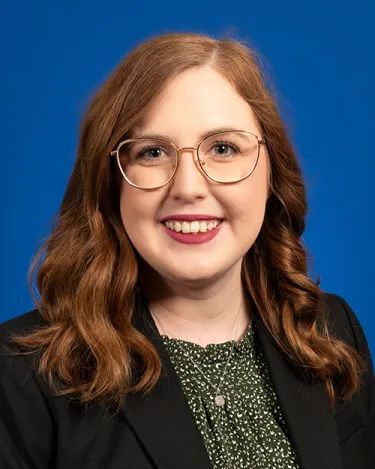
Emily Morrow-Mueller is senior prevention programs manager for the Oklahoma Department of Mental Health & Substance Abuse Services (contributed photo).

Emily Morrow-Mueller, the senior prevention programs manager for the Oklahoma Department of Mental Health & Substance Abuse Services, led the 90-minute webinar.

Before getting to how faith communities can play what is a significant role in the fight for a healthy society, Morrow-Mueller offered descriptions of promotion, prevention, treatment and maintenance.

Promotion is about helping people thrive by improving mental and emotional health for everyone, she said. Examples run from more neighborhood bike paths to improved sleep habits.

Prevention is reducing risk and protecting mental health early on. It can be universal, such as anti-bullying programs; selective, including offering support groups for at-risk groups; and educated, targeted at people with early warning signs including alcohol and drug abuse. Prevention strategies can work upstream to eliminate or reduce the root causes of, say, substance abuse, or downstream.

Treatment and maintenance are included in recovery. “It’s about getting better and staying well over time,” she said.

Risk factors are predictive for half or less of the population, while protective factors are predictive in up to 80% of the high-risk population, she said.

Morrow-Mueller then spent time exploring the different domains or contexts for promotion and prevention strategies as well as treatment and maintenance. Those contexts are individual, family and relationships, community, and societal, and Morrow-Mueller also touched on some of the risk factors associated with each.

She then turned to a brief discussion on Adverse Childhood Experiences, also known as ACEs, including abuse, neglect, separation or divorce, a family member with mental illness, a family member addicted to drugs or alcohol, a family member who is in prison, or witnessing a parent being abused.

Positive Childhood Experiences, or PCEs, are supportive and nurturing experiences in childhood that help a child grow up to be healthy and resilient and able to cope with stress. It impacts lifelong health, behavior and successful relationships.

PCEs, she said, “can buffer the effects of ACEs.”

“The presence of one caring adult can change a life,” she said, and faith leaders are often the ones to buffer those ACEs effects. As Mother Teresa put it, “Faith in action is love, and love in action is service.”

Then she answered the question many were on the call to consider: What is the role of the faith community in all this?

Faith communities have “a long history of leading positive change and supporting the well-being of members,” Morrow-Mueller said. Churches are available and accessible. Many people turn to their faith community when they’re in a crisis because they see it “as a safe place,” she said.

People who serve faith communities have a lot in common with prevention specialists, she noted, including engaging populations across the lifespan, focusing on community wellness and resilience, and employing evidence-based approaches.

Action steps that faith leaders serving in their local faith community can take include:

  • Address mental health and addiction in sermons
  • Host workshops and panels to explore mental health topics
  • Use church bulletins and newsletters to “serve as a gentle reminder that support exists,” Morrow-Mueller suggested
  • Educate the community and the congregation
  • Strengthen relationships and support systems through mentorship programs, small groups or youth circles
  • Engage in “compassionate leadership,” which “helps build trust across the community,” she said
  • Foster strong family relationships through parenting workshops and family activities
  • Strengthen economic and social stability through resource navigation, skill-building programs and community networks
  • Promote positive identity and purpose through values-based education and leadership opportunities, and celebrate milestones
  • Provide safe and structured environments through after-school programs and other safe spaces

“Ultimately, your leadership helps create an environment where young people feel guided and grounded,” she told the faith leaders present. “You are strengthening their well-being in meaningful and lasting ways.”

Mike Ferguson, Editor, Presbyterian News Service (Click here to read original PNS Story)

Let us join in prayer for:

Ezra Krumhansl, Director, IT Infrastructure, Presbyterian Church (U.S.A.), A Corporation
Tamron Keith, Chief Financial Officer, Presbyterian Church (U.S.A.), A Corporation 

Let us pray:

Dear God, we thank you for the witness community, who reveal to us that the most important thing we can do is be present for our neighbor in need, just as you are present for us in Jesus Christ, in whose name we pray. Amen.

Monday, October 26, 2026

Mission Yearbook: Calm in Crisis’ is subject of webinar

Image
PDA emotional and spiritual care
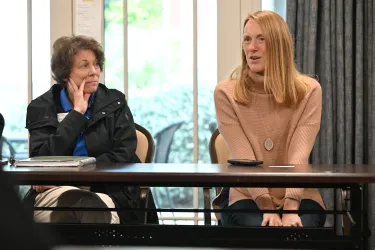
The Rev. Megan Katerjian, CEO of Door of Hope, talks about losing her home in the Eaton Fire as PDA's Kathy Riley listens. (Photo by Rich Copley)

A consortium of disaster care organizations, including Presbyterian Disaster Assistance, recently offered a weekly online series on emotional and spiritual care following a disaster. The first installment, “Calm in Crisis,” was led by Kristyne Duffy and Sean Coffman of Lutheran Disaster Response. 

“Calm in Crisis” served as an introduction to providing mental, emotional and spiritual care during and after a crisis. Disaster Emotional and Spiritual Care “focuses on presence and active listening and honors diverse faith traditions,” said Duffy, program manager for Lutheran Disaster Response.

Duffy touched on how different parts of the brain react to trauma.

The limbic system holds our emotions, memories and motivations, and is responsible for detecting danger. “It’s fast, automatic and emotional,” Duffy said. “It’s powerful and necessary for our survival, but it’s not strategic.”

The prefrontal cortex is responsible for cognitive function, thinking and problem-solving, and it regulates our emotions. “It asks questions about the long-term consequences of my decision and how it will affect others,” Duffy said. “It moves much slower, offering wisdom over impulse.”

During and after a disaster, it’s key for helpers to know what part of a person’s brain is in the driver’s seat, Duffy said. During and immediately after, “we are in the limbic system, with emotional highs and lows.” The fight, flight or freeze options are “the limbic system in action.”

During the recovery, we’re operating in the prefrontal cortex. “As we’re working with people, knowing what system they are in helps us decide what tools we should use in our actions with them,” Duffy said.

Then Duffy turned to a primer on PFA, Psychological First Aid, an evidence-informed modular approach to help children, adolescents, adults and families in the immediate aftermath of disaster.

Video URL: https://www.youtube.com/embed/qOzuMIaxfek

Psychological First Aid has five principles, Duffy noted:

  • Safety, where the goal is to enhance immediate and ongoing safety concerns and provide physical and emotional support. It’s promoted by encouraging people to do things that are active, practical and familiar and perhaps getting connected to others who’ve had similar experiences.
  • Calm, where the goal is to calm and orient emotionally. It’s promoted by being available if the person needs you and “being friendly and compassionate, even when people are difficult,” Duffy said.
  • Connectedness, where the goal is to establish brief or ongoing contacts with sources of support. It’s promoted by helping people contact their friends and loved ones and linking people with relevant services.
  • Self-efficacy, where the goal is to help people have a sense of control. It’s promoted by offering practical solutions that steer people toward helping themselves, engaging people in meeting their own needs and helping survivors identify coping strategies they’ve used in the past.
  • Hope, where the goal is to instill a sense of hope in survivors. It’s promoted by finding out the types and locations of both governmental and non-governmental services and helping survivors to focus on what they can control and to manage expectations.

After a period of preparation, putting those principles into action follows three alliterative steps:

  • Look for what’s happened and who needs help, and determine safety and security risks and trauma reactions.
  • Listen by using active listening, using calming words and actions.
  • Link people to information, connect with loved ones and access services.

Coffman, Lutheran Disaster Response’s director for training and networks, went over MESS basic training, an acronym for Mental, Emotional and Spiritual Support. The idea is to “stand with and walk beside an individual struggling with stress to increase awareness, encourage acceptance, and empower action in a way that promotes health and healing.”

MESS has six steps: show up, lean in, listen out, provide care, kindle hope and refer, and follow up.

Under the MESS umbrella, helpers show up with the five Cs:

  • Caring by accepting who the person is by being non-judgmental and kind
  • Considerate by being mindful of time, safety and privacy
  • Confidential by being a trusted and safe person
  • Competent by being compassionate and capable, balancing power and control
  • Curious by being genuinely interested and wondering with the person.

“They will not accept your help until you first hear their hurt,” Coffman said. “What they are going through matters.”

Mike Ferguson, Editor, Presbyterian News Service (Click here to read original PNS Story)

Let us join in prayer for:

Vivian Blade, Program Manager, Unification Management Office, Presbyterian Life & Witness
Margaret Boone, Project Manager, Special Offerings, Administrative Services Group (A Corporation)

Let us pray:

Gracious God, we praise you and also wonder about the great need we see around us. Forgive us for our failure to love our neighbors as ourselves. Strengthen us to work for a world where all are fed. In Jesus’ name we pray. Amen.

Friday, July 10, 2026

Mission Yearbook: Rural community in Haiti gets clean water thanks to PDA collaboration

In the heart of Meyer, Haiti, a rural community just 10 kilometers east of Jacmel, a new wave of hope is on the horizon.

Image
Meyer, Haiti drinking water system
A collaboration between Living Waters for the World and Presbyterian Disaster Assistance has produced a source of safe drinking water in Meyer, Haiti (Photo courtesy of Living Waters for the World).

Thanks to a transformative collaboration between Living Waters for the World Haiti and Presbyterian Disaster Assistance, Meyer has received a water purification system that promises to bring health, dignity and relief to families who have struggled far too long without reliable access to clean water.

Among the many voices celebrating this change is Father Guy Bellange, leader of the local parish, who has personally experienced the hardships caused by the lack of clean water.

“I don’t like purifying water with chemicals,” he said. Instead, Bellange had been traveling into the city of Jacmel to fill containers with what treated water he could find.

This routine, which is time-consuming and physically demanding, has now come to an end with the installation of the Living Waters for the World purification system. Bellange is not only grateful for the system — he’s also committed to its success. He has pledged to assist with its maintenance, understanding that clean water is not just a convenience but a necessity for community well-being.

Image
Meyer, Haiti safe water close at hand
Potable water is now close at hand in Meyer, Haiti (Photo courtesy of Living Waters for the World).

Nurse Monia Jean, who leads health education for Living Waters for the World Haiti, said, “A local mother shared with me how difficult it has been to provide safe water for her children. Families like hers have had to walk long distances or spend money on chemicals to ensure safe drinking water. Now, they have reliable access to clean, affordable and sustainable water right in their neighborhood.”

For this mother in Meyer, the new system means peace of mind. It means no longer worrying about whether water will make her family sick. And most importantly, it means hope — hope that her children will grow up strong, healthy and with every opportunity to thrive.

As Bellange embraces the system and prepares to serve in a new way, his message is clear: “When clean water flows, so does hope, dignity and the promise of a better future.”

A new Living Waters for the World water system is now installed in the community of Meyer, Haiti, in partnership with Presbyterian Disaster Assistance. The system, installed solely by Haitians, is located at a very large Catholic church. The church has more than 1,000 parishioners and also operates a school on site. Upon dedication of the system on June 1, 2025, clean water is now being provided to the school children, the church community, and the Meyer community at large. The church and the people of this community have been in severe need of clean water for many years and have shown great interest in the new water system. More than 300 enthusiastic people attended the dedication celebration.

Living Waters for the World (Click here to read original PNS Story)

Let us join in prayer for:

Samuel Putt, Summer Fellow, Office of Public Witness – Washington, Presbyterian Life & Witness
Chloe Snyder, Summer Fellow, Office of Public Witness – Washington, Presbyterian Life & Witness

Let us pray:

God of mercy, we are privileged to be called to join Christ in the world as we seek to do ministries of justice and kindness and to bring glory to your name. Give us the courage to act boldly and let all that we do be conducted in a spirit of humility and love. In Christ’s name. Amen.

Sunday, March 1, 2026

Mission Yearbook: Florida church is celebrated as PDA volunteer host site

Three years after Port Charlotte, Florida was hit by Hurricane Ian, a church that hosted as many as two to three teams of volunteer groups per month is closing the door on that chapter but leaving room for an epilogue.

Image
Women in blue shirt standing at a church lectern at a service
The Rev. Devon Andrews is pastor of Wintergarden Presbyterian Church in Port Charlotte, Florida. (screenshot)

The Rev. Devon Andrews, pastor of Wintergarden Presbyterian Church, recently led a poignant service honoring the church’s tenure as a Presbyterian Disaster Assistance volunteer host site.

Thanks to the small-but-mighty 33-member congregation, volunteers from all over the country received a place to stay while helping residents recover from 2022’s Hurricane Ian and subsequent storms that have moved through the gulf coast of southwest Florida.

The church opened its property despite having extensive hurricane damage to its sanctuary and property and provided a welcoming presence during a harrowing time for the community in the wake of one of the worst hurricanes to hit the U.S.

The service, with a liturgy of thanksgiving from PDA, was a time to reflect on the host site years and to thank those whose love and partnership helped Wintergarden to provide for the community while it persevered through its own challenges.

“Our church is a church of servants,” Andrews explained in an interview with Presbyterian News Service. “We serve our community in the best way we know how to.”

After the devastation wrought by Ian, “we started hearing all the stories of all the damage, and the question was, how can we (as a church) help and what do we do?” Andrews said.

Image
Group in blue t-shirts gets photo taken at church
Operating the volunteer host site was a labor of love for Wintergarden Presbyterian Church and its partners. (Photo courtesy of Wintergarden Presbyterian Church)

Along with becoming a host site, Wintergarden continued serving hundreds of neighbors through its food pantry program and obtained critical funds, including a $100,000 grant from the Community Foundation of Sarasota County to support the purchase of rebuilding materials to help residents who had sustained significant damage to their homes.

“The majority of what we received (through grants) all went back out into the community,” Andrews said. “So, we were able to help homeowners with new doors, with garage doors, with windows, with paying a portion of their roof, helping buy drywall and insulation — all different building materials, really — to make their homes safe, sanitary and secure.”

Jim Reitz, a member of the PDA National Response Team (NRT), praises the congregation for its dedication. Despite being small, “it is an amazing group of people that are doing a lot of good stuff,” he said. It‘s helpful to have a pastor who cheers you on, “saying, ‘We can do this. Let's go.’”

Image
Group of people posing near a host site sign
The Volunteer Host Site helped Port Charlotte to recover from Hurricane Ian. (Photo courtesy of Wintergarden Presbyterian Church)

When Reitz arrived in the community shortly after it was hit by Ian, up to 80% of roofs he saw were covered with blue tarps. But now he’s struck by the many new roofs and repairs he’s seen in the community as well as the restoration of the church.

“You laid the foundation, the footer, if you will, and then teams came in and they started building the brick walls, one layer at a time,” Reitz said during the service, which included a presentation of gifts from PDA.

“I, this morning, am just inspired by hearing your stories, and the stories of the other work partners and your listening to the Spirit calling, and trusting God to be with you,” said Michele Holifield, a fellow NRT member who presented the church with a cross and a certificate of appreciation from PDA.

Andrews credits much of the success of the host site to an array of partners that have included not only PDA, Peace River Presbytery and the Florida Presbyterian Disaster Assistance Network but also the Florida Conference of the United Methodist Church and the United Methodist Committee on Relief. Others include SBP (the St. Bernard Project), Mennonite Disaster Services, Church of the Palms in Sarasota, the Gulf Coast partnership, the United Way in Charlotte County and Palma Ceia Presbyterian Church in Tampa, among others.

“All those partnerships are what kept us going and kept us motivated because we couldn't have done anything without the partnerships that we had,” Andrews said.

PDA has several other host sites. For general questions about volunteering, contact the PDA Call Center at pda.callcenter@pcusa.org or 866-732-6121.

Darla Carter, Communications Strategist, Presbyterian Church (U.S.A.) (Click here to read original PNS story)

Let us join in prayer for:

Golnaz Golriz, Guest Relations Manager, Stony Point Center, Interim Unified Agency
Sheldon Sorge, Field Study Coordinator, Stewardship & Funds Development, Administrative Services Group

Let us pray:

Gracious God, we give thanks for the hands that served, the doors that opened and the hearts that said yes when the needs were great. Bless the volunteers, partners and neighbors who rebuilt hope one board, prayer and act of love at a time. In Jesus’ name. Amen. 

Wednesday, January 21, 2026

Mission Yearbook: Texas Hill Country gets help after flooding from PDA

Image
Large area of flooding
Flooding of the Guadalupe River near Kerrville, Texas (Photo by U.S. Coast Guard)

As David Rauer eyed the Guadalupe River during a recent Presbyterian Disaster Assistance deployment to Texas, it was hard to fathom how the seemingly innocuous river could have grown so ferocious during the weekend of July 4.

“It's not a big river,” said Rauer, a member of PDA’s National Response Team (NRT).

Yet, in about two hours, the river rose from hip-height to three stories tall, leading to devastating flash flooding, according to The Associated Press.

“It's hard to imagine that difference when you look at this mild, small river, and you realize how much water was coming down it during the worst part of the flooding,” Rauer said.

Rauer was one of four PDA National Response Team members who traveled to the Texas Hill Country Aug. 7–12 to listen, learn and provide support, following catastrophic flooding that killed at least 138 people.

The deployment by Rauer, the Rev. Pat Ashley, Jan Spence and the Rev. Jim Reitz focused mostly on Kerr County, where at least 119 people were killed, many of them children in places like Camp Mystic.

Image
A group shot of five men and women  standing in front of a wall
From left: The Rev. Bobby Musengwa, transitional general presbyter for Mission Presbytery; the Rev. Laurie Palmer, Mission Presbytery's stated clerk; and David Rauer, Pat Ashley, and Jan Spence, who visited Texas as part of a deployment of the Presbyterian Disaster Assistance National Response Team. (Photo courtesy of David Rauer/PDA)

Though Kerr County was the hardest hit, “there's widespread flooding and disaster from this same storm throughout that mid to western side of Texas,” said Rauer, team lead for PDA’s Long-Term Recovery ministry.  “A lot of homes have been impacted and people’s lives are upturned because of this flooding.”

The deployment enabled the National Response Team to see some of the damage for themselves, talk to people affected by the disaster and connect with representatives from Mission Presbytery, Synod of the Sun and others involved in the recovery.

“It was an initial deployment, so the primary purpose was assessing immediate needs” but also to discuss “possibilities around long-term recovery,” said Ashley, a retired Presbyterian minister who’s been with the NRT for about 15 years. “And, of course, emotional and spiritual care is always a part of it because so many of the people we meet are affected.”

The team — which was joined by the Rev. Kathy Lee-Cornell, director of the Synod Partnership for Disaster Recovery — also was able to share information from previous disasters, Rauer said. “They were very appreciative that we came in to give them some knowledge of recovery from other disasters to help them as they navigate this,” he said.

During a visit to First Presbyterian Church of Kerrville, the team was able to meet with a caseworker, Bailey Havis, who’s been hired by the church to assist people affected by the flooding. The team also attended a service at the church that included a blessing of backpacks for children going back to school, Ashley said.

Later, “there was a luncheon, and so we had the opportunity to go to that lunch and just talk with people and heard their stories,” she said. It was “human-to-human connection … very connective and heartwarming.”

In this way, deployments help to show that PDA isn’t just an “entity out there but rather people who are concerned and care for them and that we could talk with them about the possibilities that PDA has for working with them long-term,” Ashley said.

Among the local people the team met with during the deployment were the Rev. Jasiel Hernandez Garcia, senior pastor of First Presbyterian Church in Kerrville, the Rev. Bobby Musengwa, transitional general presbyter for Mission Presbytery, and Mission Presbytery’s stated clerk, the Rev. Laurie Palmer, as well as the Rev. Dr. Dongwoo Lee, a minister at Schreiner University, and Fred Gamble, chief financial officer of Presbyterian Mo-Ranch Assembly.

“I think it was a good starting point with PDA, and my hope is that we'll continue to have more enriching conversations and more direct kind of involvement from them,” Garcia said.

Garcia took the team out to see some of the flood damage and the progress that’s been made, such as the clearing of some of the many uprooted trees, Ashley said. The time with him also gave a clearer picture of the scope of the disaster, she said, since you could see “where the river is now and where the damaged places were that were very far removed from where the river is now.”

Presbyterian Disaster Assistance is one of the Compassion, Peace & Justice ministries of the Interim Unified Agency of the Presbyterian Church (U.S.A.). For more information about the recovery and to see a series of useful videos, go here. To support PDA’s response through your generous giving, go here.

Darla Carter, Communications Strategist, Mission Communications Click here to read original PNS Story)

Let us join in prayer for:

Edward Thompson, Senior Church Consultant and Director of Inter Agency Relations, Board of Pensions
Julie Tonini, Director of Production, Publishing & Editorial, Presbyterian Publishing Corporation

Let us pray:

Gracious God, there is no pain you don’t understand, no heart you can’t examine. Hear the voices from the most obscure corners of the world. Just as you were lifted high, may our lives also be lifted. In your precious name we pray. Amen.

Friday, September 12, 2025

Mission Yearbook: ‘Mosaic’ report highlights power of going together in disaster response

Image
A reporter cover with colorful mosaic tiles
PDA's annual report for 2024 has been released.

In the latest annual report from Presbyterian Disaster Assistance, the Rev. Edwin González-Castillo explains how a time-honored proverb, “If you want to go fast, go alone. If you want to go far, go together,” captures the heart of PDA.

“In every disaster we respond to, we do not go alone,” the PDA director notes in a letter of gratitude that opens the report. “We go together — with communities, congregations, mid councils and partners — as we respond to disasters.”

The 2024 “Mosaic: Year in Review” highlights that collaborative work, which has included supporting “communities throughout their recovery journeys, from war zones to towns devastated by wildfire and storms to the paths of asylum seekers.”

With a plethora of maps and photos, partner stories, eye-opening statistics and a sleek new format, Mosaic reveals “how our presence transforms us when we choose collective journeys,” González-Castillo said. “Through these pages, we celebrate God’s grace expressed in the generosity of donors, the commitment of the staff and volunteers, and the resilience of our communities."

The report, now available online, is designed not only to introduce PDA to long-time supporters but also to share the breadth of the ministry’s work to church and community members who might not know much about what PDA does and how it operates. The impact is told through PDA partners, whose voices are reflected in greater number this year.

Image
Smiling man in a bowtie
The Rev. Edwin González-Castillo, director of Presbyterian Disaster Assistance (Courtesy of PDA)

“The report presents narratives that highlight resilience together with transformation and sacred accompaniment and illustrates how dignity becomes affirmed while grief is honored and hope experiences rebuilding,” González-Castillo said.

For those who read the report and are inspired to join forces with PDA, here are some ways to come alongside the ministry:

A few printed copies of Mosaic will be available later this year, but it is primarily an online product. To learn more about the resource and PDA, go here.

Presbyterian Disaster Assistance is one of the Compassion, Peace & Justice ministries of the Interim Unified Agency of the Presbyterian Church (U.S.A.).

Darla Carter, Communications Strategist, Interim Unified Agency (Click here to read original PNS Story)

Let us join in prayer for:

Rebecca Barnes, Manager, Presbyterian Hunger Program, Interim Unified Agency 
Cheryl Barnes, Manager, US Global Ecumenical Liaisons, Interim Unified Agency

Let us pray:

Gracious God, giver of every good and perfect gift, thank you for calling us to your service. Help us to be cheerful in using your gifts to us for the common good of others — to your glory. Amen.

Thursday, July 3, 2025

Mission Yearbook: PDA grants help people affected by earthquake in Myanmar

Presbyterian Disaster Assistance has issued grants to Community World Service Asia and the Presbyterian Church of Myanmar to help people in earthquake-stricken Myanmar, where at least 3,600 people have lost their lives since disaster struck in late March. 

Image
A visibly damaged building in Mandalay
An earthquake-damaged building in Mandalay, one of the affected communities (Photo by Feiza via Wikimedia Commons, https://creativecommons.org/licenses/by/4.0/)

Community World Service Asia, a PDA partner and member of ACT Alliance, will use the grant to address acute needs, including food, first-aid supplies and hygiene kits, in the area, which was rocked by a 7.7-magnitude earthquake on March 28 and a subsequent 6.6 magnitude-tremor.

“For decades, the peace-loving people of Myanmar have been suffering from natural disasters, poverty and conflict,” said Marvin Parvez, regional director of Community World Service Asia, in a statement to PDA. “The recent powerful earthquake took away what little they had to survive on the margins. Infrastructure is destroyed and fields have been devastated; this will cause food security challenges for years to come. Thousands of families are still sleeping in the open, without clean drinking water, food and shelter.”

The disaster was felt nationwide and in other areas, such as Bangkok, where a skyscraper collapsed. In addition to the fatalities, almost 5,000 people have been injured and more than 140 remain missing, according to an April 14 report from the United Nations Office for the Coordination of Humanitarian Affairs.

“During this current emergency, Community World Service Asia is assessing the needs and urgently sending emergency staff to provide support,” Program Coordinator Hina Gul Roy said in correspondence with PDA. “Our intervention is focused on lifesaving actions, ensuring that immediate help is provided to the affected communities to help them recover from the devastating effects of the earthquake.”

Emergency assistance from Community World Service Asia includes the distribution of necessities including tents, tarpaulins, sleeping bags and blankets, as well as nonperishable food items and ready-to-eat meals.

Other needs to be addressed by the group include hygiene kits, bottled water and water purification tablets, and psycho-social and community support.

Image
A map showing a March 28 earthquake in Myanmar
(Image showing the March 28 earthquake intensity is courtesy of the United States Geological Survey)

“As the harsh summer season approaches, extended displacement stands to heighten health hazards for communities already facing vulnerability,” the program coordinator said. “The impoverished conditions, coupled with restricted availability of essential food items and clean water, are likely to result in a surge in both the frequency and gravity of infectious diseases. Affected people are in dire need of immediate humanitarian and emergency assistance in the aftermath of the earthquake and continuing aftershocks.”

To help, PDA also is partnering with the Presbyterian Church of Myanmar, which is working alongside local nongovernmental organizations (NGOs) and volunteers to assist internally displaced people. PCM’s efforts include providing housing, offering psychosocial support to those affected, delivering water and sanitation services, and supplying food and other essential necessities.

“We are planning to focus on two high-urgency categories such as providing lifesaving aids to earthquake-affected people in the remote villages through partner NGOs and reinforcing earthquake weakened structures of PCM’s Centre in Mandalay to be used as shelter for displaced people,” the Rev. Pek Muan Cuang, PCM’s general secretary, stated to PDA.

Humanitarian efforts are complicated by fighting in the region that has continued despite temporary ceasefires, making it difficult to reach some severely impacted communities, according to the U.N. Human Rights Office of the High Commissioner.

“I urge a halt to all military operations, and for the focus to be on assisting those impacted by the quake, as well as ensuring unhindered access to humanitarian organizations that are ready to support,” U.N. High Commissioner for Human Rights Volker Türk said recently. “I hope this terrible tragedy can be a turning point for the country towards an inclusive political solution.”

Presbyterian Disaster Assistance is one of the Compassion, Peace & Justice ministries of the Interim Unified Agency of the Presbyterian Church (U.S.A.). To assist with recovery efforts in Myanmar, you can make a donation here, using code DR000198.

Darla Carter, Communications Strategist, Interim Unified Agency, PC(USA) (Click here to read original PNS Story)

Let us join in prayer for:

Dalma Rodriguez, Kitchen Assistant, Stony Point Center, Interim Unified Agency (term)
Jermaine Ross-Allam, Director, Center for Repair of Historical Harms Visioning, Rebuilding, and Innovation, Interim Unified Agency 

Let us pray:

Protect us, O God, and give us compassion to help one another when life becomes overwhelming. Inspire us to always look to you for grace, hope and love, and may we always share these gifts with those around us. In Christ’s name we pray. Amen.

Mission Yearbook: Speaker asks church leaders to help Christians who are neurodivergent fully belong

Image The Rev. MaryAnn McKibben Dana led the "Better than Normal" workshop at the Luminosity Conference. (Photo by Gregg Brekke) T...