Showing posts with label Presbyterian Association of Musicians’ Worship & Music Conference. Show all posts

Thursday, September 25, 2025

Mission Yearbook: Montreat service highlights strength cloaked in gentleness

Image
Child waving palms
Children got worship going by waving palm fronds. (Photo by Alex Simon)

Palm fronds, provocative liturgy and, of course, prophetic preaching marked worship at the Presbyterian Association of Musicians’ Worship & Music Conference, held at Montreat Conference Center. In all, about 1,400 people are participating.

The theme was meekness, which the conference preacher, Dr. Margaret Aymer, stressed is not weakness. “To clothe oneself with meekness or gentleness means to hold one’s power lightly, not using it to oppress or destroy,” she said, relying on John’s account of Jesus’ triumphal entry into Jerusalem as her preaching text.

Children were featured throughout the service, playing chimes, processing down the aisle of Anderson Auditorium and waving palm fronds, reading prayers and Scripture, and singing an anthem, “Festival Sanctus” by John Leavitt.

Image
Middle choir sings
The Middler Choir sings “Festival Sanctus.” (Photo by Alex Simon)

Meekness “affects how we treat others, how we walk through the world as followers of Jesus,” Aymer said. “Too often in our culture we have concluded a truly strong person is forceful, aggressive — even a bully. The cultural myth of the alpha male affects everything from middle school text messages to the rulers of nations, including our own.”

On the day of Jesus’ entry into Jerusalem, the Roman governor Pilate was there as well, as were upwards of 300,000 pilgrims “suffering under the thumb of Roman oppression,” Aymer noted. Pilate made a show of force; accompanying him were no fewer than 1,000 soldiers, brought in to reinforce the Roman garrison.

“People in his day understood strength,” Aymer said. “Jesus enters Jerusalem by the Eastern Gate. He also comes in strength, but his strength is not accomplished by bluster, threat or cruelty. His strength comes cloaked in meekness and gentleness.” In the Chinese martial arts, competitors greet one another with a fist covered by the other hand, “a show of strength cloaked in meekness, gentleness and self-control,” according to Aymer.

“John tells us Jesus has something Pilate never could have,” Aymer said. While Pilate could kill, Jesus could bring people back to life, as he did to Lazarus.

Image
Dr. Margaret Aymer preaches on Thursday
Dr. Margaret Aymer delivers a sermon on meekness and gentleness. (Photo by Alex Simon)

As Jesus rides in, the people quote Psalm 126, “Blessed is the one who comes in the name of the Lord.” They lay palm branches at his feet and cry out, “Hosanna!” which means, “Save us!”

“In this moment, the crowd recognized Jesus’ strength, and they hope for the toppling of Rome and the establishment of their own strong man, who will use his strength and brutal ways to help them,” Aymer said. But in this brief account in John, Jesus is silent. “His one action is to find a donkey and ride into Jerusalem,” she said. In this way he invokes Solomon and the prophet Zechariah, who wrote, “Rejoice greatly, O daughter Zion! Shout aloud, O daughter Jerusalem! See, your king comes to you; triumphant and victorious is he, humble and riding on a donkey, on a colt, the foal of a donkey. He will cut off the chariot from Ephraim and the war horse from Jerusalem; and the battle bow shall be cut off, and he shall command peace to the nations; his dominion shall be from sea to sea and from the River to the ends of the earth.”

“This is the promise of a ruler with meek and gentle power,” Aymer said, “a ruler who opens the way for peace.” Jesus is “a man so certain of his own power that he can be gentle.”

However, “Jesus’ strength can be hard to accept when what you really want is vengeance,” she said. “That’s why Peter’s instinct is to cut off the ear of an already oppressed, enslaved man.”

“Jesus’ strength does not allow for brutality,” Aymer said. “He heals even those who would capture him.” That can be “hard to accept when you’d much rather see the legions of heaven unleashed. It is to the cross that we as disciples are called to return, again and again, that we might learn the true strength of being clothed in meekness.”

“We are not called to be minions of any strong man,” Aymer said. “We are called to be disciples of Christ, to cry out our hosannas to the meek one who emptied himself and became obedient, even unto death on the cross.”

“Dear friends,” she urged, “let us clothe ourselves with meekness.”

Mike Ferguson, Editor, Presbyterian News Service (Click here to read original PNS Story)

Let us join in prayer for:

Monica Buonincontri, Vice President, Marketing & Commumications, The Board of Pensions
Donna Burkland, Apprentice, 1001 New Worshiping Communities, Interim Unified Agency

Let us pray:

Loving God, help us to love you with all of our heart, soul, and mind, and to love our neighbors as ourselves. Help us to recall the story of the Good Samaritan and fill us with your Spirit so that we can go and do likewise. Amen.

Tuesday, September 23, 2025

Mission Yearbook: Conferees raise voices and glasses at Beer and Hymns sing-along

You could almost see conferees’ hair being let down during the Worship & Music Conference’s Beer and Hymns sing-along held at the White Horse Black Mountain music venue in Black Mountain, North Carolina.

Image
Beer & Hymns musicians
Dozens of musicians answered the call to sing and provide accompaniment during Beer & Hymns night. (Photo by Alex Simon)

For the fifth time in the long history of the Presbyterian Association of Musicians’ Worship & Music Conference, participants celebrated the popular event, which is pretty much like it sounds: the crowd of about 200 people purchased a beverage or two, found a seat, and then sang, with gusto and great affection, some of their favorite hymns, both old and new. Lyrics and music were displayed on a large screen, and talented musicians accompanied the crowd. Two sets of hymns left the singers — most of them pastors or church musicians — with large grins on their faces.

“It’s the joy of singing,” said Kelly Abraham, PAM’s executive director. “It’s relaxing, and for this community, it’s so happy and so joyful. Amidst everything going on in the world, people can just come and sing.”

Abraham praised the talented organizers and musicians, pointing out that many are decidedly younger than most Presbyterians are.

“This organization will thrive. We’ve really tried to engage younger people,” she said. “The future of our denomination will depend bringing younger people into the fold.”

Dillon Swanson, director of Music Ministries at Raleigh Court Presbyterian Church in Roanoke, Virginia, organized this year’s event, which is always a conference highlight. When he put out an all-call for instrumentalists and singers to help lead the event, dozens of people responded. In the end, the first 30 or so musicians who responded participated on a Tuesday night, rotating on and off the stage during a brief intermission. In addition to singers, the event featured piano, guitars, violin, trumpet, ukulele, percussion and more.

Image
Beer & Hymns 1
Lovers of great hymns and good beer turned out for Beer & Hymns night at the White Horse Black Mountain music venue. (Photo by Alex Simon)

“This brings us back to the roots of Protestant worship,” Swanson said, noting that ties to Reformers including Martin Luther. Some of our best-loved hymns were once songs to drink beer to, he said.

“What we do in church is so counter-cultural,” Swanson said. “Where else do we sing together like this?”

Just minutes before taking the stage, Swanson was illuminating the virtues of spending a week or two with musical colleagues from around the country.

“I always leave this conference refreshed and reassured of my call,” Swanson said. “Our support system really works.” When a church musician is seeking ideas or needs a colleague to lean on, help is readily available, he said. “We’re all rooting for each other.”

As the event began, Swanson invited the large crowd to “sit back, have a beer and sing some hymns.”

Musicians expertly alternated between traditional hymns and more modern works. During the first set, “Ten Thousand Reasons” was followed by “How Great Thou Art,” which included a beautiful a cappella verse.

The pattern of old and new continued throughout the first set, with “Come, Thou Fount of Every Blessing” following “Draw the Circle Wider” and “Down the River to Pray” being sung after “Canticle of the Turning.”

Singing “For Everyone Born” led many conferees to turn on their cellphone flashlights and sway the light back and forth. Other hymns included “How Firm a Foundation” and “I Want Jesus to Walk with Me.”

Abraham summed up Beer and Hymns this way: “This event de-formalizes the conference.”

Mike Ferguson, Editor, Presbyterian News Service (Click here to read original PNS Story)

Let us join in prayer for:

Joey Brown, Associate, Direct Mail and PILLARS, Administrative Services Group, A Corporation 
Andrew Browne, Executive Vice President, Engagement & Church Relations, The Board of Pensions

Let us pray:

Creator God, help us to find you in the fast-paced world that surrounds us. When we finally do take a break from it all, our vacations can be just as busy as our work schedules. Help us to set aside time to be still and to reflect on our relationship with you and with each other. Amen.

Monday, September 22, 2025

Mission Yearbook: At Montreat, worshipers place prayers in a river of humility

People in worship at the Presbyterian Association of Musicians’ Worship & Music Conference saw their written prayers swept away in a river flowing through Anderson Auditorium at Montreat Conference Center.

Image
Worship & Music brass
Numerous musicians combined to make a joyful noise during worship at the Presbyterian Association of Musicians' Worship & Music Conference. (Photo by Alex Simon)

The river was a long length of fabric, carried in by mostly young dancers who then deposited it on the stage. Later, worshipers placed their prayers for healing atop the river.

Humility was the theme for the service. “Rather than false modesty, the call to clothe ourselves in humility is to realize, demurely, that we are not always the main character in the story,” said conference preacher Dr. Margaret Aymer, vice president for Academic Affairs at Austin Presbyterian Theological Seminary. “Today’s service celebrates God’s gift of healing and wholeness.”

David LaMotte sang “Boots and Gloves,” reflecting on Hurricane Helene and the compassion that followed. The dancers brought in the river while worshipers sang “Shall We Gather at the River.”

Aymer based her sermon on the healing of Naaman (2 Kings 5:1–19a). She said humility is not humiliation but “an invitation to reorientation, to shifting our perspective and changing our actions so we right-size ourselves in relationship with others and God.” She used a gaming term to illustrate: “You have to be willing to listen to the NPCs,” or non-player characters, who “are a part of the game, but they’re not the main character.”

Image
Youth and river
Young dancers bring the river to the front of Anderson Auditorium. (Photo by Alex Simon)

In Naaman’s story, two NPCs teach lessons in humility. The first is an enslaved Israelite girl captured by the Arameans and forced to work for Naaman’s wife. “She has no power, no authority, no wealth and no status. She appears once, has one line, and then disappears from our memory,” Aymer said. “She is an NPC, yet the story cannot progress unless Naaman listens to her.”

But Naaman hears only half of what she has to say, namely “cure skin disease” and “Samaria.” He goes to his boss and is sent to the king of Israel. He thus goes as an emissary of a king to a king.

The king of Israel cannot cure Naaman either. The enslaved girl said nothing of a payment, but Naaman — rather than showing humility — brings “an exorbitant show of wealth, a sign he is worthy to be cured,” Aymer said, “as though health and wellness belong only to the affluent.”

Naaman is “flummoxed at the prophet’s flat refusal of payment,” Aymer said. The army commander “sees his cure as a war bounty.” He’s “insulted by a prophet who doesn’t even come to the door to speak to him. Naaman still does not have the humility to imagine a posture not of intimidation, but of intercession; not of forceful demands, but of faith petition.”

Image
Prayers in the river
A few of the prayers were placed in the river. (Photo by Alex Simon)

It is humility that “offers us a chance to look beyond our own status to see every other person as the embodiment of God,” she said, “to see God’s power at work beyond our own imagining, beyond our wealth to see the benevolence and bounty of God, who gives us far more than we can ask or think,” Aymer said. “When we put on humility, we begin to perceive this God-beloved world more fully. We see God is in control and we are not, that God loves us more fully than we could even imagine.”

Naaman eventually learns to listen to the NPCs again, including his own servants, who “challenge Naaman’s lack of imagination, his unwillingness to put down his power and wealth, his disdain for a river he believes is too ordinary to wash his powerful Syrian body.” The servants “challenge his bravado to not do a task any child could do,” she said. They candidly tell Naaman, “All he said to you was wash and be clean.”

“Friends, we need to listen to those NPCs, the people who cook our meals and clean our rooms. No person is truly an NPC, and we do not always know how God will heal us,” Aymer said. “When we look for heavenly signs, God sends us angels wearing boots and gloves.”

“We may think these divine messengers are NPCs, but the truth is they are the main characters, sent with shawls of humility until we are right-sized, humiliated and able to trust our God once more.”

Mike Ferguson, Editor, Presbyterian News Service (Click here to read original PNS Story)

Let us join in prayer for:

McKenna Britton, Communications Associate, Mission Communications, Interim Unified Agency 
Analise Brown, Registrar & Administrative Assistant, Office of Presbyterian Youth and Triennium, Interim Unified Agency

Let us pray:

Jesus, open our eyes to see. Open our hearts to respond to the least of these, our brothers and sisters. Amen

Friday, September 19, 2025

Mission Yearbook: Choral efforts, African drumming part of conference worship service

Image
African drumming
The African Drumming Class closed worship  with energy. (Photo by Alex Simon)

During worship service on Tuesday, June 17, choirs sang beautifully. Conferees played their djembe drums with gusto. In between, Dr. Margaret Aymer, the preacher for the Presbyterian Association of Musicians’ Worship & Music Conference being held for two weeks at Montreat Conference Center, talked to the 650 conferees about putting on clothes of kindness.

The Adult Choir sang Lori McKenna’s “Humble and Kind,” arranged by Ed Lojeski. Among the lyrics: “Go to church ’cause your mama says to/Visit Grandpa every chance that you can/It won’t be wasted time/Always stay humble and kind.”

During an instrumental interlude, choir members walked forward, shaking hands with worshipers and handing them candy, before resuming their anthem.

Young people read from 1 Samuel 25:1–39, the account of Abigail saving David and his renegade army before David became king. From time to time during the reading, a singer would sing the chorus of “Goodness Is Stronger Than Evil.” 

Image
Adult Choir
The Adult Choir sings Lori McKenna’s “Humble and Kind.” (Photo by Alex Simon).

The ancient hymn writers in the psalms spoke of God’s kindness “bearing a special mark,” Aymer said, and Paul writes to the church in Galatia that kindness is a fruit of the Spirit.

In 1 Samuel 25, David “is in an anxious place. David and his followers are hiding in wild desert places” and he “needs someone to show him God’s grace in a time of fear and grief.” It reminded Aymer of the song “You Will Be Found” from “Dear Evan Hansen”: “Have you ever felt like nobody’s there? Have you ever felt forgotten in the middle of nowhere?”

“David could easily have sung that song, and in truth, so can some of us,” Aymer said. Isolation, peer pressure at school, stress at work, health and home “all leave us hungry for generosity, thirsty for kindness.”

David and his rebel forces could have attacked the vulnerable shepherds and taken over their flocks. Instead, they “protect the vulnerable with benevolence, generosity and kindness. Even as he longed for kindness, David showed kindness to others,” she said. For Nabal — literally, “The Fool” — “kindness is ridiculous,” she said. “Why should he care for refugees fleeing oppression? Nabal the Fool spits in the face of David’s kindness, dismissing David’s men as though they were dirt in his shoe.”

Image
Dr. Margaret Aymer preaches Tuesday
The sermon Dr. Margaret Aymer preached focused on kindness. (Photo by Alex Simon)

These days, “we have entered an age where kindness is viewed as an expletive by those with an excess of power and wealth,” Aymer said. “Doesn’t the Bible say God helps those who help themselves?” The Bible says no such thing, Aymer pointed out. “It says that God is kind and God’s people are kind, and friends, David tends to be kind. But David is also human, and Nabal the Fool has roused David’s anger.”

Only one person stands between these men and disaster: Abigail the Peacemaker. “Abigail takes of her abundance to feed David and his men. She averts certain disaster upon herself and her husband,” Aymer said. Food isn’t her only gift; she also brings him wisdom. “It is a gift of kindness generously given and gratefully accepted by David, the future king. … She reminds him he belongs to God, and he is anointed to serve God as the leader of God’s people. As God’s anointed, David must choose how he will lead.”

Each of us has the capacity to be Nabal, David and Abigail, Aymer said. “We all have a place we can turn to when we are needing kindness, when our foolishness is too much to bear. Through Christ, we can always return to this table,” she said, gesturing at the Communion table, “where every wanderer will be given sustenance for the journey — where foolish Peter, doubting Thomas and even betraying Judas were welcome.”

It took about 20 people to serve the Lord’s Supper to such a large congregation. Dr. Tom Trenney led the gathering in a powerful call-and-response Great Thanksgiving, with the final glorious “amen” ringing throughout Anderson Auditorium.

The Senior High Choir rendered a gorgeous rendition of Wendell Whalum’s “There Is a Fountain.” Members of the African Drumming class put the exclamation point on yet another engaging Worship & Music Conference service.

Mike Ferguson, editor, Presbyterian News Service, Interim Unified Agency (Click here to read original PNS Story)

Let us join in prayer for:

Margaret Boone, Project Manager, Special Offerings, Administrative Services Group (A Corporation)
Shonita Bossier, VP, Operations, Presbyterian Foundation

Let us pray:

Lord, allow us to be wise enough to know we can always learn from each other and to be humble enough to do so. Amen.

Friday, August 18, 2023

Today in the Mission Yearbook - ‘No water necessary. No waiting required’

Worship at the Presbyterian Association of Musicians’ Worship & Music Conference explores water, faith and healing

August 18, 2023

Dr. Tony McNeill led “Cert’nly Lord” following the sermon Thursday, 

the fourth full day of the Presbyterian Association of Musicians’ 

Worship & Music Conference at Montreat Conference Center in 

Montreat, North Carolina. (Photo by Rich Copley)

Worship during the Presbyterian Association of Musicians’ Worship & Music Conference held at Montreat Conference Center continued with its pattern of seamless and beautiful liturgy and quality musicianship, the latter provided by Dr. Tony McNeill on piano and Eric Wall on organ.

The Senior High Choir contributed Rollo Dilworth’s “Take Me to the Water.” One poignant moment had the congregation sing slowly, under McNeill’s leadership, “I Love the Lord, Who Heard My Cry,” following a reading of John 5:1–15, the story of Jesus healing a man on the Sabbath who’d been ill for 38 years.

The Rev. Larissa Kwong Abazia, the conference preacher, told a story from her days as a hospital chaplain in Philadelphia, where she ministered to a 17-year-old former football player named Jake who’d suffered a severe spinal injury after a high-speed crash sent him through the windshield onto the pavement 25 feet from the crash site.

Any dream of playing football on a college team was gone, Kwong Abazia said. Classmates and teammates visited Jake early on during his months-long hospital stay, but their visits became less and less frequent. “Maybe his friends went back to their lives,” she said.

Auggie Sall participated in the reading from John 5:1-15. 

(Photo by Rich Copley)

But his mother stayed by his bedside. She and Kwong Abazia prayed using words of lament, which “grew angry for what had unfolded” as they focused on what the future would mean for Jake. Even as his spine stabilized weeks later, Jake “never talked much,” Kwong Abazia said. Mostly he “looked out the window in silence” whenever medical professionals “would poke and prod around his progress.”

Kwong Abazia wondered: “What does a person of faith do in these moments? We want to comfort, to fix, to see beyond what we could be. We want to be at the end of the story rather the uncertain beginning and middle,” she said. Many times, we “fill the room” with empty platitudes like “God will use this for good” or “God never gives you more than you can handle” or “When God closes a door, a window opens.”

We “run toward resurrection,” Kwong Abazia said, without acknowledging the loss of Good Friday or the uncertainty of Holy Saturday.

Turning to the biblical text, Kwong Abazia noted that experience tells this man that people are unlikely to bring his weary body to the water’s edge for a chance at healing. It’s said that when the water is stirred, it’s the first person in the water who receives the healing, but “the people who needed access to the resources are the exact people who are kept from them,” Kwong Abazia said.

The worship service in Anderson Auditorium ended with a 

student drumming ensemble. (Photo by Rich Copley)

Jesus commands the man to stand up and take his mat. “No water necessary,” Kwong Abazia said. “No waiting required.”

Then, even after he’s healed, the man returns to the temple, “to the familiar call of his religious and social life,” she said. “He knows nothing else. He walks to the exact place that deemed him unclean, unworthy and unwanted I the first place.”

“Friends, our temples too need cleansing,” from our bromides that include “it’s not your turn yet” and “you can’t do that” and “you’re so young — you just need more experience.”

“We make faith palatable and comfortable rather than risky,” she said. Instead, we ought to be telling those who visit our faith communities, “we are different today because you are with us,” she said. “We can then say, ‘we are blessed.’”

“As the Spirit moves, we will arrive at places we could never have imagined or dreamed without one another,” Kwong Abazia said, quoting Jesus one more time: “Stand up. Take your mat. Go.”

A circle of about 24 youth drummers concluded worship with a rousing finale.

Mike Ferguson, Editor, Presbyterian News Service

Today’s Focus: Rev. Larissa Kwong Abazia, Presbyterian Association of Musicians’ Worship & Music Conference

Let us join in prayer for:

PC(USA) Agencies’ Staff
Kevin Keaton, Church Consultant, Houston, Church Engagement, Board of Pensions
Andy Keeney, Director, Information Systems, Presbyterian Foundation

Let us pray

God, remind us to love and serve one another always. Open our hearts so we too will know that we have enough loaves to share. Amen.

Thursday, August 17, 2023

Today in the Mission Yearbook - ‘The wise love to know better, do better and be better’

Worship & Music class on biblical dialogue, dissonance and debate has a look at Wisdom literature

August 17, 2023

Photo by Alexandra Fuller via Unsplash

Wisdom, as found in the biblical books of Proverbs, Job and Ecclesiastes — and in other places too — is all about the human condition, Creation and nature, moral character, navigating life and experience.

It is, Dr. William Brown said during his recent class on Dialogue, Dissonance and Debate and affirmed by a class member who worked for years in the food service industry, not the same as knowledge.

“Knowledge is knowing that a tomato is a fruit,” Brown said. “Wisdom is knowing that a tomato does not belong in a fruit salad.”

Or, as another class member said, it’s the distinction between information and formation.

Brown, who teaches Old Testament at Columbia Theological Seminary, taught at the Presbyterian Association of Musicians’ Worship & Music Conference being held at Montreat Conference Center.

“My powerful definition of wisdom is circular: Wisdom imparts wisdom!” Brown said. “Wisdom kept to oneself is a secret.”

In Jeremiah 8 and 9, the prophet condemns the wise, imploring them not to boast in their wisdom. “It’s the cardinal sin of wisdom — self pride,” Brown said. “Their wisdom prevents them from knowing God.”

According to Proverbs, wisdom comes from home, as indicated twice in Chapter 1 and twice again in Chapter 23.

But it also comes from other sources. Proverbs 22:17 through 24:22 borrows heavily from Egyptian wisdom found in the Instructions to Amenemope, which are dated 1200–1075 BCE, centuries before the Book of Proverbs was written. That source “was so well known, we might say today [that section of Proverbs] was plagiarized,” Brown said.

Scribes and sages “reached beyond their culture to borrow from others,” Brown said. “Wisdom is not confined to any one culture.”

Dr. William Brown teaches Old Testament at Columbia Theological Seminary. (Photo by Rich Copley)

Proverbs introduces itself — in a way that’s akin to a course syllabus — in 1:2–7, Brown said. Righteousness, justice and equity are the moral virtues the wise seek.

The proverbs themselves are mostly oriented to the young. Brown asked: How do wise elders fit into the scheme? “Let the wise also hear and gain in learning,” Proverbs 1:5 says. “It never ends. Something new will always come about,” Brown said. “The wise are not given a graduation ceremony when it comes to wisdom. When you think you are quintessentially wise, maybe that’s the sin of seeing yourself wise in your own eyes.”

Wisdom is described in Proverbs 4:1–8 as a possession and in 4:11–12 as a pathway that never ends. The wise can fail, but according to 24:16, they “rise back up and keep on truckin’,” Brown said. “They learn from their mistakes.”

Proverbs 9:7–9 talks about not rebuking the scoffer, but instead rebuking the wise, who will love you for it.

“Rebuke is a harsh term. Nobody wants to be rebuked,” Brown said. “Grad students get rebuked. I have felt that, and I am all the wiser for it. The wise welcome rebuke. Being corrected, they know they will become wiser still.”

“Challenge” or “critique” can be substituted for “rebuke,” he said, making the process “a brave dialogue for the sake of the other’s growth. Moral growth is often a painful growth. The wise love to know better, do better and be better.”

Mike Ferguson, Editor, Presbyterian News Service

Today’s Focus: Dr. William Brown’s Worship & Music class, Presbyterian Association of Musicians’ Worship & Music Conference

Let us join in prayer for:

PC(USA) Agencies’ Staff
So Jung Kim, Associate, Theology, Theology & Worship, Presbyterian Mission Agency
Shawn Kang, Associate, Central & West Regions, 1001 New Worshiping Communities, Presbyterian Mission Agency

Let us pray

Dear Lord, thank you for the gift of shelter and home. Challenge us to find ways to extend this gift as we work together to create just, sustainable communities for all. In Jesus’ name we pray. Amen.

Monday, August 14, 2023

Today in the Mission Yearbook - Discrepancies in the legal system are nothing new

They date back at least to the time of the Torah, Dr. Bill Brown tells his Worship & Music Conference class

August 14, 2023

Dr. Bill Brown is shown teaching his Dialogue, 

Dissonance & Debate class at the Presbyterian 

Association of Musicians’ Worship & Music 

Conference. (Photo by Rich Copley)

Moving on from Creation to the Torah, Dr. William Brown recently made the case that the current struggle to determine what’s concrete in, say, the interpretation of laws under the U.S. Constitution was vexing for folks in Old Testament times as well.

Brown, who teaches Old Testament at Columbia Theological Seminary in Decatur, Georgia, taught the Dialogue, Dissonance & Debate in the Bible class for the Presbyterian Association of Musicians’ Worship & Music Conference held at Montreat Conference Center.

Brown shared examples of legal discrepancies between the Decalogue in Exodus and in Deuteronomy, which he called “Moses rehearsing for a new generation.” In the former, for example, male slaves are to be released after six years. In the latter, male and female slaves are released after the same interval, and reparations are to be paid. The rules for returning a neighbor’s property are more numerous in Exodus than in Deuteronomy. That fifth book of the Hebrew Bible “moves more ethically into how to better observe these stipulations,” he said.

“It’s not written in stone. They’re timely laws open for revision,” Brown said. “Torah is not dead. It’s a living Torah,” sort of like the whole debate on the U.S. Constitution. “Is it dead? Do we need to get back to the intent of [the founders] or is it a living document? Torah leans toward the latter.” Most remarkable, he said, is that the laws in Deuteronomy are preserved as well as the older laws. “That suggests they both have legitimacy,” Brown said. “It’s up to us to apply.”

One example that shows the law is not fixed is the Numbers account of the daughters of Zelophehad. The five daughters protest a law that says they can’t inherit after their father dies, and Moses says he’ll take up the matter with God. God tells Moses the daughters are right, “and a new law is formulated on the spot to make sure inheritance is retained and received by the daughters,” Brown said. “It’s a pointed illustration of the dynamic of law.”

Photo by Taylor Flowe via Unsplash

But there’s also Deuteronomy 12:32, which is a warning from Moses not to add to or take anything away from the law. A Jewish scholar who’s a friend of Brown says that Moses “was kidding. So, take it from a Jewish scholar,” Brown said. The warning “may be Deuteronomy’s way of claiming legitimacy.”

For Jesus, of course, it’s about setting priorities: “It’s all about loving God and loving neighbor,” Brown said.

As he’s done in previous class sessions, Brown turned to the psalms for further explanation, even proposing the theory that the latter part of Psalm 19 was rewritten to lift up the importance of Torah.

“It’s a speculative thesis. Not everyone agrees with me,” Brown said.

Nevertheless, Psalm 19 is “a beautiful meditation on Torah but it never says what Torah is,” he said. “It talks about the benefits of Torah, and it’s open-ended.” Whatever restores, enlightens, enlivens and gladdens — that’s Torah, Brown said of the psalm.

“It’s a much more operational definition of Torah,” Brown said, “that veers away from the legalistic view.”

Mike Ferguson, Editor, Presbyterian News Service

Today’s Focus: Dr. William Brown – workshop at the Presbyterian Association of Musicians’ Worship & Music Conference

Let us join in prayer for:

PC(USA) Agencies’ Staff
José Lamont Jones, Mission co-worker, Democratic Republic of Congo, World Mission, Presbyterian Mission Agency
Ray Jones, Director, Theology, Formation & Evangelism, Presbyterian Mission Agency

Let us pray

O god of mercy, grant the faith and courage to proclaim the gospel of your Son, Jesus Christ. Anoint the new believers with your grace, that they may experience the abundance of life found only in you, to the glory of your holy name. Amen.

Mission Yearbook: A small congregation, a legacy of hope

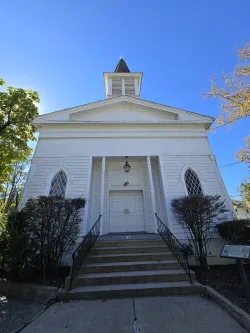
Image Exterior of the Witherpoon St Presbyterian Church (Lia Abrams) Witherspoon Street Presbyterian Church in Princeton, New Jersey, has a ...