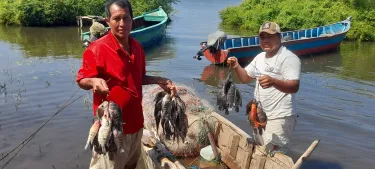
World Food Day is observed every year on Oct. 16. This year’s theme, “Innovate today. Nourish tomorrow,” asks us to look at how forward-thinking solutions can work alongside traditional knowledge to feed people and protect the planet. On Zapatera Island in Nicaragua, a group of families is showing that innovation doesn’t always require complex technology. Sometimes, it means finding new ways to harness the sun, the sea, and the resources already around them to build a more resilient future.
Zapatera Island, located in the municipality of Granada, faces unique challenges. Reachable only by small wooden boats built by residents, the island suffers from relative isolation. This geographic barrier limits access to government support and broader markets, leaving many families in poverty, suffering from poor nutrition. Yet, the island possesses a wealth of resources: fertile soil, freshwater, forests, abundant fish and plenty of sunlight.
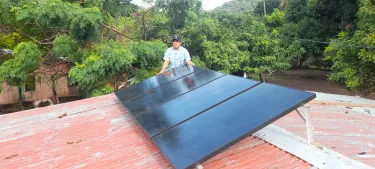
The Asociación Fénix (Asofenix), a Nicaraguan nongovernmental organization, specializing in renewable energy and sustainable agriculture, has worked for over two decades to improve living conditions in rural areas. Their track record includes installing solar-powered water systems, small hydroelectric plants and more than 500 clean wood-burning stoves across 15 communities. As a partner of the Presbyterian Hunger Program (PHP), Asofenix brings both technical expertise and a deep commitment to community-led development.
Their current initiative, funded by PHP, focuses on capacity building for 28 families, aiming to establish small, community-based businesses powered by solar energy. The project rests on three pillars. First, it promotes sustainable aquaculture and value-added processing of fish, moving beyond subsistence fishing. Second, it revives Indigenous agricultural techniques, helping families cultivate crops like corn and beans for both consumption and sale. Third, it introduces a solar-powered retail system, allowing the community to preserve and sell natural products efficiently. Throughout this process, the families participate in planning, implementation and management through elected committees.
The impact extends to approximately 150 people across four communities. By producing manuals on Indigenous agriculture and compiling a community cookbook, the project ensures that community knowledge will remain within the island. Looking ahead, Asofenix plans to expand the program to more families and develop community-based tourism to secure long-term funding.
As World Food Day reminds us, true food security is rooted in sovereignty. For the families of Zapatera Island, harnessing the potential of their own land, waters, and the sun is about more than nourishing themselves today, it is about building a future where they can sustain their families and feed their communities for generations to come.
Eileen Schuhmann, Associate for Global Engagement and Resources, Presbyterian Hunger Program
Let us join in prayer for:
Nora Baez, Lead Reservation Specialist, Stony Point Center, Presbyterian Life & Witness
Amber Baker, Donor Advised Fund Specialist, Operations, Presbyterian Foundation
Let us pray:
May God bless the soil and waters of Zapatera Island, bringing abundant crops, plentiful fish and nourishment for every family. May the sun power their endeavors, giving light and energy to their work and hope for the future. Guide their hands with wisdom and perseverance, and may their harvests bring nourishment, prosperity and a brighter tomorrow. Amen.


No comments:
Post a Comment