Wednesday, September 10, 2025

Mission Yearbook: Presbytery’s partnership helps offer literary classes in Guatemala

Image
Guatemalan students
A second literacy class has been added in Las Barrancas, Guatemala.

Last fall, while visiting our partners in Guatemala, we traveled about two hours from the Association of Mam Christian Women for Development office to a very remote village called Las Barrancas, which means “the ravines.” Tucked away in lush mountains, this gorgeous place feels somewhat forgotten, like the end of the Earth.

Traveling there is quite an adventure, requiring a trusty 4x4 to navigate the pothole-filled, muddy surfaces that are sometimes impassable in the rainy season. For residents of this community to attend school, especially after the elementary grades, they have to travel quite far, which is not always possible.

This means that literacy rates and education levels in the community are low. Most of the people living here work on one of the eight surrounding coffee fincas (plantations), the majority of them women since many of the men have migrated to the United States to find work.

Image
Guatemalan Partnership first day of class
A student is given materials on the first day of class (photo courtesy of New Castle Presbytery's Guatemala Partnership).

Our main reason for venturing to Las Barrancas was to learn more about a new literacy project that had just been launched by a Guatemalan government agency. While the initial class was a success, the government did not have the funding to continue the program after the first year. In response, the Association committed to keeping the first class going, while also adding a second class in 2025. Concord Presbyterian Church in Wilmington, Delaware, donated the funds needed for the teachers' salaries and materials while an anonymous individual offered to cover the cost of new folding tables and chairs. We are thrilled to report that both classes are now underway!

There are 20 students in total this year. Twelve students are in the “first grade” class, and eight in the “second grade” class. Sessions are held on Mondays, Wednesdays and Fridays from 2 to 5:20 p.m. for a total of 10 hours a week. This afternoon schedule allows students to come to class after they return from working on the fincas.

Students learn how to write their name, do basic math, and master the alphabet, and will receive an official government “diploma” as long as they pass the final test at the end of the year. Last year's class had a 100% pass rate! Watch this video they made to show you their hard work, as well as the new tables, chairs and materials.

This program also is providing a source of income for two teachers who both live in the community, Lidia and Abdiel, pictured below. Abdiel (right) is just 17 years old and is using his salary to pay for his tuition and travel expenses to finish high school.

This wonderful new program is building confidence and transforming lives. The students share, “we thank God for the opportunity to learn and gain knowledge.” We are especially grateful to Concord Presbyterian Church and the anonymous donor for their financial support and hope to continue and expand these classes for years to come.

Carrie Saathoff, Guatemala Partnership of New Castle Presbytery (Click here to read original PNS Story)

Let us join in prayer for:

Zenia Baker, Administrative I, Operations, Presbyterian Foundation            
Adriana Ballard, AVP, Director of Investment Management, Investments, Presbyterian Foundation

Let us pray:

Loving God, we pray that all congregations will open their arms to those who live in their communities, embrace the gifts that new people bring and allow the Holy Spirit to enable them to thrive as new creations in Christ. Amen.

Tuesday, September 9, 2025

2025 Path of Peace reflections - Tuesday, Sept. 9, 2025

Adelaide Woodard

Psalm 42:9–10

“I say to God, my rock,
“Why have you forgotten me?
Why must I walk about mournfully
because the enemy oppresses me?”

Psalm 146:5, 7

“Happy are those whose help is the God of Jacob,
whose hope is in the Lord their God …
… who executes justice for the oppressed;
who gives food to the hungry.”

Imagine a population in desperate need of medical care praying Psalm 42 to God: “Why have you forgotten me? Why must I walk about mournfully because the enemy oppresses me?” Such was the situation for an entire population of women and girls at the turn of the 20th century in India. “Cultural and religious strictures prevented most women in the early 20th century from seeking medical care from male doctors.” What sort of frustration and despair arises in sick people when they can see the ones who hold the knowledge to heal their ailments yet are denied access because of their sex? What are the people of God called to do in such a situation? Psalm 146:7 offers the answer. We partner with God to “execute justice for the oppressed.”

And so, partnering with God to address this need, “the Presbyterian Church in the (U.S.A.) appointed a number of women doctors to the field.” God stirred in the heart of one such woman: Dr. Adelaide Woodard.

At age 40, she answered God’s call, leaving the comforts and innovation of her U.S. medical practice and moving to Fatehgarh, a densely populated area in Northern India. “When Dr. Woodard arrived in 1915, there was only a small dispensary and one trained nurse. In just five years, she oversaw the construction of Memorial Hospital and the start of formal nurses’ training.” She spent 10 years there, offering her life in service. She worked to fundraise and resource the new hospital, elevating the quality of medical care. It’s impossible to calculate the sum of lives and families touched by Dr. Woodard’s work.

Why did she do it? In her own words, “I realized Jesus loved me, Adelaide, who had known so little love in my life. I was filled with happiness and wanted to tell the story to the whole world. … I began my plan to become a missionary — to go where the need was the greatest and to tell of this love to others.” May we be sensitive to God’s call to execute justice for the oppressed.

Prayer:

O God, who is our rock, may our firmly planted feet give us courage to listen for and act upon your call to give food to those who are hungry, help those in need and execute justice for the oppressed. Give us strength to trust in your faithfulness, even when the world feels unsteady, and to live as people of hope.

Amen.

Mission Yearbook: ‘God, Gospel and Gender’ author discusses book on podcast

Image
Rev. Margie Baker on A Matter of Faith

Simon Doong and the Rev. Lee Catoe have once again discovered a book they wish had been around when they were younger. But since it was published just last year, they did the next best thing, inviting the Rev. Margie Baker, the author of “God, Gospel and Gender: A Queer Bible Study for Teens,” to join them on “A Matter of Faith: A Presby Podcast.” Listen to their conversation here.

Baker is a former teacher who currently is on staff of St. John’s Episcopal Church in West Hartford, Connecticut, where she serves children, youth and families. Her book contains Scripture passages, activities, and “lots of wondering questions,” she told Catoe and Doong.

“This book was written for teens and tweens, but I’ve heard from adults who’ve really benefited from it,” she said. It can be used in a class or retreat setting, and it’s a book “you can hand to that one kid” in church “who has questions.”

Doong asked, “What are specific ways we should engage with teens to discuss the intersection of LGBTQ+ issues, faith, inclusivity and affirmation, and how should we engage with teens differently from other demographics?”

Baker said she wrote the book because the youth at her church “are yearning for a just faith and for a faith that requires active love of neighbor. That matters to them.”

While Baker found resources on topics like antiracism, “when I went looking at those resources from a queer lens, from how to either affirm your own identity or how to be a good ally, I couldn’t find it.”

Image
God, Gospel and Gender

“My context, and most of the kids that I meet who have questions about this, want to engage those questions through Scripture,” she said. “I think that’s a big difference from when I was growing up.”

“I don’t remember hearing a lot of Bible stories to help me understand that God loves gay, lesbian, bisexual and transgender people,” Baker said. “Queer kids and people who want to be allies don’t have the same baggage that adults do. I grew up knowing about ‘the clobber verses,’ the relatively few verses in Hebrew Scriptures and in Romans where we see explicit interdictions about homosexuality.”

“My kids didn’t seem to care about that as much. They were more interested in the wide arc of God’s love and God’s justice over time that as Christians we see embodied in Jesus of Nazareth,” Baker said.

Catoe asked: What Bible stories do you uplift?

Among Baker’s favorites is “reading Genesis 1 through a nonbinary lens.”

“‘Male and female, he created them’ — that sounds very binary,” Baker said. But binary-sounding creations, including “light” and “dark,” are interspersed with words like “morning” and “evening,” which Baker described as “points on a spectrum.”

“You have all this gorgeous room” in that first account of Creation, she said. “With Genesis, this is especially good for allies as well, because it’s a different way to play with Scripture with a beautiful and theological imagination: If we start with day and night and we move to land and sea and then we talk about beaches and seasonal riverbeds and wadis that you have all over Scripture, we start to see that even though the verses are saying ‘day’ and ‘night,’ ‘land’ and ‘sea,’ there’s more going on.”

By the time you get to some birds that swim and a few flying fish, “the kids are ready. They’re like, ‘What about penguins?’ … Maybe the story of Scripture in Genesis 1 isn’t trying to tell us exactly how something was made. Maybe the story of Scripture here is telling us about the breadth and power of God’s Creation, so that when we finally get to the last few verses of Genesis 1, we see that God created Adamah — God created humanity in God’s own image. Male and female, God created them.”

“Suddenly, male and female feel like points on a spectrum and poetry that might include and encapsulate a wider truth about what it is to be alive, and that God made it all, and that all of it is very good.”

New episodes of “A Matter of Faith: A Presby Podcast” drop every Thursday. Listen to previous editions here.

Mike Ferguson, Editor, Presbyterian News Service (Click here to read original PNS Story)

Let us join in prayer for:

Charles Baker, Production Clerk, Presbyterian Distribution Service, Administrative Services Group (A Corporation) 
Kristine Baker, Associate for Risk Management, Administrative Services Group (A Corporation) 

Let us pray:

Gracious God, you call us as partners in Creation. Through your Son, Jesus Christ, fill us with blessings and grow in our lives, that by the Holy Spirit we may go out into the world to do your will. Amen.

Monday, September 8, 2025

2025 Path of Peace reflections - Monday, Sept. 8, 2025

Frank Shirley

Philippians 1:1–6

Paul and Timothy, servants of Christ Jesus,

To all the saints in Christ Jesus who are in Philippi, with the bishops and deacons: Grace to you and peace from God our Father and the Lord Jesus Christ.

I thank my God every time I remember you, constantly praying with joy in every one of my prayers for all of you, because of your sharing in the gospel from the first day until now. I am confident of this, that the one who began a good work among you will bring it to completion by the day of Jesus Christ.

“He’s the last of the great churchmen.”

From time to time, I will recite this line to my wife and co-pastor, Meg, in reference to some male member of our congregation. It’s intended to be a compliment — a way to describe somebody who is thoroughly “solid” — committed to the community, capable of laying his ego aside, and dedicated to ensuring that the church of tomorrow is as healthy as the church that formed him yesterday.

I feel certain that I would have used this phrase to describe Frank Shirley. His resume would include serving as pastor, Army chaplain, Sunday school missionary and synod newspaper editor. His calling, however, was to cultivate health in Black Presbyterian churches. Shirley was a leader always in search of the next generation of leaders.

In his salutations to the church in Philippi, Paul includes Timothy as co-author in this epistle of care and encouragement. Paul understood that the health of the church tomorrow depends on identifying and cultivating leaders today. Shirley practiced this same kind of fidelity — and that is precisely why that phrase I use to describe rock-solid churchmen will never actually be true. What makes great churchmen “great” is that they would never allow themselves to be the last of the great — they always have an eye on the next generation. Thanks be to God that we have an opportunity to be those “great church people” today.

Prayer:

We give thanks to you, O God, for every sibling in Christ who — with spit, grit, and the Holy Spirit — shaped this church and thus shaped the contours of our own hearts. Help us take that same long view today, always on the lookout for tomorrow’s leaders that the Spirit has just begun to anoint. Amen.

The Rev. Jarrett McLaughlin serves as co-pastor with his wife, Meg Peery McLaughlin, at University Presbyterian Church in Chapel Hill, North Carolina. As one shaped by presbytery youth councils and opportunities to serve and lead at Massanetta Springs and Montreat youth conferences, he is incredibly grateful for the elders who shaped him.

Mission Yearbook: New director of Mid Council Ministries is announced

Image
Rev. Sarah Moore-Nokes
The Rev. Sarah Moore-Nokes

The Interim Unified Agency of the Presbyterian Church (U.S.A.) has announced that the Rev. Sarah Moore-Nokes has been appointed as director of Mid Council Ministries. Moore-Nokes has been hired for an 18-month term.

The previous director of Mid Council Ministries was the Rev. Dr. Tim Cargal, who served for almost a year as interim director after the Rev. Jihyun Oh left the role in 2024 to become Stated Clerk of the General Assembly and Executive Director of the Interim Unified Agency.

The director of Mid Council Ministries oversees more than a dozen employees who provide ministry support to presbytery and synod leaders in a number of ways, including training and education, call process support, constitutional interpretation, insight on immigration issues and advocacy, and more.

Moore-Nokes comes to the position after nearly two decades of presbytery leadership. She has served in a variety of roles, most recently as general presbyter of the Winnebago Presbytery, which consists of 28 congregations in north central and northeastern Wisconsin. She described her work in presbytery leadership as having given her deep understanding of both the challenges and the importance of mid councils.

“I'm excited about joining the IUA staff, particularly during this time of transition,” Moore-Nokes said. “Mid councils are the glue that hold our connectional denomination together, and I'm eager to support mid council leaders and help strengthen denominational infrastructure for this important work.”

In addition to her church leadership work, Moore-Nokes is also a certified coach. She created her own coaching and consulting business in 2018 and has been coaching full-time since 2020. Moore-Nokes was led to become certified as a coach because of the benefits having a coach brought to her presbytery work. She says her coaching work has also prepared her for her new role as director of Mid Council Ministries.

Oh believes that Moore-Nokes is the right person for such a time as this. “Sarah has a keen understanding of systems and listens intently for the needs that exist,” Oh said. “Sarah will not only support the ministries currently in the Mid Council Ministries but will help guide the unified agency as it works to support the vitality of all mid councils.”

“A key skill of coaching is listening, and I believe a key skill of leading is listening,” Moore-Nokes said. “I'll be listening carefully to the hopes and needs of mid council leaders as well as what's working in their various places. I've also been privileged to coach mid council leaders in a variety of contexts, so while I most recently served in a small presbytery, I have a sense of how diverse our presbyteries and synods are.”

While Moore-Nokes is excited to begin her work, she said she has not set any specific goals or expectations for the next months. Instead, she’s focused on learning more and understanding what the priorities for her ministry are first. She began her work on July 14.

Layton Williams Berkes, Communications Strategist, Interim Unified Agency (Click here to read original PNS Story)

Let us join in prayer for:

Nora Baez, Lead Reservation Specialist, Stony Point Center, Interim Unified Agency
Amber Baker, Donor Advised Fund Specialist, Operations, Presbyterian Foundation  

Let us pray:

God, you called us before we knew your names; you walk beside us when our steps are uncertain; you whisper before we know the words to speak. Continue in your teaching and help us to bear witness to your unfolding story among us. Amen.

Sunday, September 7, 2025

2025 Path of Peace reflections - Sunday, Sept. 7, 2025

 by Marianne Moore

Jeremiah 18:1–11; Psalm 139: 1–6, 13–18

The word that came to Jeremiah from the Lord: “Come, go down to the potter’s house, and there I will let you hear my words.” So I went down to the potter’s house, and there he was working at his wheel. The vessel he was making of clay was spoiled in the potter’s hand, and he reworked it into another vessel, as seemed good to him. Then the word of the Lord came to me: Can I not do with you, O house of Israel, just as this potter has done? says the Lord. Just like the clay in the potter’s hand, so are you in my hand, O house of Israel. At one moment I may declare concerning a nation or a kingdom that I will pluck up and break down and destroy it, but if that nation, concerning which I have spoken, turns from its evil, I will change my mind about the disaster that I intended to bring on it. And at another moment I may declare concerning a nation or a kingdom that I will build and plant it, but if it does evil in my sight, not listening to my voice, then I will change my mind about the good that I had intended to do to it. Now, therefore, say to the people of Judah and the inhabitants of Jerusalem: Thus says the Lord: Look, I am a potter shaping evil against you and devising a plan against you. Turn now, all of you, from your evil way, and amend your ways and your doings.

Pondering the prophet’s vision of a potter reworking a spoiled vessel into a new one, “as seemed good to him,” it seems fitting we should consider another artist — poet Marianne Moore (1887–1972), a lifelong Presbyterian, known for her meticulous craftsmanship and “passion for revision.”1 What can poets teach us about peacemaking? They can teach us about humor, imagination, paying attention, surprise, empathy, bearing witness and showing restraint, and Marianne Moore employed all these peacemaking tools masterfully. She famously wrote that poets must “present / for inspection, imaginary gardens with real toads in them.”2 For me, this suggests that artists (and peacemakers) must be able to imagine building a new, life-giving reality together, and to recognize the very real “toads” that disrupt any naïve or escapist fantasies we might be clinging to. To quote her friend, poet Grace Schulman, “To read a poem by Marianne Moore is … to know that the writer has looked at a subject … from all sides, and has examined the person looking at it.”3 Is not such multi-faceted perspective-taking what is required for peace?

“The Paper Nautilus” illustrates Moore’s commitment to detailed observation and self-examination. Her description of the octopus’ maternal (and God-like?) dedication to “her glass ramshorn-cradled freight” illuminates the poet painstakingly birthing her poem and leaves us with the revelation that sacrificial love, “hindered to succeed,” “is the only fortress / strong enough to trust to.”4 And yet, Moore insists that nothing she says “is unalterable. I’m always changing things.” So, too, peacemaking depends on our willingness to relinquish our certainties, self-correct, try new things, break a pattern and imagine a different ending.

Prayer:

O God, in whom we live and move and have our being, your love is the only fortress strong enough to trust. Subject us again and again to your terrible, revising grace. Give us eyes to see with curiosity and compassion every toad in our path and the courage to imagine gardens where all may thrive. In the name of the Creator, Redeemer and Sustainer, we pray. Amen.

1 “Introduction,” “The Poems of Marianne Moore,” (Viking Penguin, 2003), edited by Grace Schulman, p. xx.

2 ”Poetry” by Marianne Moore, from “Others for 1919: An Anthology of the New Verse” (Nicholas L. Brown, 1920), edited by Alfred Kreymborg. This poem is in the public domain and can be found online at poets.org/poem/poetry.

3 Ibid, p. xxvi.

Minute for Mission: A Season of Peace begins

Image
A Season of Peace Logo

Peace bookends the biblical story. In the beginning, God shapes a chaotic world, creates a world with life and light and creatures of all kinds, and blesses it with primal shalom. Then God rests to enjoy peace alongside all created things. Skip to the end of the biblical story where John’s Revelation unveils a renewed vision of a world at peace. Creatures, angels, and “a great multitude that no one could count, from every nation, from all tribes and peoples and languages” stand “before the throne and before the Lamb, robed in white, with palm branches in their hands.” (Revelation 7:9) Together they sing, confess, and cry out with a loud voice, bearing witness to the God who has restored them and all of Creation to wholeness and primal shalom.

Between these two visions of a peaceful world, of course, come innumerable stories of conflict and strife and the long witness to God’s patient work of redemption. East of Eden but this side of Christ’s return, we find ourselves between peaceable times. We are destined for God’s peaceable kingdom, and Jesus calls us to be peacemakers, to join in with God in the work of making all things new. And we catch glimpses of this promised peace as it breaks in even now.

This fall, the Presbyterian Church (U.S.A.) again welcomes you to journey toward World Communion Sunday through A Season of Peace, a four-week devotional designed to help deepen the pursuit of peace for congregations, small groups, families and individuals. This year’s devotional comes at a time of transition. Political upheaval has deepened polarization and political distrust in the United States while also bringing further militarism to our city streets. We deeply need communities of faith who are committed to practicing peace and seeking its flourishing.

And yet the way is difficult and confusing. Where can we look for hope, encouragement and examples of how we might be the peacemakers Jesus calls us to be? This year, we invite you to consider the ordinary saints that have come before and live among us. Each day, the Season of Peace devotional will feature a Presbyterian who has lived in a way that promotes God’s peace and justice. By their example, may we be assured that we can each do something, however great or small, that conforms with God’s long struggle to return primal shalom to all.

Dr. Andrew J. Peterson, Representative for Peacemaking, Office of Public Witness, Interim Unified Agency, Presbyterian Church (U.S.A.)

Let us join in prayer for:

PC(USA) Agencies’ Staff:

Gohar Aznauryan, Administrative Assistant, Jinishian Memorial Program, Interim Unified Agency
Katherine Babicz, AVP Financial & Investment Planning Professional, Trust Services, Presbyterian Foundation

Let us pray:

God of grace and peace, give us peace at all times and in all ways. Be with us; guide us that we may not grow weary but yearn and struggle for your peaceable kingdom. Amen.

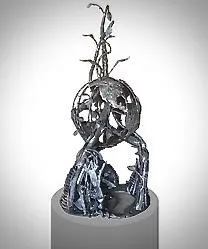
Mission Yearbook: Louisville church dedicates ‘Healing the Earth’ anti-gun violence sculpture

Renowned Louisville blacksmith and sculptor Craig A. Kaviar created a 6-foot metal sculpture, “Healing the Earth,” for the front plaza of C...